

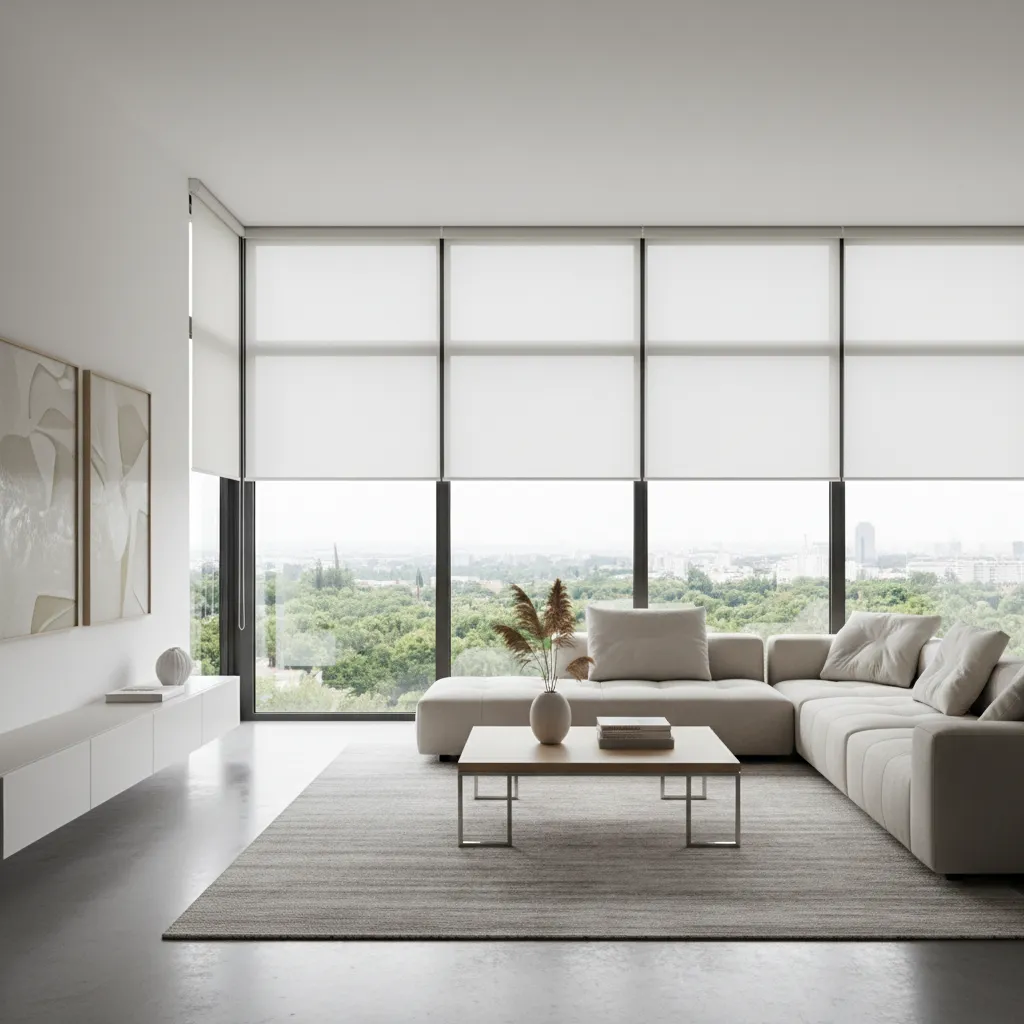
A bright, modern living room with cordless blinds gives a clean, updated look without dangling cords.
If you’ve ever walked into a room and seen blind cords puddled on the floor, wrapped around a chair, or dangling where curious little hands can reach them, you’re not alone. Cords have been the standard for decades, but they can look messy and feel a bit dated next to everything else you’ve upgraded.
If you’ve been typing “what are cordless blinds” into Google while juggling safety, style, and a realistic budget for your Surrey or Vancouver home, this guide is for you. We’ll break down how cordless blinds work, where they shine, when they’re worth the extra dollars, and when another option might serve you better.
TL;DR: Are Cordless Blinds Worth It?
- Yes, for most Surrey & Vancouver homes, cordless blinds are worth it—especially in kid, pet, and high‑traffic spaces.
- You lift or lower the blind by holding the bottom rail—no dangling cords, no knots, cleaner look.
- They usually cost a bit more than basic corded blinds, but manufacturer-direct pricing through Ray Blinds keeps that gap small.
- Great for bedrooms, living rooms, and condos where you want a modern, uncluttered window.
- For very tall, heavy, or hard‑to‑reach windows, corded or motorized blinds can still be the smarter pick.
What Are Cordless Blinds & How Do They Work?
Let’s keep this simple: a cordless blind is still a blind. You still get slats or fabric that go up and down to manage light and privacy. The main difference is how you control it.
Instead of pulling on a cord, you:
- Place your hand on the bottom rail or a small handle.
- Gently push up to raise the blind.
- Pull down to lower it to the exact height you want.
Inside the headrail, there’s a spring or tension system that keeps everything balanced. Think of it like a very smooth, well‑behaved yo‑yo that stops exactly where you leave it. With fabric styles (like zebra shades or roller shades), the same idea applies: a hidden mechanism replaces the visible cord.
For slatted options such as faux wood or aluminum, you’ll usually still have a small wand or tilt bar to angle the slats, but there’s no long dangling cord to raise or lower the blind itself.
Cordless vs Corded Blinds: Key Differences
Corded blinds have been around forever for one main reason: they’re simple and inexpensive. That said, cords come with trade‑offs that many homeowners are ready to leave behind.
Look & feel
- Corded: Visible cords, tangles, and fraying over time. Feels more “builder basic.”
- Cordless: Clean, uncluttered lines. Windows look more like built‑ins, less like an afterthought.
Daily use
- Corded: Can be finicky if cords catch or get uneven. Easy to yank too hard.
- Cordless: Smooth lift with one hand. You set the height and it stays put.
Safety & peace of mind
- Corded: Loops and long cords can be hazardous for young children and pets.
- Cordless: No accessible cords to get tangled in, which is why many families switch as soon as babies or grandkids enter the picture.
From our in‑home consultations across Surrey and the Greater Vancouver area, we see a clear pattern: once people live with a good cordless blind, they rarely want to go back to cords in their main living spaces.
Safety Benefits for Kids, Pets & Seniors
If you have little ones, grandkids, or pets, you’ve probably already run across safety reminders about blind cords. Agencies like Health Canada consistently flag corded window coverings as a strangulation risk. Canada now enforces strict corded window covering regulations that limit how long any accessible cord can be, and Health Canada has reported that, before these rules, strangulation fatalities from window covering cords occurred at an average rate of just over one child per year in Canada.

Cordless blinds remove dangling cords around busy family areas, helping keep kids and pets safer.
Cordless blinds help reduce that risk because there’s simply less for anyone to get caught in. No loops, no dangling strings, no temptation for a cat to bat at or a toddler to play with.
We often see this scenario: a Surrey family with a busy toddler and a new baby on the way calls us in. Their old mini‑blinds have long, tangled cords right beside the crib and sofa. Swapping those out for cordless blackout shades in the bedroom and cordless zebra shades in the living room gives them:
- Safer nap and play zones.
- Better sleep thanks to darker rooms.
- A cleaner, more modern look without redoing the entire room.
For seniors, cordless blinds also remove the need to grip thin cords or tug hard. A gentle push or pull on the bottom rail is easier on hands and shoulders.
Style & Design: Where Cordless Blinds Look Best
Cordless control isn’t a style by itself—it’s a feature that can be paired with many looks. At Ray Blinds, we build cordless options in popular styles such as:
- Zebra shades for that soft, layered look in living and dining rooms.
- Roller shades for minimalist condos and home offices.
- Honeycomb shades for extra insulation on chilly or hot windows.
- Faux wood blinds for classic style that stands up to humidity in kitchens and bathrooms.

Cordless controls can be paired with many styles, from zebra and roller shades to honeycomb and faux wood blinds.
Best rooms for cordless blinds
- Kids’ rooms & nurseries: Safety plus blackout options for better sleep.
- Living rooms: A cleaner look without cords competing with your view or décor.
- Street‑facing bedrooms: Easy privacy control without fumbling with cords at night.
- Condos & townhomes: Sleek lines that suit modern architecture in Surrey City Centre, Burnaby, or downtown Vancouver.
Because the mechanism is hidden, cordless blinds also photograph better—great if you’re planning to sell soon or just love a tidy space when you walk in the door.
Cost: Are Cordless Blinds More Expensive?
Short answer: usually a little, but not as much as many people think.
Cordless mechanisms have more engineering inside the headrail than a basic cord system, so they’re typically priced slightly higher at big box stores. As a local manufacturer‑installer, we’re able to price cordless blinds much closer to corded options because we source components directly and build in‑house in Surrey.
In real‑world terms, most of our customers see cordless as a “small upgrade, big payoff” choice. You’re paying a bit more upfront for:
- Safety for kids and pets.
- A cleaner, more current look.
- Everyday ease of use.
If you want an exact comparison for your windows, a quick free quote will show you the price difference between corded, cordless, and motorized for each room.
Cordless Blinds FAQ for Surrey & Vancouver Homes
Do cordless blinds break easily?
Quality matters here. A well‑built cordless system is designed for daily use—up and down, every morning and night. The issues we see usually come from low‑end, off‑the‑shelf products that aren’t custom‑sized to the window. When we measure, build, and install a blind for a specific opening, the weight and tension are balanced so the mechanism works smoothly for years.
Can very tall or wide windows use cordless blinds?
Up to a point, yes. For standard‑sized patio doors, large living room windows, and most bedroom windows, cordless works very well. For extremely tall, wide, or heavy shades, we’ll often recommend either a high‑quality corded system with safety features or fully motorized blinds so you’re not wrestling with a heavy bottom rail.
Are cordless blinds good for rental condos?
They can be a smart upgrade. Many Surrey and Vancouver landlords choose cordless roller or zebra shades because they:
- Look more upscale to tenants.
- Remove cords that might otherwise get damaged or misused.
- Stand up better to frequent handling when the quality is solid.
If you own multiple units, we can quote cordless packages that work across the whole building.
Will cordless blinds help with energy efficiency?
By themselves, cordless mechanisms don’t change your hydro bill, but the style of blind does. Honeycomb (cellular) shades, for example, trap air in small pockets and act like an extra layer of insulation. According to the U.S. Department of Energy’s guidance on energy-efficient window coverings, tightly fitted cellular shades can reduce heat loss through windows by around 40%, which can translate into roughly 10% heating-energy savings. Pairing that with smart opening and closing times—something BC Hydro recommends—can help keep rooms more comfortable through hot summers and damp winters.
How to Choose Cordless Blinds for Each Room
1. Start with light & privacy needs
- Bedrooms: Cordless blackout roller or honeycomb shades are favourites for shift workers and kids.
- Living rooms: Cordless zebra shades give you flexible light control without blocking the view entirely.
- Home offices: Light‑filtering cordless shades cut glare on screens while still letting in daylight.
2. Think about moisture & cleaning
- Kitchens & bathrooms: Cordless faux wood blinds handle steam and splashes better than real wood.
- Busy entryways: Smooth cordless roller shades are quick to wipe down.
3. Consider your windows & who will be using them
- If a window is used constantly, cordless makes life easier—no fighting with cords ten times a day.
- If someone in the home has limited mobility, we might suggest extra‑light cordless options or automated smart blinds they can control from a phone or voice assistant.
During a free in‑home consultation, we walk through each room with you, talk about how you actually use the space, and suggest cordless options (or alternatives) that match both your lifestyle and budget.
When Corded or Motorized Blinds Make More Sense
Cordless blinds are great, but they aren’t the answer to every single window. Here are a few times we might steer you toward something else:
- Very tall stairwell or foyer windows: A motorized blind you can control from your phone or a wall switch will be safer and more practical.
- Extra‑large, heavy shades: A high‑quality, child‑safe corded system can still be the right tool for the job.
- Windows blocked by furniture: If you have to reach over a deep sofa to grab the bottom rail, motorization or a side‑control system can be easier.
The goal is always the same: safe, smooth, long‑lasting operation. Sometimes that’s cordless. Sometimes it’s corded with safety devices. Sometimes it’s fully smart and motorized. The right answer depends on your specific windows and who’s using them.
How Ray Blinds Helps Surrey & Vancouver Homeowners
Because we design, build, and install blinds from our Surrey facility, we get to see what works long‑term in real Lower Mainland homes—from high‑rise glass condos in Vancouver to family homes in Fleetwood and Cloverdale.

In-home consultations make it easy to compare cordless, corded, and motorized blinds for each room.
Here’s how we typically help with cordless blinds:
- Free in‑home consultation: We measure, bring fabric samples, and talk through corded vs cordless vs motorized for each room.
- Custom manufacturing: Every blind is made to fit your exact windows, which keeps cordless mechanisms working smoothly.
- Professional installation: Our team handles the details so your blinds look built‑in, not “stuck on.”
- After‑sales support: If something doesn’t feel right once you live with it, you call us—not a call centre two provinces away.
If you’re still on the fence about cordless, a quick visit from our team can clear things up. We’ll show you real samples, talk through costs, and help you choose a setup that balances safety, style, and your budget.
Get a free quote on custom cordless blinds for your Surrey or Greater Vancouver home, and see exactly what’s possible for your windows.
Key Takeaway
Cordless blinds replace dangling cords with a simple lift‑and‑lower action, giving you a cleaner look, safer rooms, and easier everyday use. For most Surrey and Vancouver homeowners—especially families with kids or pets—they’re a small upgrade that pays off every single day you open and close your blinds.
Get Custom Blinds for Your Home
Looking for clean, easy-to-use blinds for your home? Ray Blinds provides custom window blinds for homes in Surrey, Langley, Vancouver, and across the Lower Mainland.