

Choosing window coverings in Vancouver or Surrey can feel overwhelming — bright west‑coast sunsets, street‑facing windows, condo bylaws, and long summer evenings all play a role.
This room‑by‑room guide explains which types of window coverings suit each space and when it makes sense to go custom, with help from our Ray Blinds team across the Lower Mainland.
TL;DR:
- Living rooms: light‑filtering roller or zebra shades, often motorized.
- Bedrooms & nurseries: true blackout roller or honeycomb shades plus side channels.
- Kitchens & baths: moisture‑resistant faux wood or aluminum blinds.
- Offices & media rooms: glare‑control roller shades with screen‑friendly fabrics.
- Patio doors & big windows: verticals, panel tracks, or coordinated rollers.
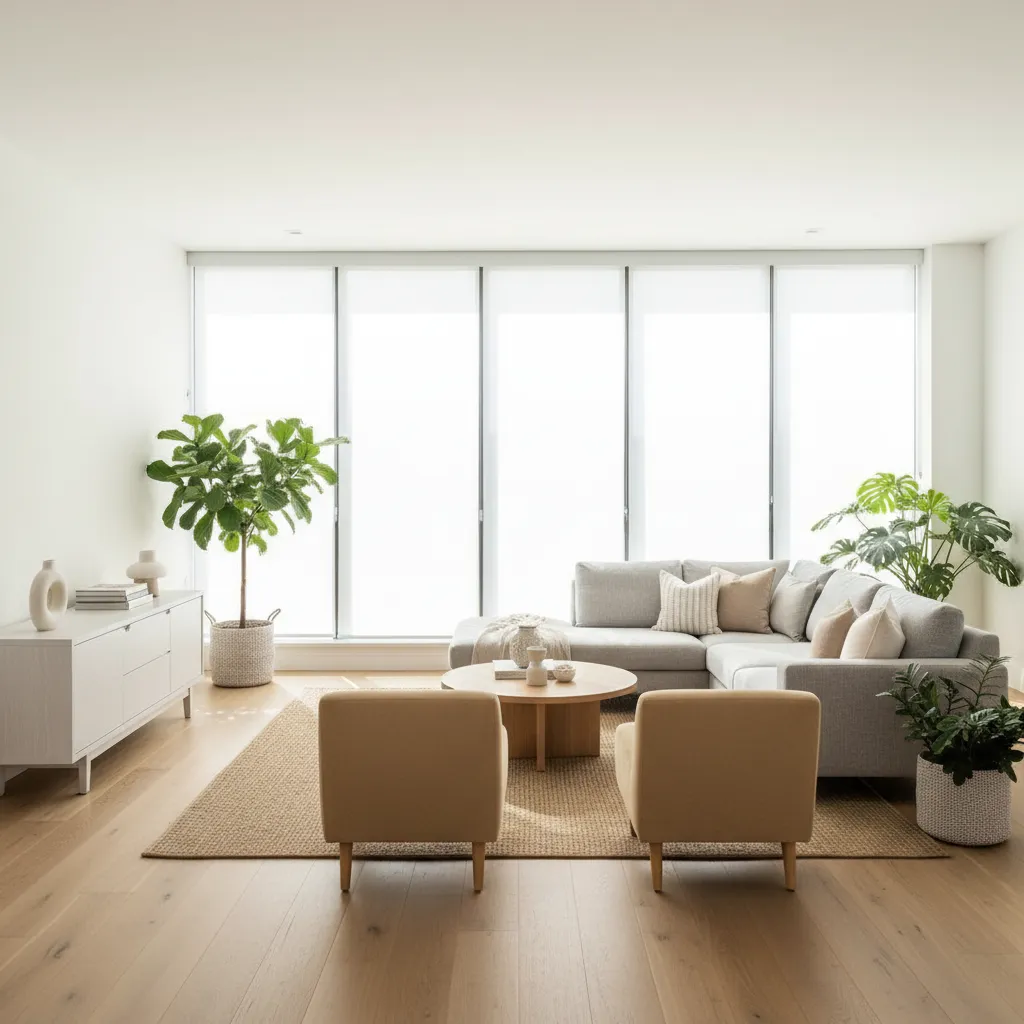
A contemporary living room with light-filtering roller shades is a common choice for Vancouver and Surrey condos and family rooms.
Quick overview: the main window covering options
Before we get into each room, here’s a quick tour of the most common blinds and shades you’ll see locally. For a deeper dive, see this window covering overview.
1. Shades
- Roller shades: Clean, minimal, great for condos. Fabrics range from sheer to full blackout. See our custom roller shades for examples.
- Zebra (sheer shades): Alternating sheer and solid bands you can slide for either view‑through or privacy.
- Honeycomb (cellular) shades: Air pockets help insulate; excellent for bedrooms and street‑facing windows.
- Roman shades: Softer, fabric‑rich look when raised, often layered with drapery.
2. Blinds
- Horizontal blinds (faux wood, real wood, or aluminum): Slats tilt to control light and privacy, useful in kitchens, offices, and commercial window coverings.
- Vertical blinds: Slats hang top‑to‑bottom and slide sideways; a workhorse option for patio doors and wide windows.
3. Shutters & drapery layers
- Interior shutters: A more architectural look, with louvers that tilt for light and privacy.
- Drapery panels: Often used on top of shades or blinds, for softness, sound absorption, and extra blackout.
All of these can be made cordless for child safety, and many can be motorized blinds so you can set schedules or control them from your phone.
The “right” window covering is less about trends and more about how you actually use each room day to day.
Living room & family room: soften light, reduce glare
These are the rooms where you relax, entertain, and often watch TV, and many west‑ or south‑facing living rooms get strong late‑day sun and reflections on screens.
What types of window shades are best for living rooms?
- Light‑filtering roller shades: Great for condos and modern homes. They keep things bright but cut harsh glare and UV on floors and furniture.
- Zebra shades: Ideal if you want a softer look with flexible privacy. Line up the sheer stripes during the day; close the solid stripes in the evening.
- Layered roller + drapery: A roller shade for everyday light control plus full‑length drapery panels at the sides for cosiness and extra darkness.
For townhomes and houses on busier streets, we often recommend zebra shades in living areas because they let you see out while neighbours see far less in.
Motorized and smart options for family spaces
If you have tall or hard‑to‑reach windows, motorized or smart shades let you lower them before the sun hits the glass and keep cords out of reach of kids and pets. Natural Resources Canada estimates that windows, doors, and skylights can account for up to 35% of a home’s total heat loss in winter, so automated daily use of the right coverings can also help comfort and energy use. You can learn more in their Keeping the Heat In guide.
Bedrooms & nurseries: true blackout and privacy
Ask any parent with east‑ or west‑facing bedrooms: bright summer evenings can keep little ones wide awake. Adults working shifts also need proper darkness during the day.
What kinds of blackout blinds actually work in bedrooms?
Many people are surprised when a so‑called blackout product still leaks light at the sides. The fabric might be opaque, but gaps at the edges and around the top cassette still let light in.
For bedrooms and nurseries, we usually suggest:
- Blackout roller shades with side channels and a closed top cassette.
- Blackout honeycomb shades inside the frame, often with double‑cell fabrics for extra insulation.
- Layered solutions: a light‑filtering shade plus lined drapery that fully overlaps the window frame.
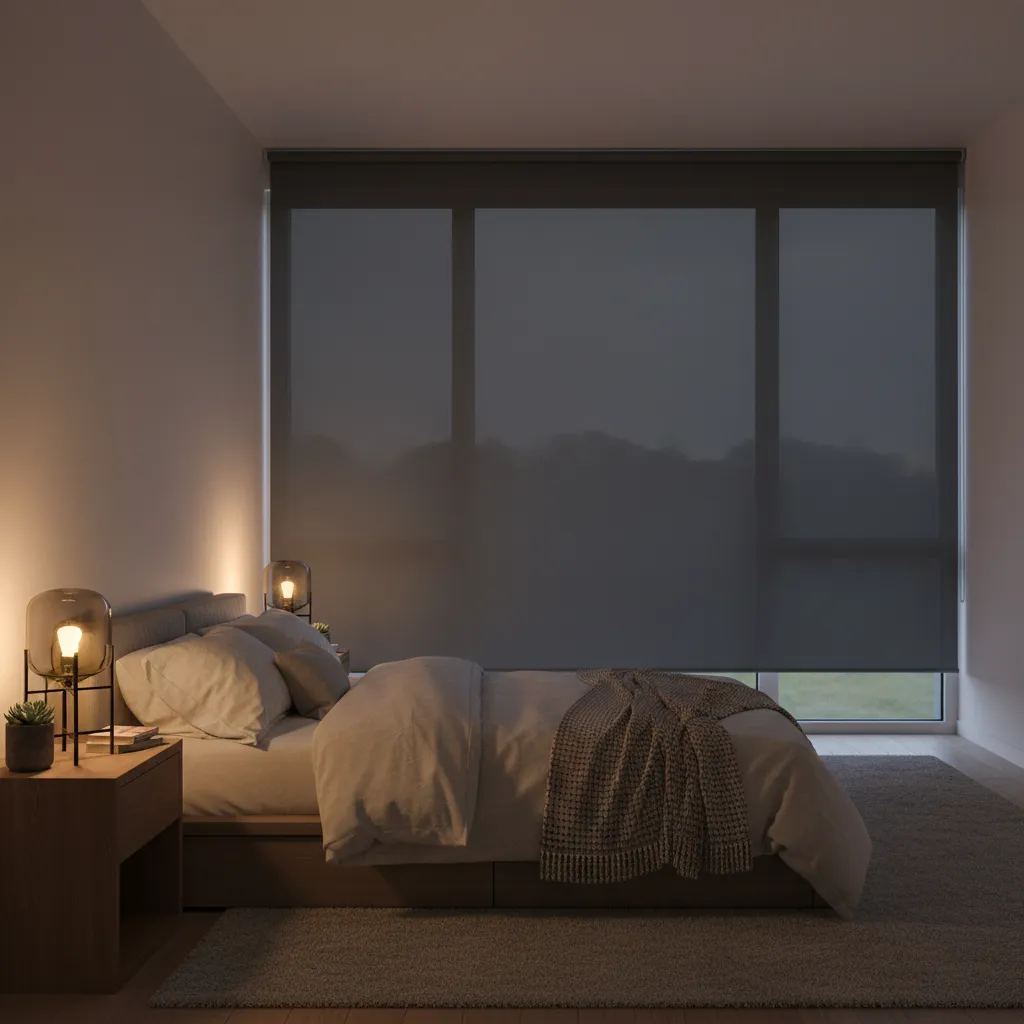
A cozy bedroom with true blackout roller shades, designed to block light for better sleep.
Myth: Any “blackout” blind will make a room pitch‑dark.
- Blackout fabric stops light, but gaps at the sides and around hardware still glow.
- Side channels and a closed cassette greatly cut that light leak.
- For the darkest rooms, we design the mount, channels, and any drapery layer to work together.
Why darkness matters for sleep
Light is one of the strongest cues for your body clock, so a cool, dark bedroom helps signal that it’s time to sleep — advice echoed by Canadian sleep researchers and organizations like the U of T sleep guide and the Sleep Foundation.
That’s why true blackout coverings matter most in nurseries, shift‑worker bedrooms, and east‑ or west‑facing rooms, while a softer setup (light‑filtering shade plus blackout drapery) usually works well in primary bedrooms.
Cellular shades also add insulation, especially for bedrooms over garages or on top floors that tend to feel drafty or hot.
Kitchens & dining rooms: light, views, and easy cleaning
These windows face cooking steam, food splashes, and daily use, so fabric that looks stunning in a bedroom can feel fussy next to the stove.
What types of window shades and blinds work best in kitchens?
- Faux wood blinds: Give you the warmth of wood with better moisture resistance. Slats tilt so you can keep privacy while still seeing the sky.
- Aluminum blinds: Slim profile, budget‑friendly, and simple to wipe down.
- Screen roller shades: Great if you love your mountain or city view but need less glare at the sink. Open‑weave fabrics keep the space bright.
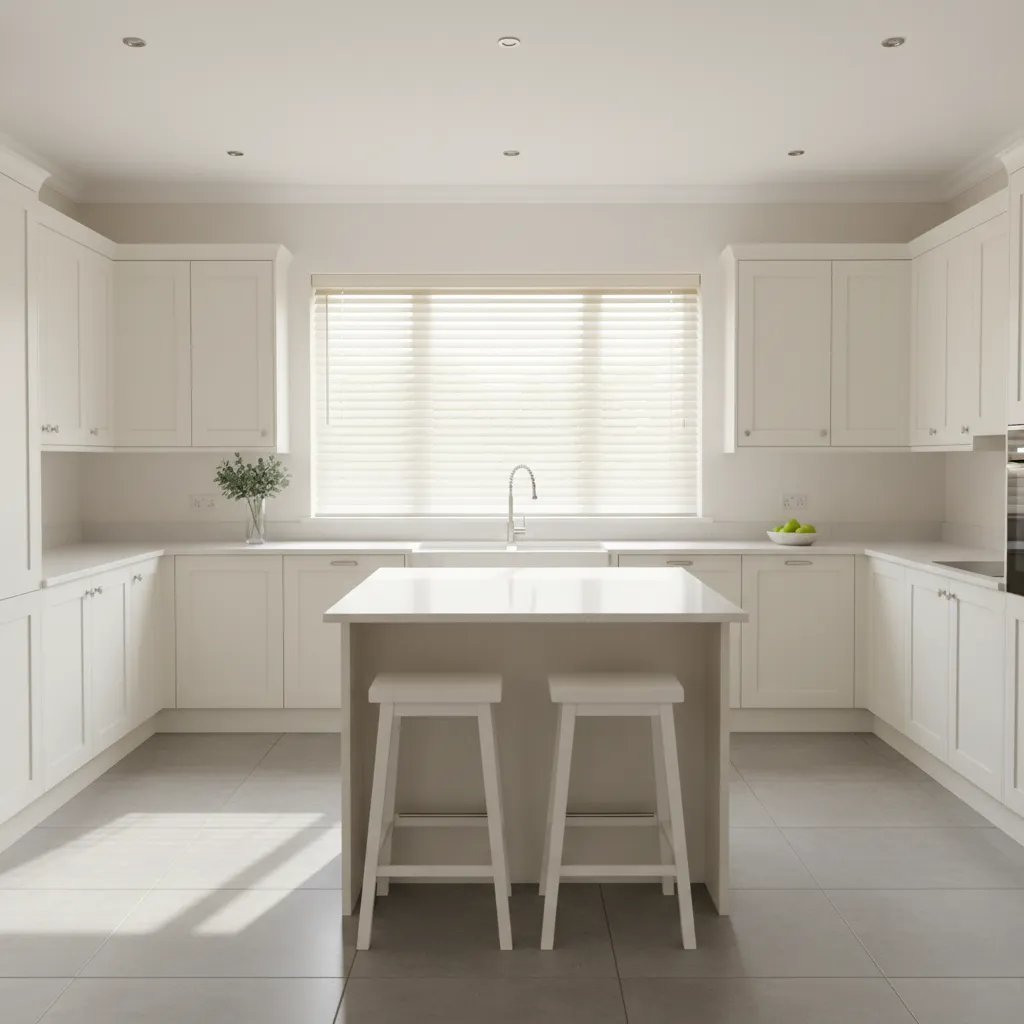
A bright kitchen with moisture-resistant faux wood blinds, easy to tilt for light and privacy while you cook.
In dining areas, many homeowners choose custom faux wood blinds or light‑filtering rollers that still let in a glow during dinner without shining straight in your eyes.
A quick room checklist
For each kitchen or dining window, ask:
- Do you want to keep the view or mostly close it off?
- Will steam or splashes hit this window regularly?
- Are people walking by outside at night?
Your answers usually point you straight to either easy‑clean blinds, view‑preserving shades, or a combination of both.
Bathrooms & laundry rooms: moisture and privacy
These are the windows that make people nervous: you need privacy even with the light on, and you don’t want warped slats or mildew a year from now.
Moisture‑resistant options that still look good
- PVC or vinyl faux wood blinds: Designed for humidity; they won’t swell like real wood.
- Aluminum blinds: Slim and discreet, often used in basement bathrooms or laundry rooms.
- Specialty roller fabrics: Certain coated fabrics stand up well to humidity and are easy to wipe.
We often recommend inside‑mount blinds in bathroom windows for a clean look, then frosting film or a sheer curtain if you’d like extra softness without sacrificing privacy.
Our in‑home consultants can bring samples and show which materials hold up best in local bathrooms and laundry rooms.
Home offices & media rooms: glare control and focus
With more people working from home, offices are often either cave‑dark or way too bright.
Screen‑friendly window covering types
- Solar roller shades (screen fabrics): Reduce glare and UV while keeping some view. Openness factors (1%, 3%, 5%) control how much you see through.
- Dual or day‑night shades: One sheer layer for daytime work, one blackout layer for video calls and media.
- Horizontal blinds: Let you tilt just enough to take the sun off your monitor without darkening the whole room.
For media rooms, we often pair blackout blinds with thick drapery. That way you can fine‑tune light for everyday use and still enjoy a movie‑theatre feel when you want it.
Patio doors & large windows in Vancouver & Surrey homes
Sliding doors to decks and balconies, big living‑room windows, and corner glass in high‑rises all put special demands on your window coverings.
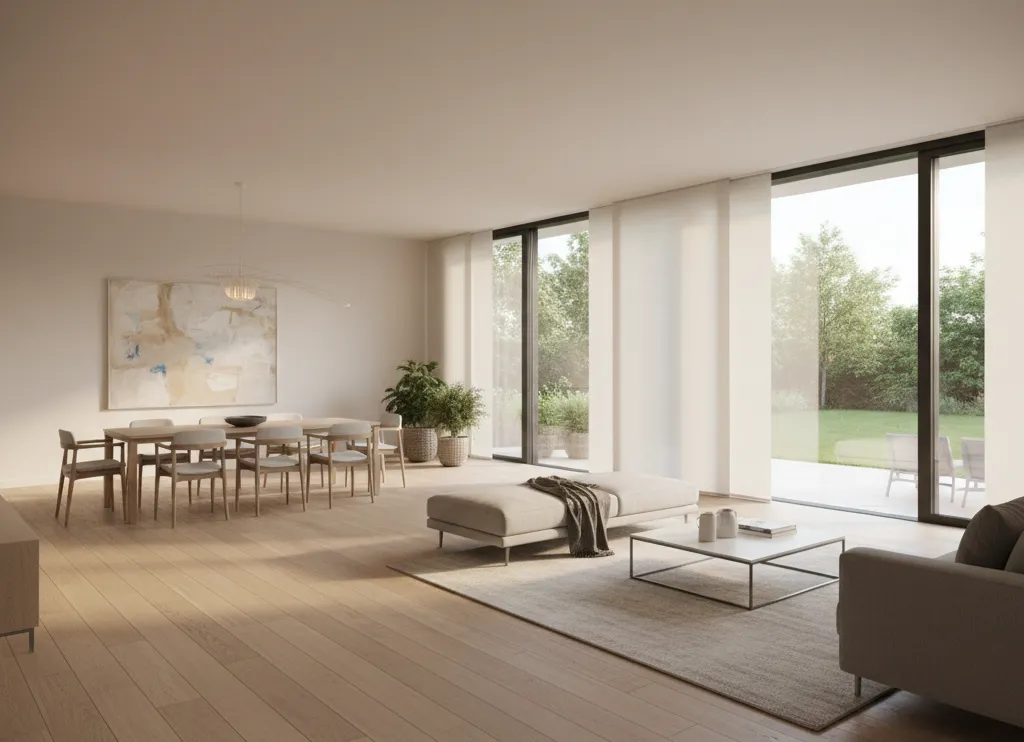
Large sliding patio doors fitted with vertical blinds, a practical solution for wide openings and everyday access.
What works best on wide openings
- Vertical blinds: A practical classic for sliding doors; slats draw completely off to one side when you want full access.
- Panel track systems: Large fabric panels that slide; a more contemporary alternative to traditional verticals.
- Linked roller shades: Multiple roller shades on one wide window, connected so they move together or separately.
Many Lower Mainland homeowners choose one fabric for every main living‑area window so everything looks consistent from the street, even if different mechanisms (verticals, rollers, panels) are used.
If you’re planning a bigger refresh, you can book a free in‑home quote and we’ll measure the whole floor at once, then design a package that feels cohesive.
How Ray Blinds helps Vancouver & Surrey homeowners choose
Picking from all the types of window shades on a website can feel abstract; seeing samples in your actual living room at 4 p.m. makes it clear what will and won’t work.
The Ray Blinds room‑by‑room approach
Here’s how our team typically helps local homeowners choose:
- Free in‑home consultation: Walk through each room and note privacy, light, and temperature needs.
- Show samples: Hold fabrics and slats in the window so you see them with your paint colours and daylight.
- Precise measuring: Measure every window so blinds and shades fit properly.
- Local manufacturing: Make many popular blinds in‑house or with trusted partners to control fit, timing, and fabrics.
- Professional installation: Secure brackets, level blinds, and test operation before we leave.
A handy decision framework
When we’re in your home, we ask the same three questions for every window:
- Privacy: Who can see in, and when?
- Light: Do you need blackout, soft light, or a view?
- Practicality: Kids, pets, moisture, and cleaning.
Once those are clear, choosing between the different types of window shades and blinds becomes straightforward.
|
Room |
Typical Goal |
Recommended Options |
|
Living / Family |
Glare control, daytime privacy |
Light‑filtering rollers, zebra shades, smart controls |
|
Bedrooms / Nursery |
Blackout, sound & temperature comfort |
Blackout rollers with channels, honeycomb shades, drapery layers |
|
Kitchen / Dining |
Easy cleaning, balanced light |
Faux wood or aluminum blinds, screen rollers |
|
Bath / Laundry |
Privacy, moisture resistance |
PVC faux wood blinds, aluminum blinds, specialty rollers |
|
Office / Media |
Screen comfort, less glare |
Solar rollers, dual shades, horizontal blinds |
Mini case study: Surrey townhouse with afternoon glare
In a typical Surrey townhouse with a west‑facing living room that overheated and had TV glare every evening, we installed solar roller shades to cut daytime glare and UV plus blackout drapery for movie nights — the room now stays cooler with far fewer reflections.
Ready to see what this looks like in your home? Our Surrey‑based team offers free, no‑pressure consultations across the Lower Mainland.
Key takeaway: once you match each room’s privacy, light, and practicality needs to the right kinds of blinds for windows and shades, the whole house feels more comfortable, more finished, and easier to live in day after day.
Frequently asked questions about window coverings in Vancouver & Surrey
What are the main types of window coverings?
The main types of window coverings are shades (roller, zebra, honeycomb, Roman), blinds (horizontal and vertical), interior shutters, and drapery panels.
Do I need blackout blinds in every bedroom?
You don’t need blackout blinds on every window, but they make a big difference in east‑ and west‑facing bedrooms, nurseries, and any space used for daytime sleep. In shadier or secondary rooms, light‑filtering shades with lined drapery usually give enough darkness.
Are motorized blinds worth it for tall or hard-to-reach windows?
Motorized blinds are especially helpful on tall or hard‑to‑reach windows, over staircases, or behind furniture where cords are awkward or unsafe. Automation lets you open and close shades every day without wrestling with cords.
How do I choose window coverings for a Vancouver or Surrey condo?
For Vancouver and Surrey condos, start by confirming any strata rules about what colour backings can face the street. Inside the suite, slim‑profile options like roller or zebra shades usually clear balcony doors, control glare on screens, and create a consistent look across multiple windows.