

Roller blinds quietly collect dust, splatters, condensation, and everyday marks from cooking, pets, and kids.
The good news is that learning how to clean roller blinds is straightforward. With the right method for your material – vinyl or fabric – you can remove dust and stains without damaging the fabric or warping the roller.
In this guide, we’ll cover quick weekly upkeep, gentle deep‑cleaning for vinyl and PVC, and step‑by‑step instructions for how to clean fabric roller blinds that are stained or starting to smell musty, plus what not to use so you don’t void any warranties.
Regular light cleaning helps roller blinds stay fresh and prevents heavy build‑up.
TL;DR: The fastest way to refresh roller blinds
- Weekly: Lower blinds fully and dust with a vacuum brush or microfiber cloth from top to bottom.
- Vinyl roller blinds: Wipe with a lightly soapy cloth, then rinse with clean water and dry thoroughly.
- Fabric roller blinds: Vacuum first, then gently blot stains with a mild soap solution. No soaking or scrubbing.
- Mould or heavy staining: Treat small spots gently; blinds with widespread black mould or flaking backing generally need replacing.
Why keeping roller blinds clean matters
Roller blinds trap dust, pollen, kitchen grease, and bathroom humidity, and if they’re never cleaned, they can discolour, smell stale, or develop small mould spots along the edges.
Light regular cleaning keeps fabrics brighter, helps rollers move smoothly, and extends the life of your blinds so you’re not replacing custom roller blinds as often.
Key takeaway: A few minutes of upkeep each month beats scrubbing years of built‑up grime.
Before you start: material checks and cleaning kit
Spend a minute checking what your blind is made of and getting a few basic tools ready.
- Identify vinyl vs fabric: Look for a small care tag on the back or bottom hem. Vinyl or PVC blinds feel smooth and slightly glossy (common in kitchens and bathrooms); fabric blinds feel softer or textured and may have a backing on the window side. If your blinds came with a care card from brands like Norman or Elite, follow that guidance first.
- Build a simple cleaning kit: A vacuum with a soft brush attachment, one or two microfiber cloths, a small bucket or bowl, mild dish soap (no bleach), warm water, and, optionally, white vinegar for light odours on vinyl, plus a soft sponge or lint roller for fabric.
- Avoid harsh products and tools: Skip scouring pads or stiff brushes, strong solvents or oven‑type cleaners, soaking fabric blinds in a tub, or high‑pressure sprayers that can force water into the roller tube or damage adhesives.
Think “gentle, damp, and supported” rather than “soaked and scrubbed” to keep both vinyl and fabric roller blinds in good shape.
Quick weekly routine: dusting without taking blinds down
This quick routine stops dust and grime from building up, and you can do it with the blinds left in place.
Step‑by‑step: clean roller blinds without taking them down
- Lower the blind fully. Straighten ripples so the fabric or vinyl lies flat.
- Use a vacuum with a brush head. Starting at the top, gently run the brush down the blind in vertical strokes. Work across the width, then move to the back side if you can reach it.
- Pay attention to edges and the bottom bar. Dust and pet hair tend to settle there.
- For pet hair or lint on fabric blinds, run a lint roller or a slightly damp microfiber cloth over the surface.
Tip: Work from top to bottom so any falling dust lands on areas you haven’t cleaned yet. Finish by wiping the windowsill.
Doing this weekly – or even every other week – makes deep cleaning much faster, especially on light‑coloured zebra blinds and roller shades that show dust easily.
How to deep clean vinyl roller blinds
Vinyl or PVC roller blinds tolerate moisture well, so a thorough wipe‑down (not a full soak) is ideal for kitchens and bathrooms.
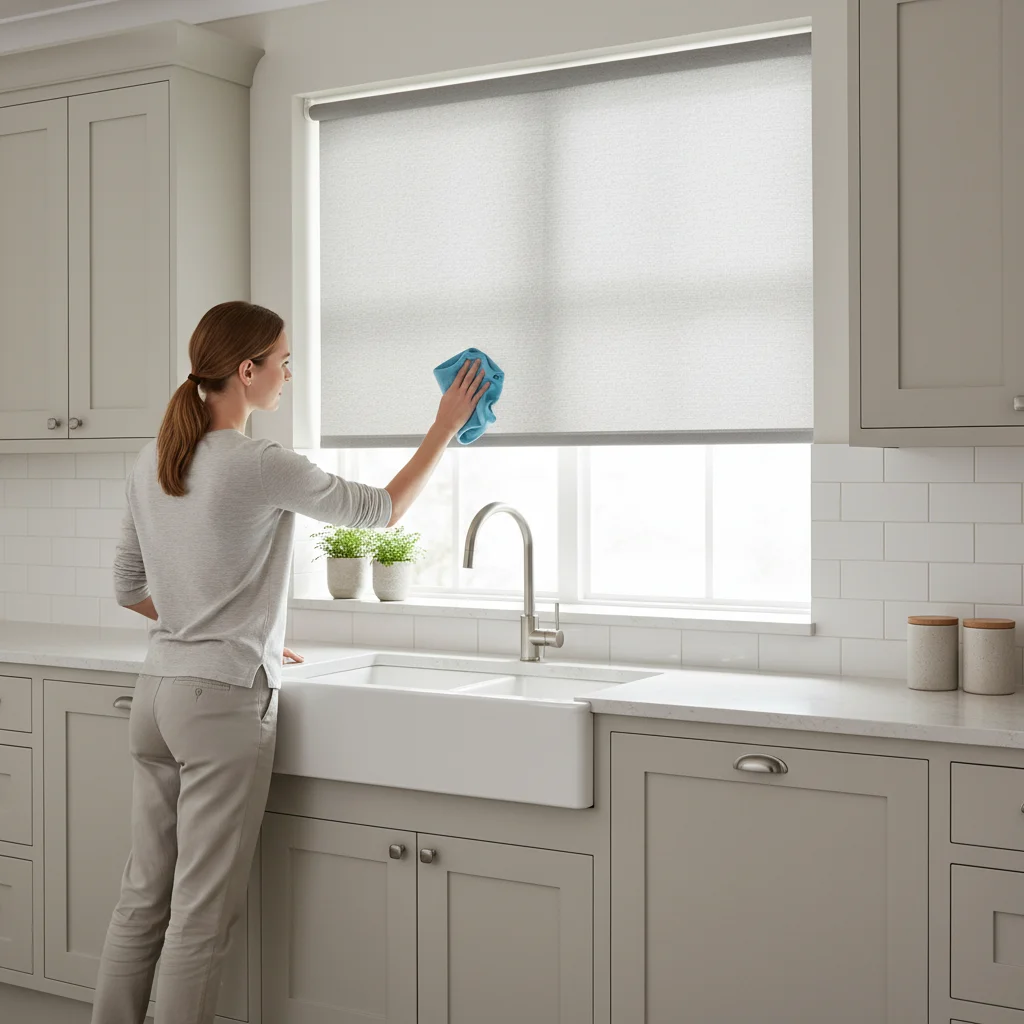
For vinyl roller blinds, a damp microfiber cloth and mild soap are usually all you need.
Method 1: Wipe vinyl roller blinds while they hang
- Dust first. Use the quick routine above so you’re not rubbing grit into the surface.
- Mix a mild solution. In a bucket, combine a few drops of dish soap with warm water.
- Dip and wring a microfiber cloth. The cloth should be damp, not dripping.
- Wipe in sections. Working from top to bottom, wipe the front of the blind in smooth strokes, rinsing and wringing your cloth often. Repeat on the back if reachable.
- Rinse with clean water. Use a second cloth dipped in plain water and wrung out well to remove soap residue.
- Dry thoroughly. Pat with a dry towel, then leave the blind fully lowered until it air dries.
Method 2: Take vinyl blinds down for heavy grease
For blinds near stoves or over kitchen sinks, grease can cling even after wiping. In those cases:
- Remove the blind from the brackets according to the hardware style.
- Lay it flat on a clean sheet or towels on the floor.
- Use the same soapy solution and wipe both sides, staying clear of the roller tube and pin ends as much as possible.
- Rinse with a well‑wrung cloth. Avoid running water directly into the tube.
- Let it dry completely before re‑installing, then roll it up and down a few times to be sure everything moves smoothly.
If allergies or asthma are a concern, pair this routine with indoor air advice from groups like the American Lung Association and Asthma Canada’s indoor air quality tips on managing dust and other triggers indoors.
How to clean fabric roller blinds without damage
Fabric roller blinds look soft and elegant but need a lighter hand. Many styles use adhesives or special backings, so soaking can lead to ripples, bubbling, or separation.

When cleaning fabric roller blinds, work gently and focus on small areas rather than soaking the fabric.
Light surface cleaning for fabric blinds
- Lower the blind fully.
- Vacuum with a soft brush. Work gently from top to bottom, front and back, supporting the fabric with your free hand.
- Use a lint roller to pick up any remaining hair or fibres.
Spot‑cleaning stains on fabric roller blinds
- Test in an inconspicuous spot. Mix a small amount of mild dish soap with warm water. Dab a hidden corner and let it dry to check for colour changes.
- Support the fabric. Slip a clean white towel or cloth behind the stained area so moisture doesn’t reach the backing or wall.
- Dab, don’t scrub. Dip a microfiber cloth into the soap solution, wring it out well, and gently blot the stain from the outside edges toward the centre.
- Rinse the area. Use a second cloth dampened with plain water and blot again to remove any soap.
- Dry in place. Leave the blind fully lowered with a towel still behind the cleaned area until everything is dry.
Tip: For oil‑based splatters on fabric (like salad dressing), place paper towel on both sides of the fabric first and press lightly to lift as much oil as possible before you start blotting with soap.
Stubborn stains, smells, and mould
Sometimes blinds pick up more than everyday dust – nicotine stains, cooking smoke, or a patch of mould in a damp bathroom.
Dealing with odours
- Vinyl blinds: After a standard wash, wipe problem spots with a cloth dipped in a mix of one part white vinegar to three parts water, then follow with a plain‑water rinse and thorough drying.
- Fabric blinds: Focus on good ventilation and regular vacuuming. Light odours often improve once dust is removed and the room has a chance to air out.
Handling mould and mildew safely
- Small, faint spots on vinyl: Clean with mild soap, then use a diluted vinegar solution and dry completely.
- Fabric with scattered specks: Vacuum with a HEPA‑style attachment first to remove loose spores, then blot gently with a mild soap solution. Open windows while you work.
- Widespread black mould, flaking, or musty smell that returns quickly: At that stage, cleaning rarely gives a healthy, long‑term result, and replacement is usually the better option.
For broader guidance on mould and indoor air quality, see advice from the U.S. Environmental Protection Agency or Health Canada’s mould guidance, and speak with a professional if the problem extends beyond window coverings.
How often should you clean roller blinds?
There’s no single schedule for every home, but these ranges work well for most households in Surrey, Vancouver, and the Lower Mainland:
Room type | Suggested frequency | Best method |
Living room/bedroom | Dust every 2–4 weeks; deep clean 1–2 times per year | Regular vacuum or dusting plus a gentle wipe for vinyl or fabric roller blinds as needed |
Kitchen | Dust every 1–2 weeks; wipe monthly | Quick dusting and a damp cloth to clean vinyl roller blinds near cooking areas |
Bathroom | Dust every 2 weeks; deep clean every few months | Vacuum first, then wipe vinyl roller blinds and check for early mould spots |
Kids’ rooms/pet areas | Use the more frequent end of each range | Regular vacuuming and spot cleaning to keep dust, hair, and other allergens down |
Building blind cleaning into the same routine as washing windows or wiping baseboards keeps everything in good shape without a marathon cleaning day.
When it’s time to replace roller blinds instead of cleaning them
Even the best cleaning routine can’t rescue blinds that have simply done their time. Signs your roller blinds are ready for retirement include:
When blinds are discoloured, damaged, or no longer roll smoothly, replacement is usually the best option.
- Fabric that has yellowed or discoloured unevenly
- Backings that are cracking, peeling, or bubbling
- Rollers that don’t stay up, slip, or grind when you pull them
- Deep mould staining or a strong musty smell that returns soon after cleaning
If that sounds familiar, new custom roller blinds can freshen the whole room and give you better light control at the same time. Our local team handles measuring and installation across Surrey, Vancouver, and nearby cities so your new roller shades fit neatly and work smoothly from day one.
For rooms that need extra darkness or insulation, you can also look at blackout blinds, insulating honeycomb blinds, or convenient automated blinds.
Key takeaway: Clean, functioning blinds support comfort, privacy, and style. When cleaning stops making a difference, replacement is a smart home upgrade rather than “one more chore.”
FAQs about cleaning roller blinds
Do I need to take roller blinds down to clean them?
Not for regular upkeep; weekly or monthly dusting works well with blinds left in place. Taking blinds down makes sense only for heavy grease or grime you can’t reach comfortably while they hang.
Can you put roller blinds in the washing machine?
In most cases, no. The roller tube, side mechanisms, and any glued backing aren’t designed for soaking or agitation, and a washing machine cycle can twist the fabric or damage the spring. Only use a washing machine if the manufacturer label clearly states the fabric is machine‑washable.
Can you steam clean roller blinds?
Steam introduces high heat and moisture, which can distort vinyl and weaken adhesives in blackout fabrics. Hand cleaning with a mild soap solution, plus vacuuming and spot cleaning, is usually more than enough.
What is the best cleaner for roller blinds?
A small amount of mild dish soap in warm water covers most situations for both vinyl and fabric. For light mould and odours on vinyl, a diluted white vinegar solution can help, but strong chemicals, bleach, or solvent‑based products raise the risk of discolouration and damage.
Will cleaning void my blind’s warranty?
That depends on the brand and how aggressive the method is. Light vacuuming and gentle wiping are usually fine, but soaking blinds, using harsh products, or dismantling internal parts can lead to warranty issues, so when in doubt, check the care leaflet or ask the supplier who installed your blinds.
Bringing it all together
With a simple routine – regular dusting, the right cleaning method for vinyl or fabric, and a gentle approach to stains – roller blinds stay looking sharp for years.
If you’re renovating, refreshing a single room, or replacing blinds that have reached the end of their life, the team at Ray Blinds can help with made‑to‑measure options and friendly, in‑home advice. Ready to upgrade? Start with our guide on how to measure for blinds so your new roller blinds fit perfectly.