


A bright living room showing how blinds and curtains can be layered for style and control.
If you’re redoing a room, the question of blinds vs curtains comes up fast. Both can look great, both affect your energy bills and cleaning routine, and both feel very different to live with day to day.
We spend a lot of time in Surrey and Greater Vancouver homes helping people untangle this decision. The right choice often depends less on “style” and more on how you use each room, how much privacy you need, and how much time you want to spend dusting or washing fabric.
TL;DR: quick answer for busy homeowners
- Cost: Ready-made curtains win on low upfront price. Custom blinds or shades usually win on long-term value, especially in condos and modern homes.
- Durability: Quality blinds (roller, zebra, honeycomb) typically outlast most curtain panels and hold up better to kids, pets, and daily use.
- Cleaning: Blinds are quicker to wipe; curtains need proper washing or dry cleaning but hide dust a bit better between cleans.
- Best combo: In living rooms and bedrooms, many Lower Mainland clients choose blinds or zebra shades for light control, then add curtains for softness.
Key factors when choosing curtains versus blinds
Before we compare numbers, it helps to get clear on what matters most to you. For most homeowners we visit, the decision comes down to a mix of:
- Privacy and light control – street-facing rooms and condos often need more control across the day.
- Cleaning habits – if you’re not going to wash curtains regularly, that changes the picture.
- Kids, pets, and wear – paws and curious hands are harder on some fabrics than on a sturdy roller system.
- Moisture and cooking – in steamy bathrooms and busy kitchens, fabric behaves very differently from PVC or faux-wood blinds.
- Budget and resale – will this be a “for now” solution or something you’d like to live with for a decade?
Keep these in mind as you compare, because the “winner” in blinds vs curtains for your living room might be different from what works best in your laundry room.
Cost comparison: blinds vs curtains in real homes
Let’s answer the big question: which is cheaper, blinds or curtains?

Comparing the total cost of blinds vs curtains means looking beyond just the price of a single panel.
Upfront costs
If you’re buying ready-made panels from a big-box store, curtains often look like the lowest-cost option. But once you factor in proper rods, brackets, and enough fabric to cover wide windows (especially in new-build Surrey homes), the total can surprise you.
With custom roller blinds or zebra shades, you pay more per window than a single budget curtain panel, but you’re getting a made-to-measure fit, hardware included, and a cleaner finish that usually stays in place for many years.
Long-term value
|
Feature |
Blinds / Shades |
Curtains / Drapes |
|
Typical lifespan |
8–15+ years with good hardware |
5–10 years before sagging, fading, or style changes |
|
Energy performance |
Strong with honeycomb / cellular shades |
Good with lined or thermal curtains |
|
Resale appeal |
Feels “built in” and finished |
More personal taste–dependent |
|
Replacement pattern |
Usually only when broken or style changes |
Often replaced during each repaint or decor update |
For homeowners planning to stay put, we usually see blinds or shades work out as the better investment, especially when they replace older, leaky coverings and help keep heating and cooling loads down. For very short-term rentals or student housing, simple curtains can make sense as a quick, low-commitment fix. You can also try pinch pleat curtains since they’re trending in the market too.
For more on how window coverings affect energy use, the U.S. Department of Energy has a helpful overview on energy-efficient window coverings.
Canadian homeowners can also review Natural Resources Canada’s guidance on upgrading windows and exterior doors for better efficiency when considering new window coverings alongside other improvements.
Durability: how blinds and curtains hold up over time
Durability is where blinds often pull ahead in the curtains vs blinds debate, especially in busy family homes.
How long do blinds last?
Quality roller, zebra, or honeycomb systems are built to be opened and closed multiple times a day without stretching or sagging. In the homes we’ve serviced over the years, the first thing to go is rarely the fabric itself; it’s usually an older, low-grade mechanism.
That’s why we spend time choosing reliable components and offer options like motorized blinds where cords tend to fray or tangle. In high-use rooms (kitchens, patio doors, kids’ bedrooms), this can be the difference between replacing a full set in five years or still loving them a decade later.
How long do curtains last?
Curtains can last a long time if they’re lined, kept out of direct UV, and cared for gently. In practice, though, many fabric panels start to fade, stretch, or pick up odours from cooking or smoking, especially in smaller condos where rooms do double duty.
For high-moisture, high-traffic rooms, hardwearing blinds are usually easier to live with than floor-length curtains.
Cleaning and maintenance: blinds vs curtains
Cleaning is where people either fall in love with a product or quietly regret it every time they vacuum.

Blinds are often easier to keep clean with a quick wipe than full-length fabric curtains.
Cleaning blinds and shades
- Routine: Quick dust with a microfibre cloth, Swiffer, or small vacuum brush.
- Deeper clean: Spot-clean roller and zebra shades with a damp cloth; many fabrics are made for this.
- Allergies: Less fabric surface than curtains, so less fibre to hold dust and pet hair.
For busy households, this “little and often” approach fits better than stripping a window of fabric panels every few months.
Cleaning curtains and drapes
- Routine: Vacuum with a brush attachment; shake dust off when open.
- Deeper clean: Many need dry cleaning, especially lined or blackout drapes.
- Odours: Fabric can hold cooking smells or smoke longer than a blind will.
Allergies, dust, and pets
If someone in your home struggles with dust allergies or asthma, less fabric is often your friend. The Lung Health Foundation and similar organizations often suggest minimizing heavy, dust-prone textiles in bedrooms. In those spaces, smooth, easy-wipe blinds paired with a lighter decorative curtain can be a smart compromise.
Health Canada’s advice on dust and dust mites also emphasizes reducing dust-collecting surfaces and keeping fabrics clean to help lower exposure to common indoor allergens.
Room-by-room guide: blinds vs curtains for every space
Living room & dining room
These are the “show” rooms in many homes, especially front-facing living rooms and condo great rooms with big windows. Here’s what usually works well:
- Best for control: Layered zebra shades or roller blinds for daytime privacy and evening blackout.
- For softness: Add curtains overtop to frame the window and hide hardware.
- Street-facing: Consider light-filtering blinds that soften views from outside without making the room feel closed in.
Bedrooms & nurseries
Sleep and privacy drive the blinds vs curtains decision here.
- Best light blocking: Blackout roller or honeycomb blinds fitted tightly inside the frame.
- Noise and cosiness: Add lined curtains over top if you like a hotel look and a bit more sound absorption.
- Kids’ rooms: Fewer dangling cords and fabrics mean fewer temptations for little hands and paws.
Kitchens
Between steam, food splatters, and limited wall space, full-length curtains rarely make sense in kitchens.
- Best pick: Moisture-resistant roller or faux-wood blinds that can be wiped down quickly.
- Over sinks: Inside-mount blinds that stay out of the way of taps and dishes.
- Avoid: Long curtains near stoves or countertops where they can catch grease.
Bathrooms & laundry rooms
For damp rooms, this is one area where blinds nearly always beat curtains.
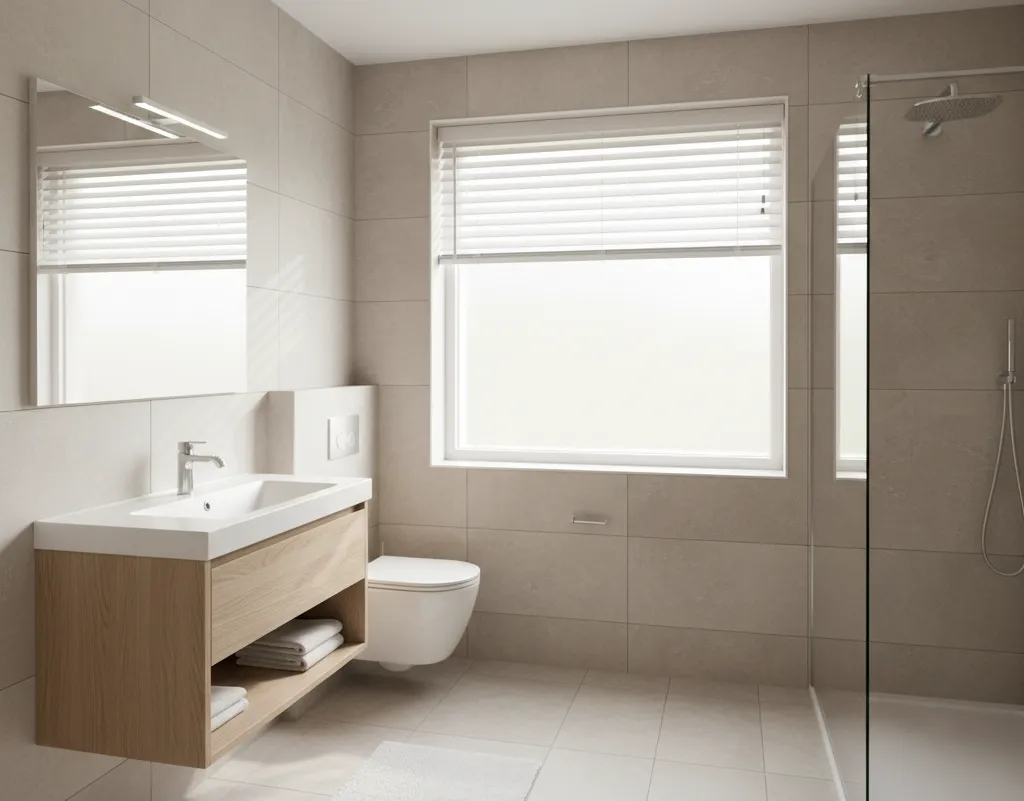
Moisture-resistant blinds in bathrooms and laundry rooms handle steam better than most curtains.
- Best pick: PVC, faux-wood, or aluminium blinds that won’t hold moisture.
- Privacy: Top-down/bottom-up shades or simple rollers with a good inside fit.
- More details: We cover moisture-friendly options in more depth in our guide to curtains vs blinds in bathrooms.
Home offices & media rooms
Glare on screens is the main issue here.
- Best pick: Light-filtering roller blinds that cut glare but keep the room bright enough to work.
- For total darkness: Blackout blinds plus side channels, sometimes paired with curtains if you want a softer look.
- Smart control: Motorized blinds work well when screens or desks block easy access to cords.
Style, light control, and comfort
Blinds give you very fine control over light. You can tilt slats, raise shades part-way, or automate them to move with the sun. Curtains, by contrast, are more all-or-nothing—you either pull them open or shut.
Where curtains shine is in texture. They soften echoes in hard-surface rooms, frame views, and bring in colour or pattern. In many Surrey homes, the best “style vs function” balance ends up being blinds for the real work (privacy, UV control, energy) with curtains added for personality.
For inspiration, you can see examples of layered looks in our project gallery.
When to mix blinds and curtains together
If you’re stuck on curtains v blinds, you might not need to choose just one. Some of our favourite, most liveable rooms use both:
- Inside-mount blinds (roller, zebra, or honeycomb) for everyday use.
- Decorative side panels that stay mostly open but make the room feel finished.
- Blackout combo in bedrooms: tight blackout blinds plus heavy curtains for hotel-level darkness.
This mix lets you pick materials based on practicality for each layer, instead of forcing one product to do everything.
FAQs: curtains v blinds questions we hear most
Are blinds or curtains better for insulation?
Both can help. Well-fitted honeycomb blinds create pockets of still air at the window, which is excellent in drafty older homes. Thick, lined curtains can also help, but only if they’re wide and long enough to seal the edges and you actually close them at night.
Which gives more privacy: curtains versus blinds?
For street-facing rooms or condos with neighbours nearby, blinds usually win. You can fine-tune angles and height in a way curtains just can’t match. Sheer curtains can soften views, but most people end up needing a blind or shade behind them for true privacy.
What’s better for allergies, blinds vs curtains?
Many allergy sufferers prefer blinds because there’s less fabric to trap dust, and surfaces are easier to wipe. If you love curtains, choose washable fabrics and plan for regular laundering.
We’re in a strata condo. Does that change the choice?
Often yes. Many strata councils in Surrey and Metro Vancouver ask for a consistent exterior look, which favours neutral roller or zebra blinds. You can still add curtains inside the unit without affecting the building’s appearance.
Need help choosing? How Ray Blinds can help
There’s no single winner in the blinds vs curtains debate—only what fits your rooms, lifestyle, and budget. What we do every day is walk through those decisions with you, room by room.
Our team brings samples of zebra, roller, and honeycomb blinds to your home anywhere in Surrey or the Greater Vancouver area, measures each window properly, and talks through where curtains might still make sense as a second layer.
Get a Free Quote and we’ll help you decide, without any pressure, which rooms call for blinds, which suit curtains, and where a mix of both will give you the best of each.