

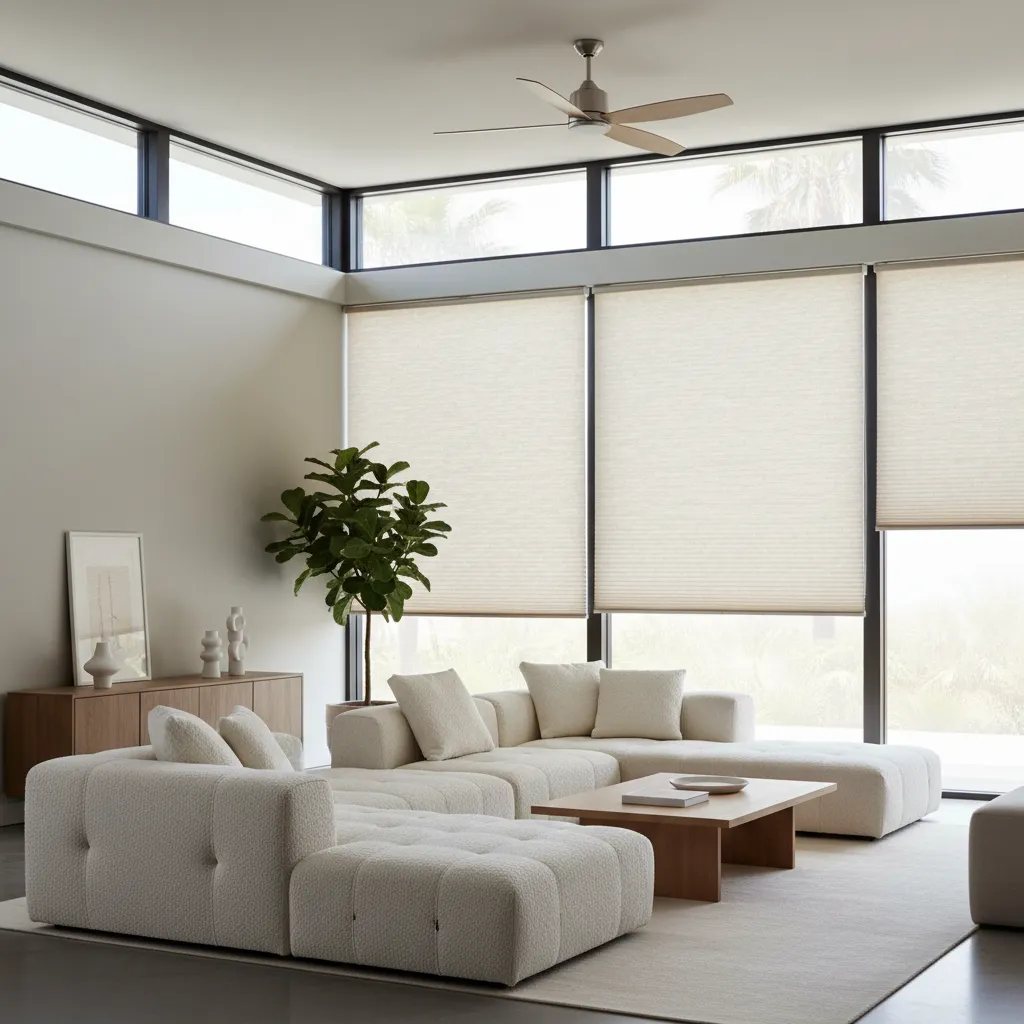
A snug fit and light-coloured fabrics help your blinds keep summer heat out while your rooms stay bright and comfortable.
TL;DR
- Most summer heat sneaks in through your windows, not your walls.
- Cellular (honeycomb) shades and well-fitted blackout roller shades are usually the most effective at blocking heat.
- Light-coloured, reflective fabrics, side channels, and a snug fit all help stop hot air and sunlight.
- For west-facing or large windows, consider layered solutions: heat-blocking blinds plus curtains.
- Custom, professionally measured blinds do a better job sealing gaps, which keeps rooms cooler and cuts AC use.
When summer hits the Lower Mainland, the afternoon sun can turn a bright room into a sauna. Air conditioning helps, but if your windows are bare or covered with thin, leaky blinds, you end up paying to cool air that keeps heating back up.
If you’re searching for window coverings that actually keep your rooms cooler, you’re probably tired of hot bedrooms, glare on screens, and rising hydro bills. The good news: with the right fabrics, fit, and style, your window coverings can do a lot of heavy lifting before your AC ever kicks on.
“The right blinds can make a sun-baked room feel comfortable again, even on those 30°C afternoons.”
How blinds and shades keep summer heat out
On a sunny day, a big chunk of the heat in your home comes from solar gain: sunlight hits the glass, turns into heat, and gets trapped inside. Glass also conducts outdoor heat to the indoor side of the window frame.
According to guidance from the U.S. Department of Energy on energy-efficient window coverings, about 30% of a typical home’s heating energy is lost through windows, and in cooling seasons, roughly 76% of the sunlight that falls on standard double-pane glass turns into indoor heat. Thoughtful use of blinds and shades is one of the simplest ways to cut that solar gain before it overheats your rooms.
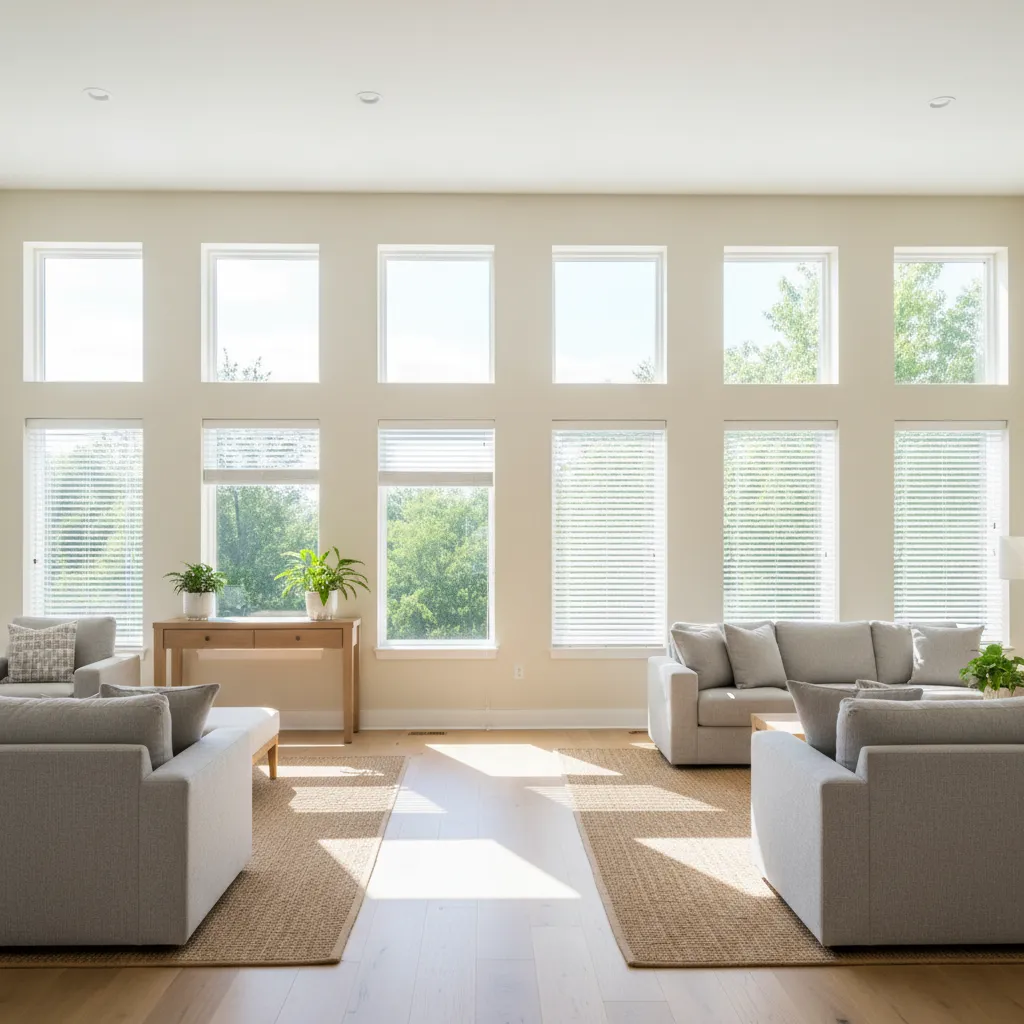
Closing blinds on sun-facing windows helps stop harsh summer sunlight before it turns into trapped indoor heat.
Good window coverings interrupt that process in a few ways:
- Reflecting sunlight before it can turn into heat.
- Adding insulation between the hot glass and your cooler room air.
- Sealing gaps around the edges where hot air can sneak in.
Independent testing compiled in the Window Attachments Energy Rating Council’s cellular-shade performance data also shows that insulated cellular shades with edge tracks can meaningfully raise a window’s R-value and reduce unwanted summer solar heat gain.
That’s why basic, thin vinyl blinds that hang loosely often feel disappointing in summer. They block glare but still let a lot of heat through. Upgrading to properly measured energy-efficient honeycomb blinds and shades gives you both light control and a real temperature difference.
How much can the right blinds really help?
Government efficiency data backs up what homeowners feel in real life. U.S. Department of Energy research shows that well-fitted insulated cellular shades can cut a large share of unwanted summer solar heat gain at the window, especially when they sit snugly in the frame instead of leaving gaps.
Here in B.C., local utility BC Hydro’s summer cooling tips for homes note that closing blinds and drapes on hot days can block up to about 65% of the heat that would otherwise enter through bare windows.
Natural Resources Canada’s guide to energy-efficient residential windows and doors adds that tight-fitting blinds, interior shutters, and insulated curtains installed close to the window opening help reduce unwanted heat gain in summer and heat loss on winter nights.
Key features of the best blinds to keep heat out
Rather than focusing only on style names, look for these practical features when you’re comparing the best window blinds to keep heat out:
To make it easy to remember, we use a simple “Block–Insulate–Seal” framework when we think about summer heat:
- Block – light colours, reflective or white backings, and dense fabrics that reflect sunlight before it turns into heat.
- Insulate – cellular (honeycomb) structures and layer blinds with curtains to trap air between your room and the hot glass.
- Seal – tight inside mounts, side channels, fascias, and minimal gaps so hot air can’t sneak around the edges.
The features below all support one or more parts of this Block–Insulate–Seal approach.
1. Insulating structure
Blinds and shades that trap air are naturally better at blocking heat. Cellular (honeycomb) shades are the classic example: each “cell” works like a tiny double-glazed pocket between your room and the hot glass.
2. Light colour and reflective backing
Light, neutral colours on the window side reflect more sunlight than dark colours. Many roller shades and solar shades include a reflective or white backing for this reason, even if the room side is darker or textured for style.
3. Tight fit and minimal gaps
Heat loves a gap. Inside-mount blinds that are measured to the millimetre and, where useful, paired with side channels or fascia at the top, will outperform loose, off-the-shelf blinds every time.
4. Fabric density and openness
For woven or screen fabrics, the “openness factor” (how much you can see through) matters. Lower openness means more heat and glare reduction. For bedrooms and TV rooms, many homeowners in Surrey pick blackout fabrics to block almost all incoming light and a lot of heat.
5. Safe, easy operation
Heat-blocking blinds only help if you actually use them. Cordless lift systems and motorized smart blinds make it simple to close shades during the hottest hours of the day, even when you’re not home.
The best blinds to keep heat out in summer (our top picks)
After more than a decade of in‑home consultations across Surrey and Greater Vancouver, these are the styles we see work best for keeping rooms cooler and cutting AC use.
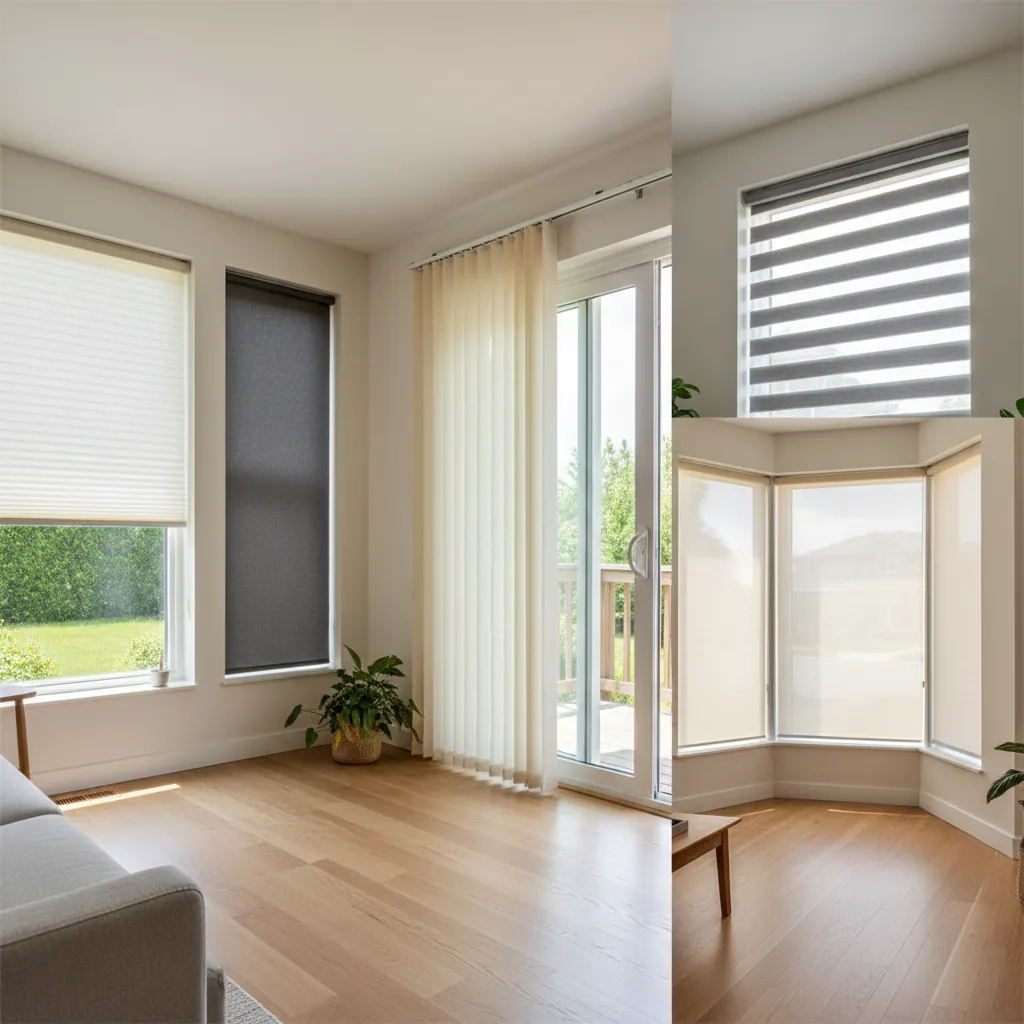
Different blind styles—from cellular and blackout roller shades to solar, zebra, and vertical panels—can all help reduce summer heat when chosen for the right window.
Type | Heat control | Light control | Privacy | Best for |
Cellular (honeycomb) shades | Excellent – double-cell, light-coloured fabrics are among the best blinds to keep heat out in summer. | From light-filtering to room-darkening. | High, even in daytime. | Bedrooms, nurseries, street-facing windows. |
Blackout roller shades | Excellent when tightly fitted with side channels or fascia. | Near-total blackout when closed. | High, especially at night. | Shift-worker bedrooms, media rooms, condos with floor-to-ceiling glass. |
Solar shades | Good radiant-heat and glare reduction, moderate insulation. | Moderate – keeps the view with filtered light. | Daytime privacy; limited at night. | Living rooms, dining rooms, spaces with views. |
Zebra blinds | Good when solid bands are aligned closed. | Highly adjustable between sheer and dim-out. | Good when bands are closed; moderate when open. | Main-floor living areas, kitchens, flexible day/night use. |
Vertical blinds & panels | Good for wide glass areas when fabrics are dense and light-coloured. | Adjustable – tilt or slide to control light. | Good when fully closed. | Patio doors, large sliders, balcony walkouts. |
1. Cellular (honeycomb) shades – top choice for insulation
If you want the best window shades to keep out heat, cellular shades are hard to beat. Their air pockets act like a quilt over your glass, softening both heat and sound. Double-cell fabrics and light colours boost performance even more.
They’re especially helpful for:
- South- and west-facing bedrooms that overheat in late afternoon.
- Street-facing windows where you need privacy and insulation together.
- Older homes with drafty frames or single-pane glass.
We commonly recommend honeycomb shades with cordless lift in kids’ rooms for both safety and comfort.
2. Blackout roller shades – sleek look, serious heat control
Blackout roller shades use dense fabrics that block almost all light. When measured tightly inside the frame and combined with fascia or side channels, they become some of the best blinds to keep heat out in minimalist, modern spaces.
They shine in:
- Condos with floor-to-ceiling glass where you still want a clean, simple look.
- Media rooms and home offices where glare is a problem.
- Shift-worker bedrooms that need both darkness and cooler air during the day.
3. Solar shades – control glare and UV while keeping the view
Solar shades use a technical fabric that cuts glare and UV rays while preserving your view outside. They don’t insulate as much as cellular or blackout fabrics, but they do stop a lot of radiant heat and protect floors and furniture from fading.
They’re a strong option for:
- Living rooms and dining rooms with nice views you don’t want to lose.
- West-facing glass where glare is a bigger annoyance than pure heat.
Many homeowners layer solar shades with side-drapery for extra insulation in the evening.
4. Zebra blinds – flexible day/night light and heat control
Zebra blinds (also called dual or transitional shades) use alternating sheer and solid bands. Slide the bands to open for filtered light, or close them for more privacy and heat reduction.
They’re a good match when you want the best window blinds to keep heat out and the ability to fine-tune light during the day without fully darkening the room. We install a lot of zebra blinds in main-floor living spaces and kitchens for this reason.
5. Vertical blinds and panels – for patio doors and large sliders
For wide patio doors and large sliding windows, well-fitted vertical blinds or panel track shades cover a large glass area with fewer gaps. Choose thicker, light-coloured fabrics and tight overlap at the centre to reduce heat gain.
They’re often the most practical way to keep heat out while still allowing smooth access to decks and balconies.
Blinds vs. other ways to block heat
Blinds and shades aren’t the only way to reduce summer heat, but they’re often the simplest upgrade in an existing home or condo.
- Window films reflect solar energy but are semi-permanent and may be restricted in some strata buildings.
- Awnings and exterior shading block heat before it hits the glass. U.S. Department of Energy guidance notes that well-designed awnings on south- and west-facing windows can significantly cut summer solar gain.
- Thermal curtains and drapes add insulation, especially at night, and work well layered over high-performing blinds.
For many Surrey and Vancouver homeowners, the sweet spot is a snug‑fitting blind or shade, sometimes paired with simple curtains on the hottest windows. Natural Resources Canada’s low-cost home energy tips highlight blinds and drapes as an easy first step before bigger window or HVAC upgrades.
Which heat-blocking blinds are best for each room?
If you’re wondering, “What are the best blinds to keep heat out in my bedroom or living room?” here’s a quick room-by-room guide.
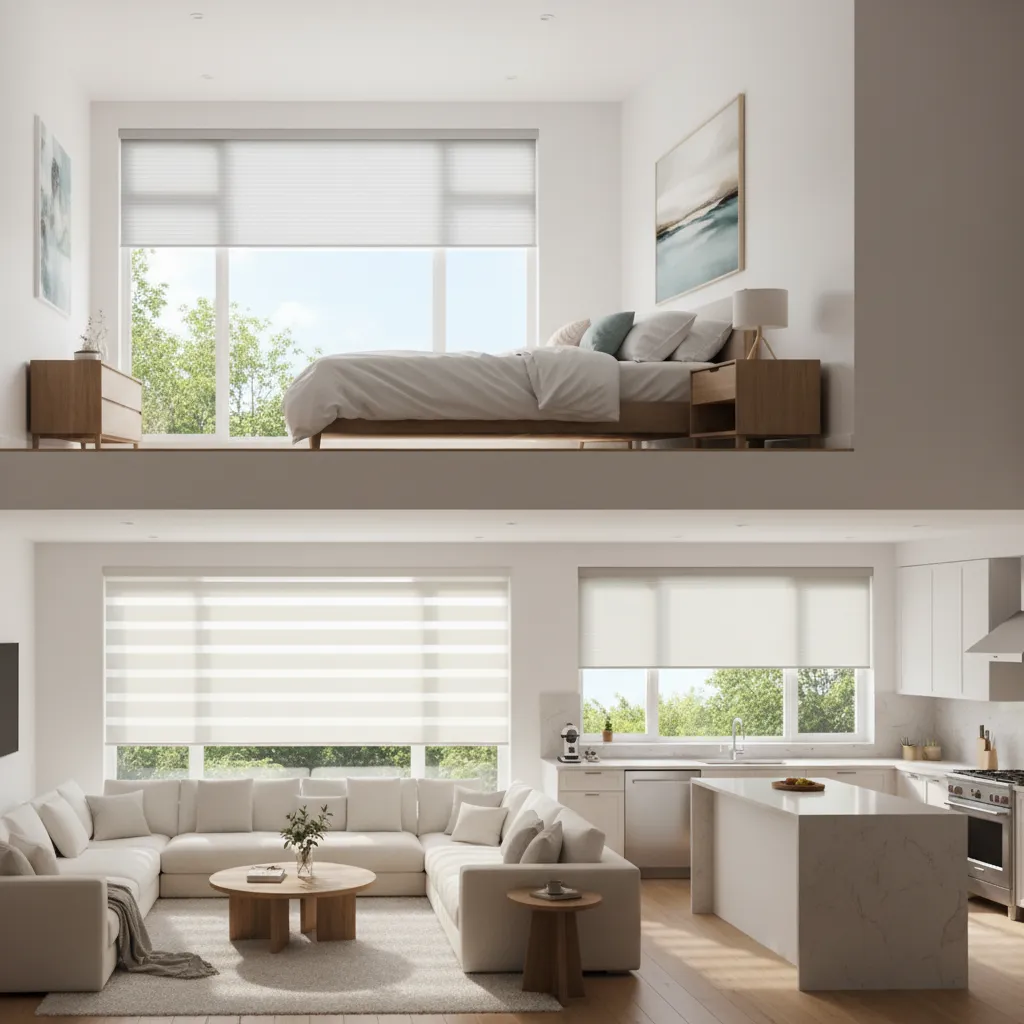
Match your blinds to each room: insulating cellular shades for bedrooms, solar or zebra blinds for living spaces, and moisture-resistant rollers for kitchens.
For example, consider a west-facing Surrey townhouse bedroom with thin vinyl blinds. Swapping in double-cell honeycomb shades and adding a simple blackout curtain can turn that space into a much cooler, darker sleep zone without changing the AC settings. The same idea applies throughout your home: match the shade type to how each room is used.
Bedrooms and nurseries
- Best choice: Double-cell honeycomb shades or blackout roller shades.
- Why: Strong insulation plus darkness for better sleep.
Living rooms and open-plan spaces
- Best choice: Solar shades or zebra blinds with light-coloured fabrics.
- Why: Cut glare while keeping views and a bright, open feel.
Kitchens, bathrooms, and high-humidity areas
- Best choice: Moisture-resistant roller shades or faux-wood blinds with tight slats.
- Why: Easy to clean, handle humidity, and help with summer heat and glare.
How to choose the right heat-blocking window coverings
Here’s a simple checklist that mirrors how we think through options in an in‑home consultation to help homeowners pick the best window shades to keep out heat without overcomplicating things:
- Note which rooms overheat first. West- and south-facing rooms usually need the strongest solutions.
- Decide how dark you’re comfortable with. Full blackout isn’t for everyone, especially in living spaces.
- Think about privacy day and night. Do you want filtered light by day but full privacy at night? Zebra or layered options may suit you.
- Choose safe, simple controls. Cordless or motorized blinds are great for homes with kids and pets.
- Measure properly. A professional measure from a local company like Ray Blinds ensures a snug fit that actually blocks heat instead of letting it slip around the sides.
Get custom heat-blocking blinds in Surrey & Vancouver
Every home is different. Condo glass in downtown Vancouver behaves differently than a shaded single-family home in Cloverdale, even on the same hot day. That’s why our team at Ray Blinds designs, manufactures, and installs custom blinds in Surrey and across the Lower Mainland instead of relying on one-size-fits-all solutions.
When we visit your home, we look at:
- Which direction each window faces and what’s outside (trees, neighbouring buildings, open sky).
- Your current cooling setup and comfort issues (too hot to sleep, glare on the TV, fading floors, and so on).
- Style preferences, budget, and how much you want to automate things with smart blinds.
From there, we suggest a small set of options—usually a couple of cellular or roller fabrics plus, in some rooms, zebra or solar shades—that will keep heat out while still looking finished and clean.
Ready for cooler rooms and lower cooling bills?
Request a free in-home quote for custom heat-blocking blinds and shades in Surrey, Vancouver, and the Lower Mainland.
You can also browse our recent installs to see how different blinds and shades look in real homes across the region.