

A bright living room with clean, well-aligned zebra blinds on large windows.
Wondering how to clean zebra blinds without damaging the delicate fabric? We install a lot of zebra blinds in Surrey, Vancouver, and homes across Coquitlam, and one of the first questions people ask is how to keep them looking fresh without damaging the sheer stripes.
The good news: with a light, regular routine and the right tools, you can keep your dual sheer shades looking showroom-new for years. This guide walks you through a gentle process that works whether your blinds are cordless, chain-operated, or fully motorized.

Quick overview: what makes zebra blinds different?
Zebra blinds (also called dual sheer shades, layered shades, or zebra shades) use alternating sheer and solid fabric bands that pass in front of each other. That soft, layered look is beautiful, but it also means:
- The fabric is thinner than typical roller shades.
- The sheer sections are more sensitive to rough scrubbing and strong chemicals.
- Dust tends to sit on the front surface instead of hiding in deep folds like drapes.
So the goal isn’t “scrub everything spotless once a year.” The goal is light, consistent care that removes dust before it settles into the weave.
TL;DR: gentle cleaning checklist
If you only remember one routine, make it the Ray Blinds 5-Step Gentle Clean:
- Fully lower the shade and line up the stripes so the fabric is flat.
- Dust from top to bottom with a clean microfiber cloth or duster.
- For extra dusty blinds, use a vacuum on low with a soft brush attachment.
- Spot clean marks with a barely damp cloth and a tiny drop of mild dish soap.
- Blot, don’t rub, then let the fabric air-dry in the open position.
Done every 1–2 weeks, this keeps most zebra shades in great shape in typical Lower Mainland homes and aligns with advice from many sheer shade guides.
What you’ll need to clean zebra shades safely
You don’t need specialty products. In fact, gentle household items work best. Here’s a simple kit we recommend to our Lower Mainland clients:
Item | Why it helps |
Microfiber cloths | Pick up dust without scratching or shedding lint into the fabric. |
Soft feather or synthetic duster | Quick weekly touch-ups, especially on wide windows and patio doors. |
Vacuum with brush attachment | The low-suction setting helps lift heavier dust and pet hair. |
Bowl of cool water | For light spot cleaning on stains or fingerprints. |
Mild dish soap | A single drop of water breaks up light grease (kitchen, dining areas). |
Soft, white cloth or sponge | For dabbing very specific spots so dyes from coloured cloths don’t transfer. |
If you’re ever unsure about what cleaners your fabric can handle, check the care tag or the manufacturer’s guide, or look at general advice from groups like the American Cleaning Institute.
Step-by-step: light regular cleaning (weekly or bi-weekly)
This routine tackles dust before it turns into that grey film that makes fabric look tired. Gently dust zebra blinds from top to bottom with a clean microfiber cloth.
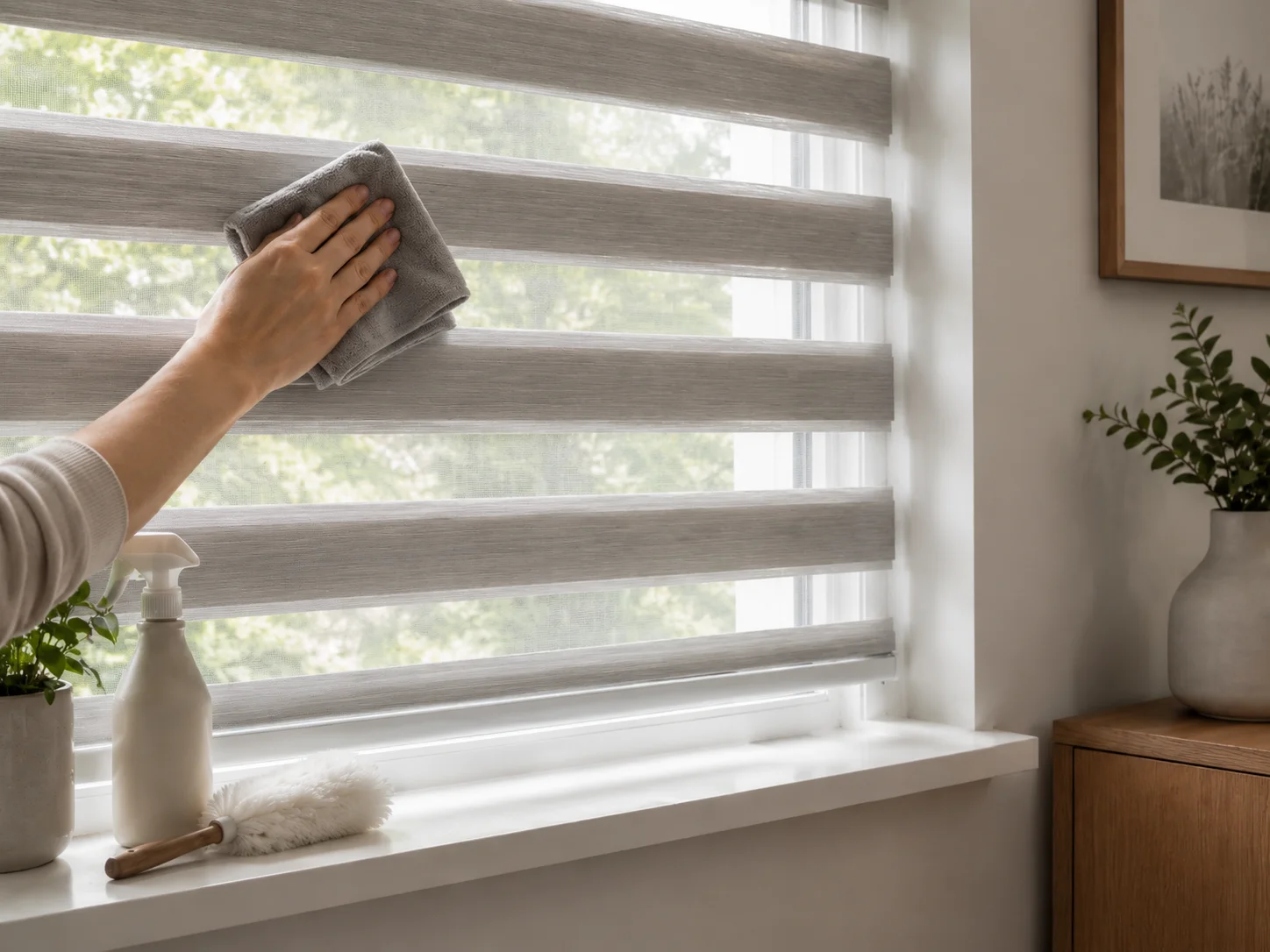
1. Lower and align the shade
- Lower the zebra blind fully so the fabric panel is as flat as possible.
- Rotate the control chain or use your remote until the solid bands line up for full privacy (no sheer gaps).
- This gives you a single, smooth surface to work on.
2. Dust from top to bottom
- Starting at the cassette/headrail, gently wipe across the width of the shade.
- Work your way down in straight, horizontal passes.
- Use light pressure; you’re lifting dust, not pressing it deeper into the weave.
If your home is near a busy road or you have pets, doing this once a week can make a huge difference. In quieter spaces, every two weeks is usually enough.
3. Use a vacuum for heavier dust
- Set the vacuum to low suction.
- Attach the soft brush nozzle.
- Hold the bottom rail gently to steady the fabric and run the brush over the shade in the same top-to-bottom pattern.
On large patio doors and extra-wide shades, this saves a lot of time compared to wiping every stripe by hand.
The Ray Blinds 5-Step Gentle Clean: quick do’s and don’ts
Do | Don’t |
Use clean microfiber cloths and light pressure. | Scrub with rough sponges or stiff brushes. |
Keep the vacuum on low with a soft brush head. | Use high suction that pulls or twists the fabric. |
Support the fabric with your free hand when spot cleaning. | Let the material sag or stretch while you wipe. |
Dab stains with a barely damp cloth, then blot dry. | Rub back and forth or soak the entire shade. |
Deeper cleaning for stains, splashes, and light buildup
For stains, greasy fingerprints, or light buildup that dusting won’t remove, use this deeper spot-clean routine.
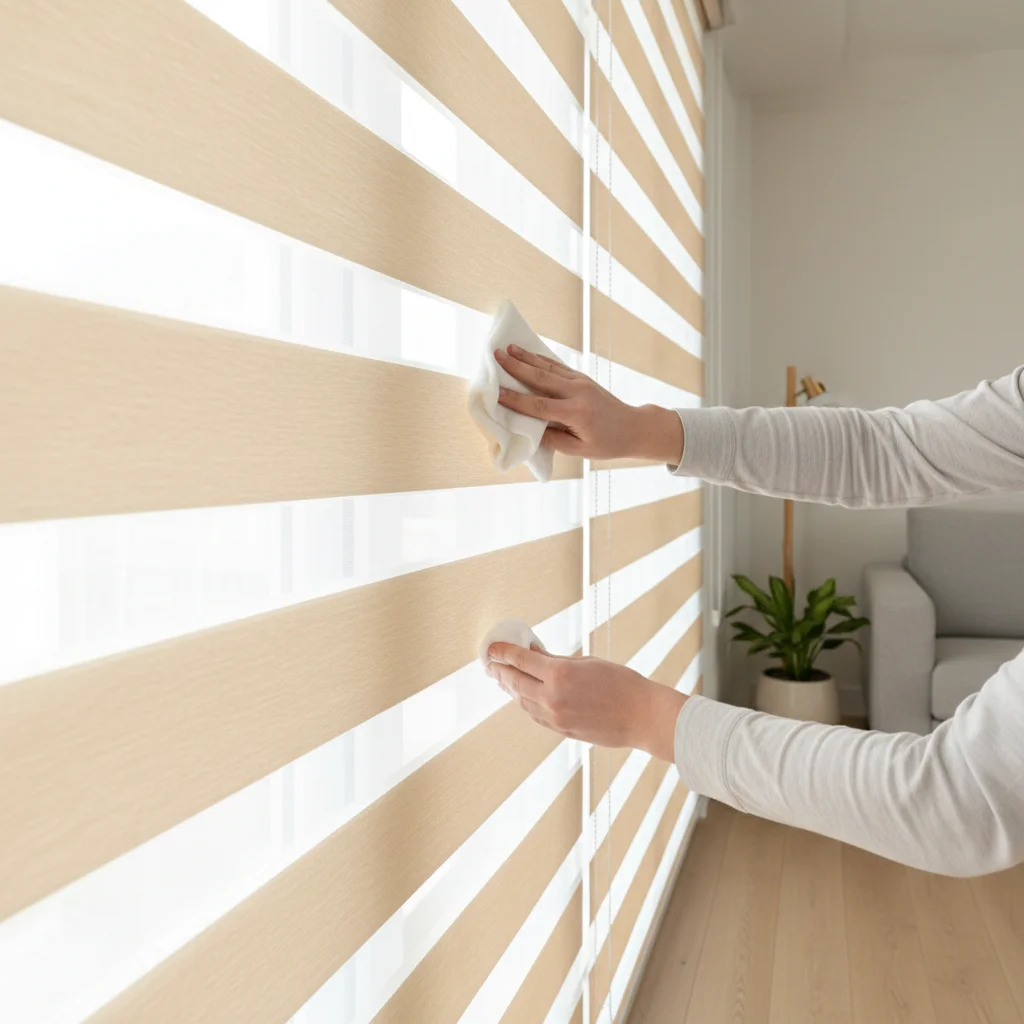
Use a soft, barely damp cloth to spot clean specific marks on zebra blinds.
4. Mix a mild cleaning solution
- Fill a small bowl with cool or lukewarm water.
- Add a single drop of mild, clear dish soap and stir gently.
- Dip the corner of a white cloth, then wring it out so it’s just barely damp.
5. Spot clean the stain
- Support the back of the fabric with your free hand.
- Press the damp cloth onto the stain with short, gentle dabs.
- Lift and repeat, changing to a clean area of the cloth as the mark transfers.
6. Rinse and blot
- Rinse your cloth with clean water, wring it out well, and dab the spot again to remove soapy residue.
- Follow with a dry cloth to blot out excess moisture.
- Leave the blind lowered and open so air can move through the fabric while it dries.
7. What about deep cleaning the whole shade?
Avoid soaking zebra blinds in a tub or shower; most fabrics aren’t designed for full immersion and you can end up with warping or stains. For very heavy buildup that gentle cleaning can’t fix, follow the manufacturer’s care instructions or talk to a blinds specialist about professional cleaning or replacement.
Common mistakes that fray or damage zebra fabric
On repair calls and replacements, we see the same issues again and again. Avoid these habits to help your shades last longer.

Zebra blinds near busy kitchens and dining areas need gentler, more frequent cleaning.
Using harsh chemicals or bleach
Strong cleaners, bleach, and abrasive powders can weaken fibres and strip colour; most manufacturer guides for dual sheer shades, such as this dual sheer care, recommend plain water or a tiny amount of mild soap instead.
Scrubbing aggressively on sheer sections
The sheer stripes are delicate, so hard scrubbing or stiff brushes can fuzz the surface permanently—use gentle dabbing with a soft cloth instead.
Steaming or ironing the fabric
High heat can distort the yarns and bonding agents inside layered shades; if your zebra blinds develop waves or creases, contact a blinds professional instead of using a steamer or iron.
Letting grime build up in kitchens and bathrooms
In rooms with more moisture or cooking oils, light cleaning every week or two works far better than rare, intense “rescue missions.” For areas right beside stoves or showers, consider roller blinds in easy-clean fabrics or faux wood blinds instead of sheer zebra fabric.
Frequently asked questions about cleaning zebra blinds
How often should I clean zebra blinds?
In most Surrey and Greater Vancouver homes, a light dusting every 1–2 weeks is enough. If your windows are often open, you have pets, or you live near a busy road, weekly cleaning helps more.
Can I use water or cleaner on zebra blinds?
Yes, but only for spot cleaning: use a lightly damp microfiber cloth and, if needed, a drop of mild dish soap in cool water. Avoid soaking the shade or using harsh chemical sprays.
How do I clean the top cassette and bottom rail?
Dust the cassette and bottom rail with the same microfiber cloth you use on the fabric. For fingerprints, wipe with a barely damp cloth, dry right away, and don’t spray cleaner directly into the cassette where the fabric rolls up.
Are zebra blinds hard to maintain compared to other blinds?
Not really—they just need a slightly gentler touch. If you already dust your honeycomb shades or vertical blinds now and then, adding zebra shades into that same light routine is easy.
When it’s time to call a professional (or consider replacing)
Some situations are better handled by a specialist. Reach out for help if:
- The fabric has visible fraying or tearing along the edges.
- The shade no longer rolls up evenly, even after gentle cleaning.
- You see mould or heavy nicotine staining that doesn’t lift with light spot cleaning.
- The blind was damaged during a renovation or move.
We can inspect your existing shades during a free in-home visit and suggest whether careful cleaning, repair, or full replacement makes more sense. If you’re in Surrey, Vancouver, or nearby, you can book a free consultation for honest, pressure-free advice.
Keep your blinds looking new: simple maintenance tips
These small habits keep zebra blinds in great shape:
- Set a reminder. Add “dust blinds” to your phone every 1–2 weeks so light cleaning never turns into a big job.
- Use the controls gently. Smooth, steady motions on chains or remotes reduce strain on the fabric roll and mechanisms.
- Mind kids’ hands. In kids’ rooms, remind little ones not to tug on the fabric and consider cordless or motorized options for extra safety.
- Choose wisely in high-splash areas. Near stoves, sinks, or showers, pair zebra shades in nearby spaces with more wipeable materials right beside the mess.
Takeaway: Light, regular care beats heavy scrubbing and keeps zebra blinds looking their best.
Thinking about upgrading old shades or adding new ones? Explore our custom zebra blinds and other window covering options, then get a free quote for professional measuring, manufacturing, and installation anywhere in Surrey, Vancouver, and the surrounding area.