

Standing in front of a bare window, many homeowners get stuck on the same question: “Do I want classic blinds with slats, or a softer window shade?” The showroom options can feel endless, especially when you’re trying to balance daylight, privacy from neighbours, and a clean, modern look.
In this guide, we’ll walk through the different types of blinds for windows, how they handle light and privacy, and which options make sense room by room in a typical Surrey or Vancouver home.
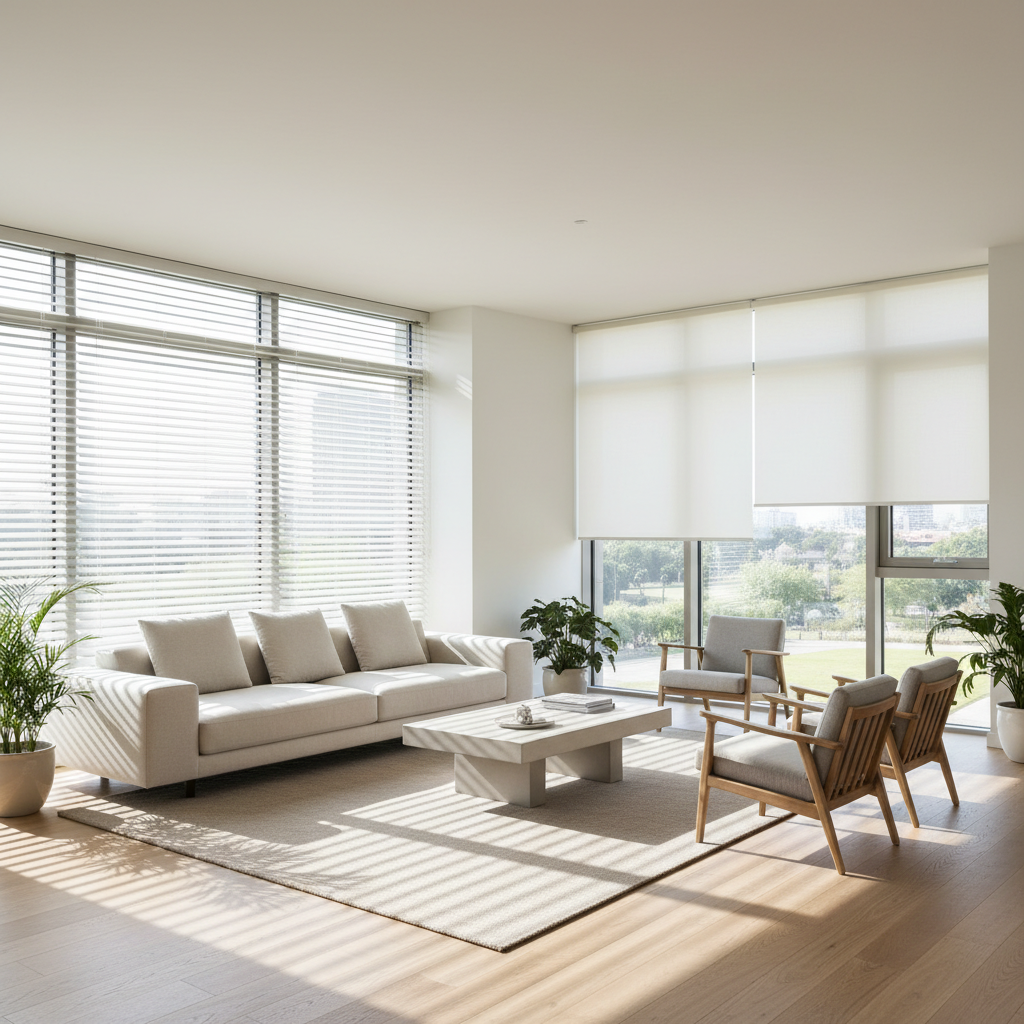
A bright modern living room using a mix of slatted blinds and fabric shades to balance light and privacy.
TL;DR – Quick guide
- Slatted blinds (like faux wood and vertical blinds) are best when you want to tilt light in and out throughout the day.
- Window shades (like roller, zebra, and honeycomb shades) give smoother privacy, softer light, and better insulation.
- Living rooms: zebra or sheer shades; bedrooms: blackout roller or honeycomb; sliding doors: vertical blinds or panel track.
- If you’re not sure, mix: use shades in bedrooms for comfort, and slatted blinds in spaces where you adjust light constantly.
Blinds vs window shades: the big picture
People often use the word “blinds” for everything, but there’s a useful split:
- Slatted blinds have horizontal or vertical slats you can tilt (open/close) and lift or draw to the side.
- Window shades are continuous pieces of fabric that roll, stack, or fold up and down without individual slats.
In the Lower Mainland, where long summer evenings and bright winter glare are both part of life, most homes end up with a mix of the two. Many of our clients start out thinking they want the same product everywhere, then discover that the living room, street‑facing bedrooms, and south‑facing kitchen each need something slightly different.
“If you like changing the mood of a room throughout the day, slatted blinds give the most fine‑tuned light control.”
Before choosing colours or fabrics, it helps to understand the main types within each group. We also have a dedicated in-depth guide on Blinds vs Shades.
Different types of slatted blinds
1. Faux wood and wood blinds
These are the classic horizontal blinds many people picture: rows of slats that tilt open and closed. Genuine wood has a warm, natural feel; faux wood uses composite materials that handle humidity better and are easier to wipe down.
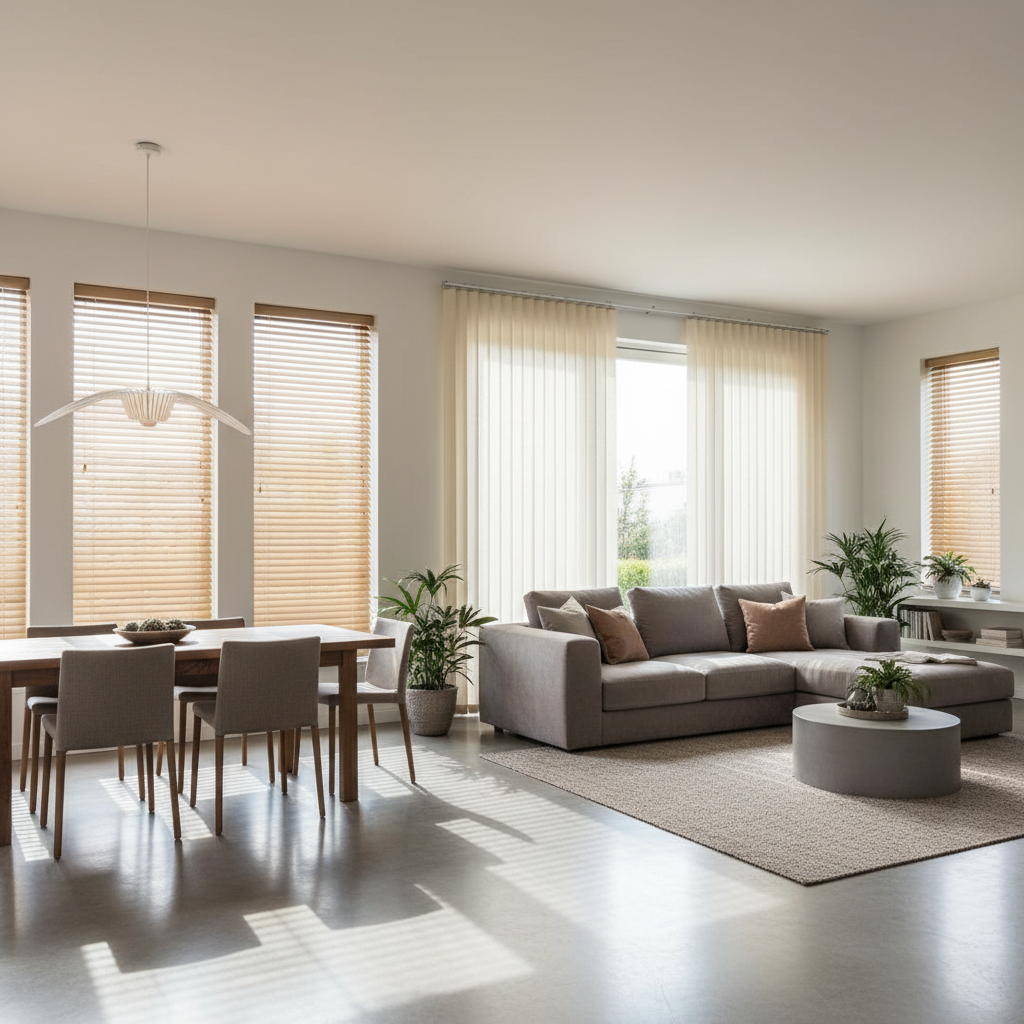
Slatted blinds, including faux wood blinds and vertical blinds on patio doors, offer precise control over daylight and views.
- Best for: living rooms, home offices, main‑floor windows.
- Pros: strong light control, timeless look, good privacy.
- Consider: wide banks of windows can feel visually busy if the slats are narrow.
2. Venetian (aluminum) blinds
Slim aluminum slats work well in spaces where you want a low‑profile blind at a friendlier price point. They’re common in rentals, but higher‑quality versions still look sharp in modern condos.
- Best for: laundry rooms, garages, secondary spaces.
- Pros: budget‑friendly, compact stack, moisture‑resistant.
- Consider: slats can show bends if kids or pets are rough with them.
3. Vertical blinds
Vertical blinds use tall slats that draw to one side, making them a go‑to for patio doors and wide windows. At Ray Blinds, we build custom vertical blinds that track smoothly and sit neatly when stacked.
- Best for: sliding doors, very wide windows.
- Pros: easy access to doors, strong light control, simple to replace individual vanes.
- Consider: if you prefer a softer, drapery‑like look, consider panel track shades instead.
All slatted blinds share one thing: you can tilt the slats. That tilt is what gives you precise control over glare and outside views, especially in street‑facing rooms.
Different types of window shades
Shades use fabric instead of individual slats, which instantly softens a room. Here are the most common shade styles we install around Surrey and Vancouver.
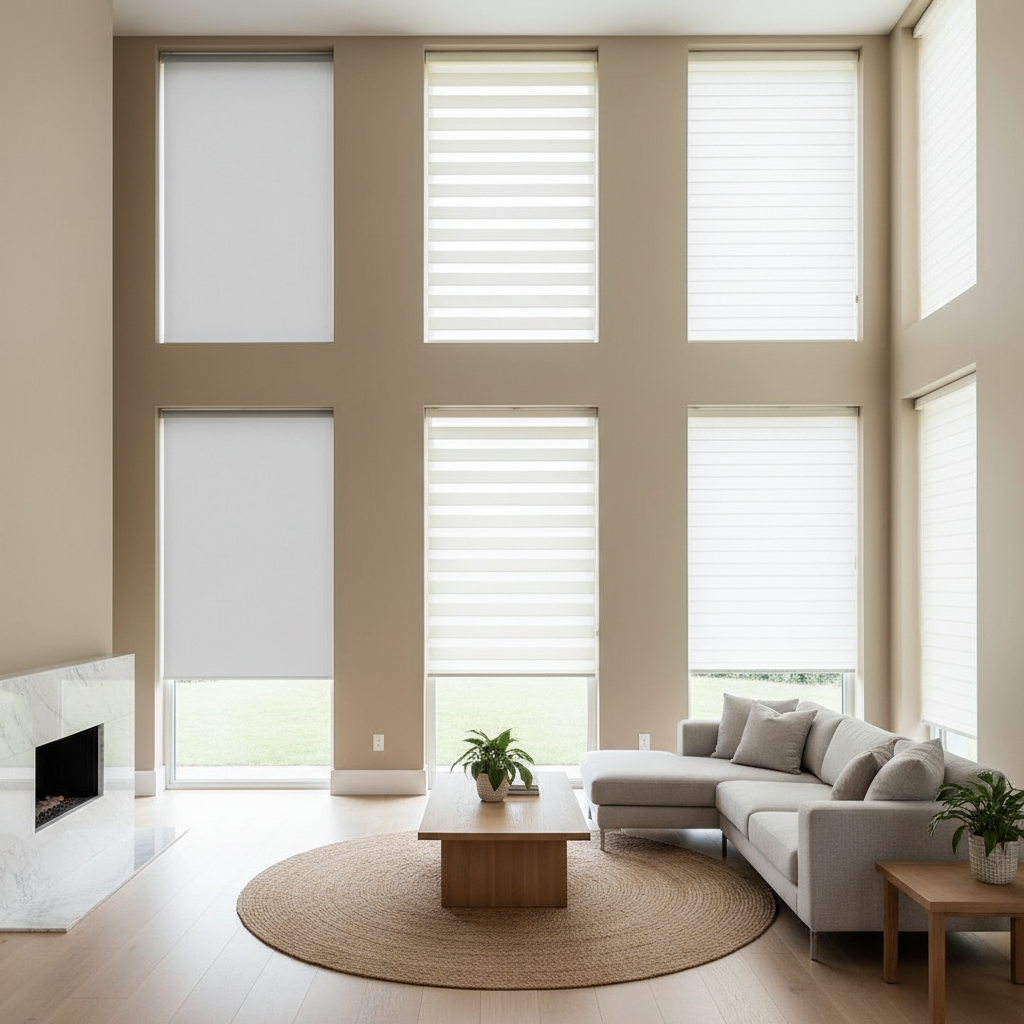
Fabric window shades such as roller, zebra, and honeycomb styles create softer light and smoother privacy.
1. Roller shades
Roller shades are simple, clean, and work almost anywhere. A fabric panel rolls up onto a tube at the top of the window. At Ray Blinds, our custom roller shades range from light‑filtering to full blackout.
- Best for: bedrooms, media rooms, minimalist spaces.
- Pros: clean lines, lots of fabric choices, great for layering behind curtains.
- Consider: when they’re down, light control is all or nothing (you can’t tilt like a slat).
2. Zebra (dual) shades
Zebra shades use alternating sheer and solid fabric bands on a loop. By shifting the bands, you “line up” either sheer‑on‑sheer (for filtered light) or solid‑on‑solid (for more privacy and room darkening).
Our zebra blinds and shades are especially popular in condos and main‑floor living spaces because they handle both daytime views and evening privacy without feeling heavy.
3. Honeycomb (cellular) shades
Honeycomb shades are made of pleated fabric that forms small air pockets (cells) when you lower them. Those cells help slow heat transfer through the glass, which can support energy savings and comfort according to resources from Natural Resources Canada.
- Best for: bedrooms, nurseries, drafty or very sunny windows.
- Pros: excellent insulation, great for blackout and better sleep.
- Consider: they read as more “soft” than “architectural,” which some people love and others skip.
4. Sheer horizontal shades
Sheer horizontal shades sit between blinds and shades. They use soft fabric vanes floating between two layers of sheer fabric. Tilt the vanes slightly open for a view with gentle light, or close them for more privacy.
You can see examples in our sheer horizontal shades collection.
5. Blackout vs light‑filtering options
Most of these shade styles can be ordered as blackout (great for sleep and media rooms) or light‑filtering (soft daylight with privacy). The fabric choice often matters more than the style when it comes to brightness.
Light control: when slats shine
If you work from home, watch TV during bright hours, or have glare bouncing off neighbours’ windows, light control is more than a small detail.
Feature | Slatted blinds | Window shades |
Fine‑tuning daylight | Excellent – tilt slats a few degrees at a time. | Good – raise/lower in sections, but no tilt. |
Controlling glare on screens | Strong – angle light up or down, keep the view. | Strong with zebra or sheer shades; roller is more on/off. |
Keeping plants happy | Great – angle light while blocking harsh rays. | Great with light‑filtering fabrics. |
For rooms where you constantly tweak the light – home offices, dens, front‑facing living rooms – many homeowners in Surrey end up preferring faux wood or vertical blinds. The tilt function lets you bounce light off the ceiling or floor instead of straight into your eyes.
If you mostly raise blinds fully during the day and lower them at night, the extra precision of slats may not matter as much; a roller, zebra, or sheer shade can be a better match.
Privacy: Where shades pull ahead
Privacy works a little differently. With slatted blinds, people outside can sometimes catch partial views between slats, especially at night with lights on. Shades, by contrast, create a single sheet of fabric across the glass.
- Daytime privacy: Zebra and sheer shades let you see out while softening what people can see in.
- Night‑time privacy: Opaque roller, honeycomb, or room‑darkening zebra fabrics stop silhouettes and shadows from showing through.
- Bathrooms: Light‑filtering cellular or roller shades in a lighter colour give privacy without making the room feel like a cave.
If privacy is your top concern, think less about “blinds vs shades” and more about:
- How close neighbours or the street are to that window.
- Whether you need privacy all day or mainly at night.
- Whether people walk or drive by at eye level.
During in‑home consultations, we often stand at the window with homeowners and look out at the exact angle passersby would see. That simple step makes it much easier to choose between slats and fabric.
Room‑by‑room recommendations for Lower Mainland homes
Living rooms and great rooms
For main living spaces, most of our clients choose zebra shades or sheer horizontal shades. They give soft daylight during the day, then a cozy, private feel at night.
Bedrooms and nurseries
Good sleep is tied to darker rooms, something sleep experts like the Sleep Foundation talk about often. For bedrooms and nurseries, we usually recommend:
- Blackout roller shades with side channels if you want hotel‑level darkness.
- Honeycomb blackout shades for both darkness and better insulation.
- Layered setups – For example, a roller shade plus decorative curtains.
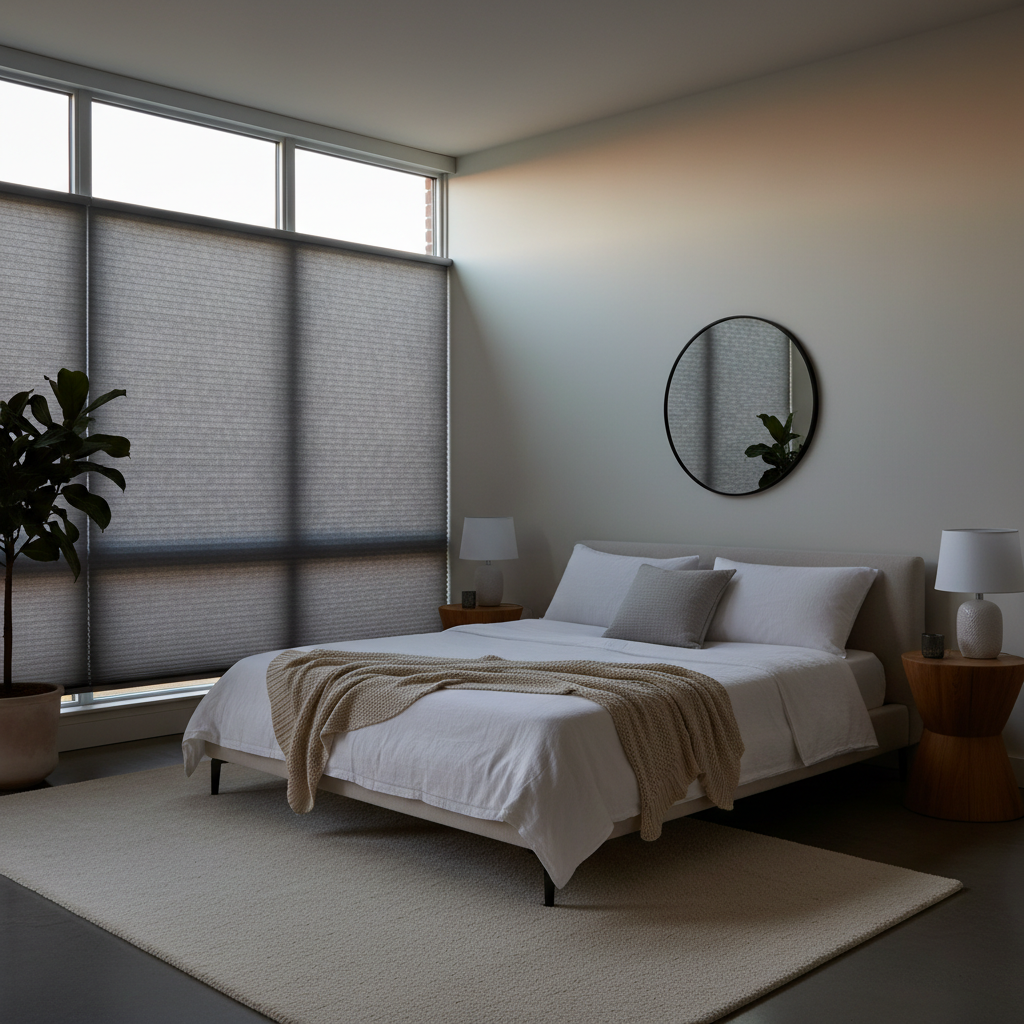
Blackout roller or honeycomb shades in bedrooms and nurseries help create a darker, more restful sleep environment.
Kitchens and dining areas
Kitchens near busy streets often do well with faux wood blinds or vertical blinds on patio doors. Both are easy to wipe and hold up well to steam and splashes. Light‑filtering roller or zebra shades also work nicely if you like a more open, airy look.
Bathrooms
For bathrooms, moisture and privacy come first. We typically suggest:
- Faux wood blinds for a classic look that stands up to humidity.
- Light‑filtering roller or honeycomb shades for softer privacy.
Home offices and media rooms
For screen‑heavy rooms, controlling glare is the main job. Consider:
- Faux wood or aluminum blinds if you want to tilt light away from your monitor.
- Blackout roller shades if you watch movies or work late and want full control over brightness.
Cords, child safety & smart blinds
Once you know which style you like, the next choice is how you’ll operate it.
- Cordless lift: great for homes with kids or pets and recommended by safety resources from the Government of Canada.
- Continuous loop chain: common for larger roller shades and zebra shades; can be securely tensioned.
- Motorized smart blinds: ideal for hard‑to‑reach windows or whole‑home control.
Our motorized and smart blinds can be controlled by remote, app, or voice assistants, and can be scheduled around sunrise and sunset. That’s handy if you want bedroom blinds to rise gently in the morning or drop automatically before the evening commute traffic rolls by.
Quick answers to common questions
What are the main types of blinds?
The most common types of blinds with slats are faux wood and real wood blinds, aluminum Venetian blinds, and vertical blinds for patio doors. Many homeowners also include shutters in the family of “blinds” because they have tiltable louvers and mount inside the frame. You can learn more about our custom shutters here.
What are the different types of window shades?
In fabric shades, you’ll mainly see roller shades, zebra (dual) shades, honeycomb/cellular shades, sheer horizontal shades, and Roman shades. At Ray Blinds we focus on roller, zebra, honeycomb, sheer horizontals, and other custom shades that work well in modern BC homes.
Which gives better privacy at night – blinds or shades?
For strong night‑time privacy, opaque shades usually win. A blackout roller or honeycomb shade blocks silhouettes and most light gaps. Slatted blinds with tight closure and a good fit can also work well, but small gaps between slats may still show tiny pinpoints of light.
Need help choosing the right blinds and shades?
If you’re still weighing different types of blinds and shades, you’re not alone. Most Surrey and Vancouver homeowners we visit end up choosing a mix: maybe zebra shades in the living room, blackout honeycomb shades in bedrooms, and vertical blinds on patio doors.
During a free in‑home consultation, our team measures your windows, looks at how the sun hits each room, and walks you through samples of slatted blinds and window shades right in your space. Because we manufacture and install locally, you get a better fit and faster turnaround than with big‑box stores.
About the Ray Blinds Design Team
Ray Blinds is a family‑owned manufacturer and installer of custom blinds and shades based in Surrey, BC. Our team has spent more than a decade measuring, building, and installing window coverings across Surrey, Vancouver, and the Lower Mainland – from downtown condos to family homes in Cloverdale and beyond.
Every article on our blog is based on real conversations in local homes, so you get practical advice that reflects how people in our region actually live.