

French doors bring in light and connect your home to the outdoors, but choosing window treatments for French doors that control privacy, glare, and heat can be tricky. This guide shows you how to get a clean, modern look without fighting door handles, door swing, or messy cords.
You’ll see which shades, blinds, and shutters work best in different rooms, plus how a professional installer thinks about measurements, clearances, and mounting so your doors still operate smoothly.
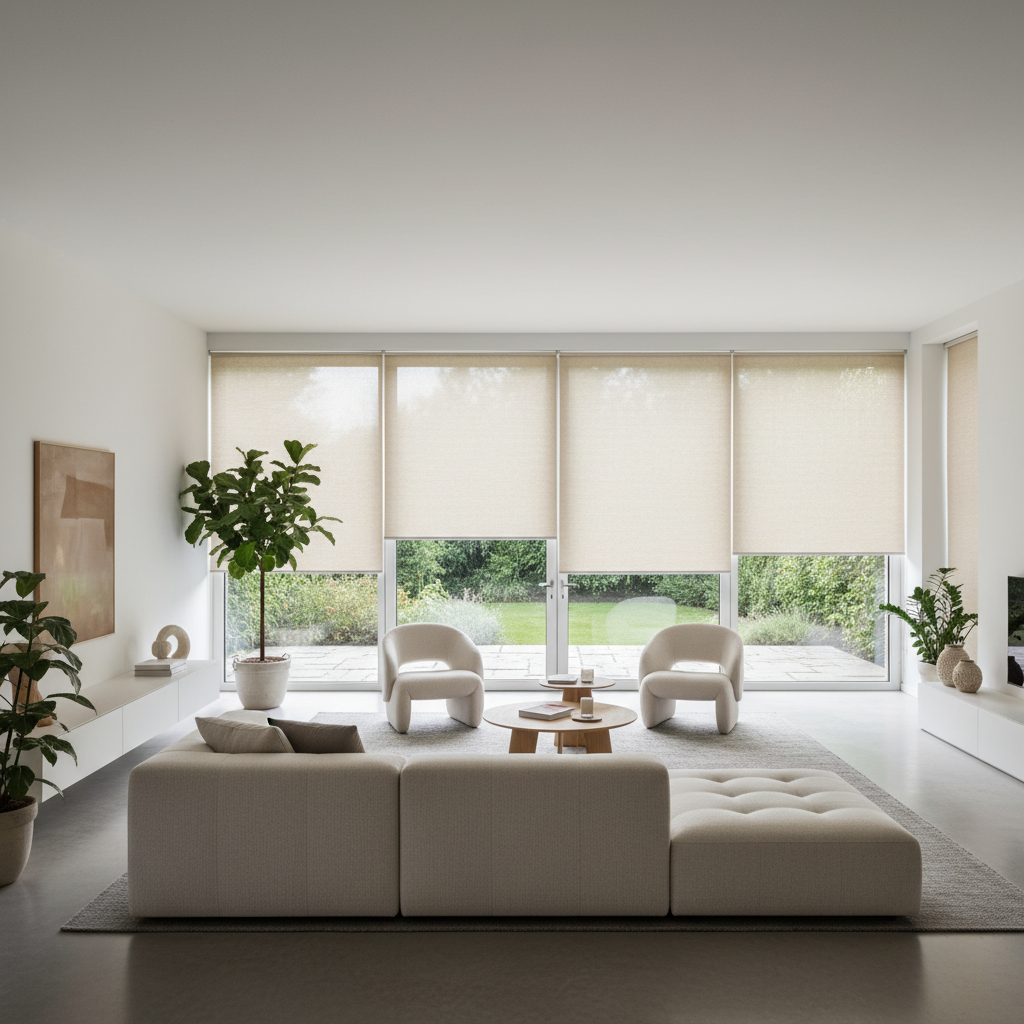
A clean, modern living room with French doors fitted with slim roller shades for soft light and privacy.
TL;DR: Quick Picks for Busy Homeowners
- High-traffic patio doors: Slim cassette roller shades sized just wider than the glass, with low-profile brackets and optional hold-downs, look clean and don’t bang.
- Living rooms: Light-filtering roller shades or sheer horizontal shades soften light while preserving views and evening privacy.
- Bedrooms off a balcony: Blackout honeycomb blinds or dual/“day-night” systems block light and add insulation.
- Doors with very tight handle clearance: Door-mounted systems like Window Fit Blinds sit flush to the glass so they clear handles and move with the door.
- Hard-to-reach or tall doors: Motorized blinds controlled by remote or phone remove cords and make tall or hard-to-reach doors easy to use.
- On any project: Always measure, handle, and trim projection, plan for light and privacy, and favour cordless or motorized controls for a clean, safe finish.
What to Consider Before Choosing Window Treatments for French Doors
Clearance, Control, Cleanability, Cords (4‑C checklist)
Before you fall in love with a fabric or inspiration photo, run your French doors through this quick test:
- Clearance: Measure how far handles and trim project from the door and nearby furniture so the treatment clears everything without scraping when the doors swing.
- Control: Decide whether you need glare control, evening privacy, or full darkness, then pick sheer horizontals or zebras for flexible daytime light or honeycomb/dual shades for extra insulation (similar to sheer shade collections from retailers such as Blindster).
- Cleanability: Because French doors sit in busy zones, flat roller fabrics and honeycombs that wipe or dust easily are usually easier to live with than long floor-brushing drapes.
- Cords: In homes with kids or pets, cordless and motorized controls are safer and keep the doors looking less cluttered than hanging chains and cords.
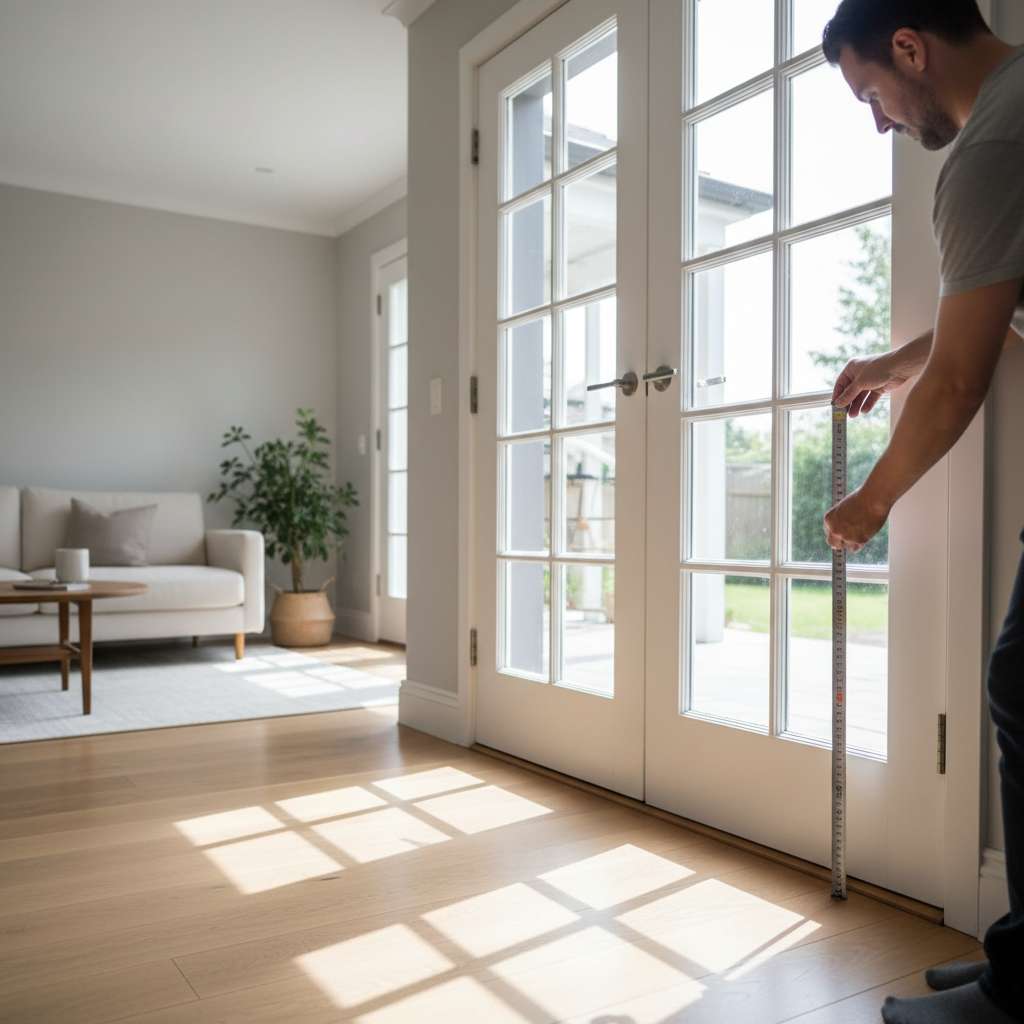
Measuring handle projection, trim, and glass size helps ensure your French door window treatments clear hardware and reduce light gaps.
What is the best window treatment for French doors in a living room?
In most living rooms, you want softened daylight, privacy after dark, and a look that doesn’t compete with the room. Light-filtering roller shades, sheer horizontal shades, or zebra blinds stay close to the glass and disappear neatly when raised.
Shutters also work if you prefer a more architectural, built-in feel. Window-covering manufacturers such as Norman note that well-fitted shutters and shades on French doors usually control light and temperature better than loose curtains, which tend to drag and snag on the doors.
When a blind for a French door makes more sense than a shade
Most modern French door projects lean toward shades, but tilting blinds still make sense when:
- You want to angle slats for privacy while keeping some light from above or below.
- The doors sit beside windows that already have wood or faux-wood blinds, and you want everything to line up.
- You prefer a more traditional, structured look.
Slim, anchored wood, faux-wood, or aluminum blinds sized to the glass work best in these situations.
Best Roller Shades for French Doors
Roller shades are one of the cleanest ways to dress French doors: a simple fabric panel that rolls into a compact cassette when you want wide-open glass. They work especially well with modern steel or black-framed doors, or when you’re matching other roller blinds in the room.
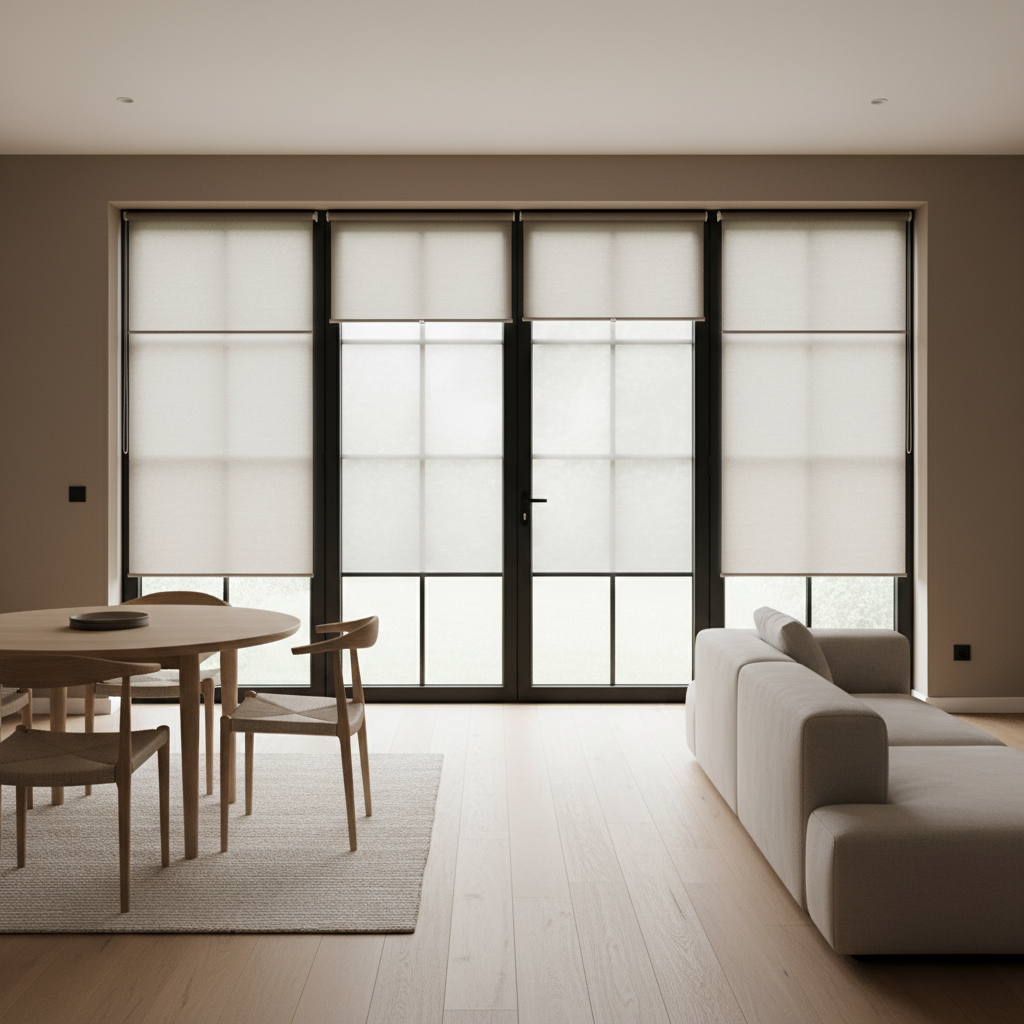
Slim cassette roller shades on French doors give a minimal, modern look while keeping glare and privacy under control.
Can you put roller shades on French doors with lever handles?
Yes, you can – it’s one of the most common setups we install. The keys are:
- Using a slim cassette and brackets so the shade projects just enough to clear the handle.
- Mounting the cassette slightly above the door trim or glass rather than right at handle height.
- Sizing the fabric slightly wider than the glass so you don’t end up with bright light gaps on either side.
Where the handle sits very close to the glass, a door-mounted system like Window Fit Blinds keeps the shade within a slim frame that moves with the door and avoids clashes with lever hardware.
Fabric choices: light-filtering vs blackout
For most interior French doors in living rooms or kitchens, light-filtering fabrics are ideal: they cut glare, soften the view, and protect furnishings from UV without making the space feel closed in. Where the doors lead directly to a bedroom or media room, blackout or room-darkening fabrics are usually better, especially on east- or west-facing doors.
Even with blackout fabric, cassette-mounted rollers on doors leave a slim halo of light around the edges. If you need near-total darkness, pair rollers with side channels or curtains, or use blackout day-night honeycomb shades on the doors themselves.
French Door Window Blinds vs. Shades vs. Shutters
Choosing between blinds, shades, and shutters is easier if you compare them side by side. Here’s a quick breakdown of how they behave on French doors.
Option | Best for | Light & privacy | Clearance & swing | Typical cost level* |
Roller/screen shades | Modern, minimal doors; patios; condos | Simple up/down; choose light-filtering or blackout | Very slim; easy to clear handles with proper mounting | $–$$ |
Honeycomb / cellular shades | Bedrooms, energy efficiency, noise reduction | Excellent; top‑down/bottom‑up and blackout options | Compact; can be framed close to the glass for a neat swing | $$ |
Sheer horizontal / zebra | Living rooms, design-forward spaces | Fine-tuned; behaves like a blind + shade in one | Low profile; may need hold-downs on busy doors | $$ |
Wood / faux-wood blinds | Traditional interiors, matching existing blinds | Good tilt control; full raise for views | Thicker stack; must be anchored to prevent banging | $–$$ |
Shutters | Architectural look, high-end finishes | Excellent tilt control, strong privacy | Thicker profile; needs custom cut-outs for handles | $$$ |
*Relative comparison only; exact pricing depends on size, fabric, and motorization.
How to choose French door window blinds that don’t bang when the door opens
If you go with slatted blinds (wood, faux-wood, or aluminum) on your doors, stopping the swing is essential. Look for:
- Hold-down brackets or side channels that secure the bottom rail to the door so it can’t swing out.
- Tighter ladder spacing (more cords per width) so the slats don’t twist and clatter with every movement.
- Accurate sizing so the blind sits just inside the raised molding or slightly over the glass – too narrow and it will rattle in the opening.
On many projects, we now recommend compact shades (roller, honeycomb, or sheer horizontals) instead of heavy slatted blinds on French doors because they’re quieter, slimmer, and easier to anchor close to the glass.
How to Mount Blinds on French Doors (Without Blocking Handles)
Measuring for clearance and light gaps
Most French door problems come from not allowing enough handle clearance, leaving big light gaps, or ignoring how the doors swing. A quick checklist before you order solves all three; for full details, see Ray Blinds’ measuring guide.
- Measure the glass area: Record the visible glass width and height (inside any molding) so the shade covers the panel evenly.
- Check mount height: Measure from the top of the glass to where a cassette or headrail can sit so you know it will mount level across both doors.
- Check handle and trim projection: Measure how far handles and trim project from the door, and compare that to your cassette or frame depth so the pieces clear each other.
- Decide shade width and drop: Size the shade slightly wider and longer than the glass for better coverage while still leaving clearance for locks and the floor.
- Test the swing path: Open each door through its full arc so you can catch conflicts with nearby walls or furniture.
Mounting on the door vs. above the trim
Door-mounted treatments keep everything close to the glass and look integrated. Mounting the cassette just above the door trim on the wall side lets you run the shade slightly wider than the glass so it clears lever handles and casing, which most designers prefer for a clean, minimal look on French doors; design guides such as Livingetc highlight similar principles.
Where clearance is extremely tight, a framed system such as Window Fit Blinds sits within the door’s glazing bead so the fabric stays flush to the glass and moves with the door, avoiding handle clashes and swinging fabric.
Motorized Window Treatments for French Doors
How do motorized blinds for French doors work?
Motorized shades tuck a small, quiet motor into the headrail so you can raise and lower the fabric with a remote, wall switch, or app instead of reaching for cords—especially helpful on tall or hard‑to‑reach doors.
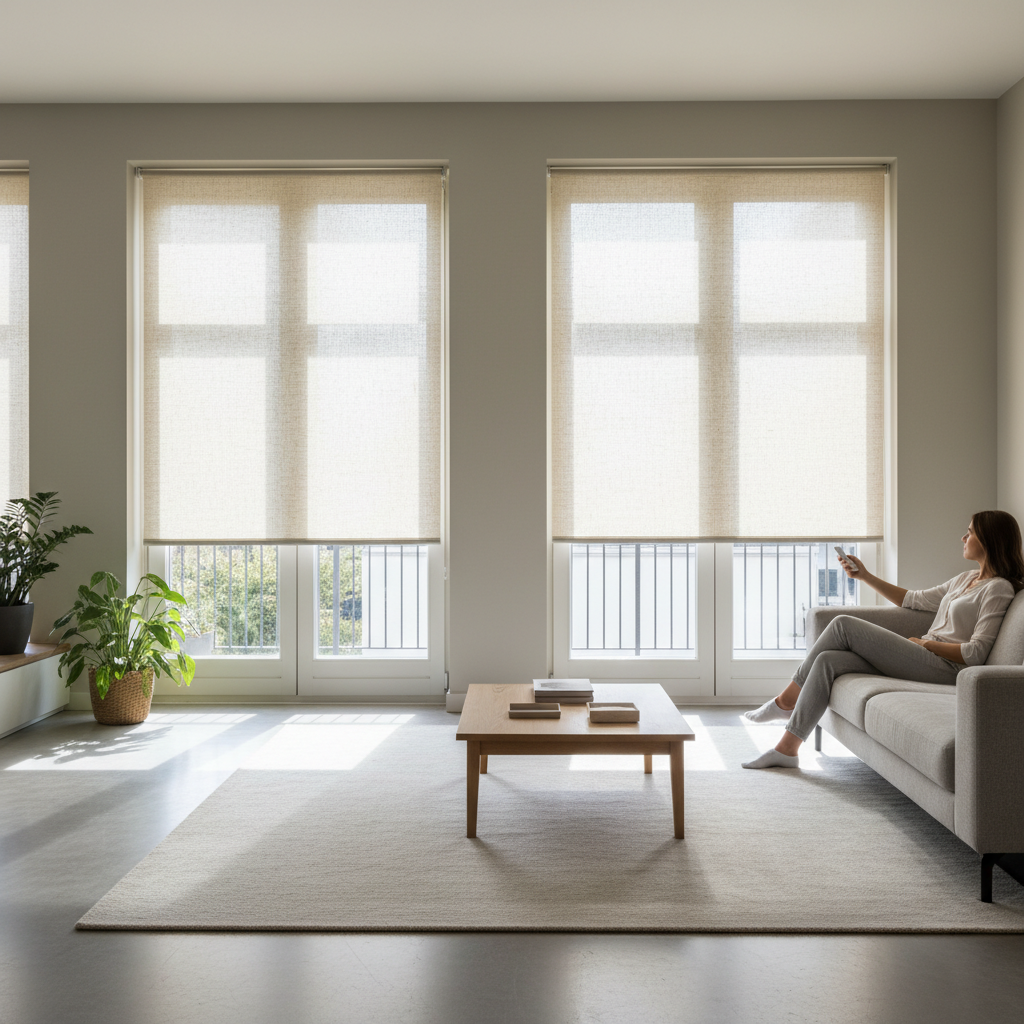
Motorized roller shades on tall French doors let you control light and privacy at the touch of a button.
When to upgrade to motorized control
- Multiple doors in one room: Manage all the shades together at the touch of a button.
- Very tall doors or added transoms: Avoid long, dangling cords or awkward wands.
- Bedroom or media-room doors: Close everything for privacy and darkness without crossing the room.
- Accessibility or aging in place: Make everyday operation easier for everyone in the home.
Pairing French doors with motorized blinds also removes cords for better child safety and lets you fine‑tune comfort by closing shades during the hottest or brightest parts of the day.
Common Mistakes With French Door Window Blinds
These are the issues we see most often on DIY French door projects:
- Ignoring handle clearance and door swing: Skipping measurements for handle projection and swing paths leads to fabric or slats scraping hardware or nearby walls, so always measure before you order.
- Choosing fabrics that fight the door: Heavy drapery or stiff, textured fabrics snag on trim and furniture; choose smooth roller, honeycomb, or sheer horizontal fabrics that glide past the door.
- Skipping child safety and cord management: Long chains or cords at child height are unsafe and frustrating, so opt for cordless, tensioned, or motorized systems and secure any remaining cords.
- Underestimating light gaps: Narrow glass means small sizing errors become bright strips of light, so oversize the fabric slightly or use framed systems or side channels if you’re sensitive to halos.
- Mixing styles without a plan: Where doors sit beside windows, either match nearby shades or intentionally “upgrade” the doors with shutters or zebra blinds so the contrast looks deliberate.
Costs, Installation, and How Ray Blinds Works
Typical price ranges for French door window coverings
Exact pricing varies with fabric, size, and motorization, but these benchmarks help set expectations:
- Manual roller or honeycomb shades: Custom roller or honeycomb shades in typical French-door sizes starting around $120–$250 per door before installation, with extra cost for premium fabrics and hardware.
- Sheer horizontals and zebra shades: Typically sit a notch above standard rollers because of the more complex fabric construction.
- Shutters: Often the highest initial investment per door because of the joinery, frames, and cut-outs around handles.
- Motorization: Adding motors and a hub increases upfront cost but can pay off in usability, especially for multiple doors or tall installations.
For fully measured and installed solutions, a consultation gives you a clear total project cost for all doors and nearby windows together.
What to expect from a Ray Blinds visit
In Surrey, Vancouver, and the Lower Mainland, a typical French door project with Ray Blinds is straightforward:
- Quick call or form: Share how many doors you have, which rooms they’re in, and your budget and priorities.
- In‑home consult and measuring: A consultant brings fabrics and hardware, checks clearance and door swing, and records precise sizes.
- Quote and installation: You review manual or motorized options, then a professional installer returns to fit, test, and show you how everything works.
FAQs About French Door Window Treatments
Do you need window coverings on all French doors?
No. In some entryways or internal double doors, leaving French doors bare can be the right design choice when privacy and glare aren’t an issue. But on doors leading to patios, neighbours, or bedrooms, most homeowners prefer the control and comfort that comes with shades, blinds, or shutters.
What is the most energy-efficient option for French doors?
For energy efficiency, honeycomb (cellular) shades or tightly fitted framed systems usually perform best because their air pockets help reduce winter heat loss and summer heat gain. The U.S. Department of Energy notes that heat gain and loss through windows can account for about 25–30% of residential heating and cooling energy use, so adding insulating window coverings on large areas of glass can make a noticeable comfort difference. DOE’s guidance on energy-efficient windows explains how coverings and upgrades work together.
Can you install blinds on French doors without drilling into the frame?
Yes. Certain systems use specialized brackets that grip the existing glazing bead or fit into the door’s frame, and framed solutions like Window Fit Blinds attach to the window area rather than the solid door panel. These approaches are especially helpful for newer doors where you want to avoid visible screw holes.
Summary: How to Choose the Right Window Treatment for Your French Doors
If you’re still torn between blinds, shades, and shutters, think about handle clearance, light and privacy needs, cleanability, and whether you prefer cords, cordless, or motorized control, then match those priorities to these common scenarios:
- Busy patio or balcony doors: Light-filtering roller blinds with slim cassettes and optional hold-downs keep the look minimal and stand up to daily use.
- Living room with a view: Sheer horizontal shades or zebra shades give a soft, modern finish and finely tuned light control.
- Bedroom French doors: Blackout honeycombs or day-night honeycomb systems improve insulation and darkness for better sleep.
- Tight-clearance or tilt-and-turn style doors: Door-mounted systems like Window Fit Blinds sit within the frame and move with the glass, staying out of the way of levers and trim.
- Tech-forward or hard-to-reach doors: Motorized blinds let you manage multiple doors together and automate privacy and light for comfort and efficiency.
If you’d like help choosing, an in‑home consultation with the Ray Blinds team brings fabrics, hardware samples, and French door expertise to your space. For deeper dives, explore Ray Blinds’ roller blinds guide or their motorized blinds page to see how these systems work in different rooms and window types.