

That big front window in your living room does a lot: it brings in daylight, frames the view, and, on movie night, lets in just enough glare to wash out the screen. No wonder so many homeowners feel stuck trying to choose living room window treatments that work morning, afternoon, and evening.
The good news: you don’t have to pick just one solution. By pairing blackout living room curtains with light, breezy sheers, you can switch from bright and open to cozy and private with a quick pull of the fabric.
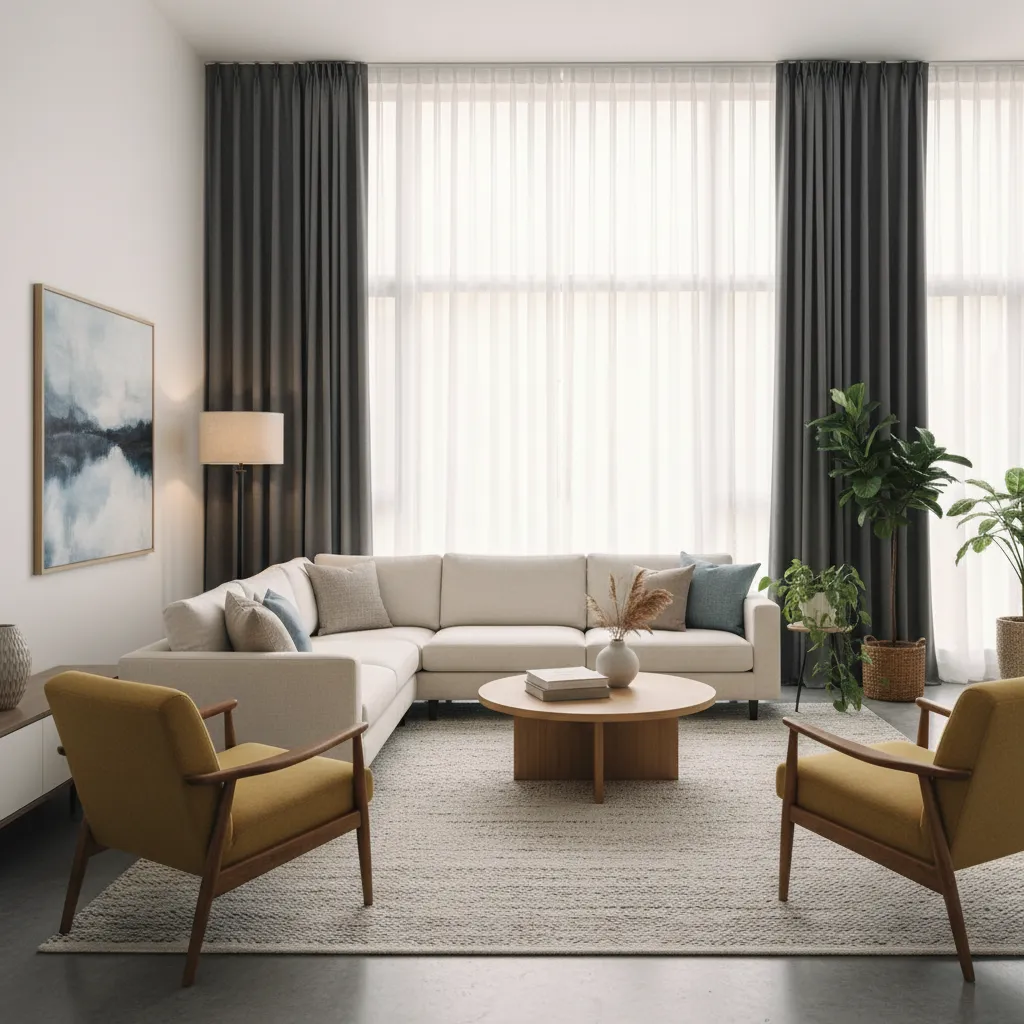 A layered combination of blackout curtains and sheer drapes helps a living room feel bright by day and cozy at night.
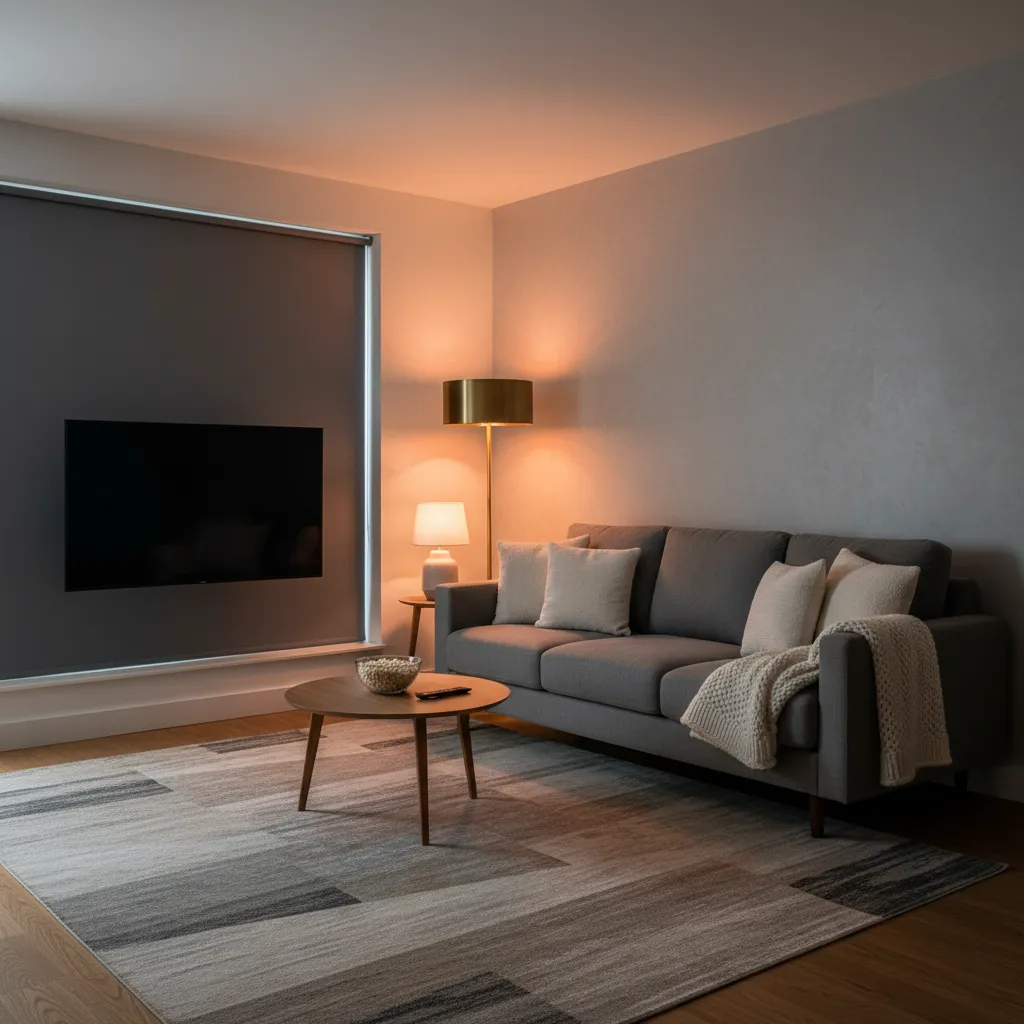 Blackout living room window treatments reduce glare on the TV and make movie nights more comfortable.
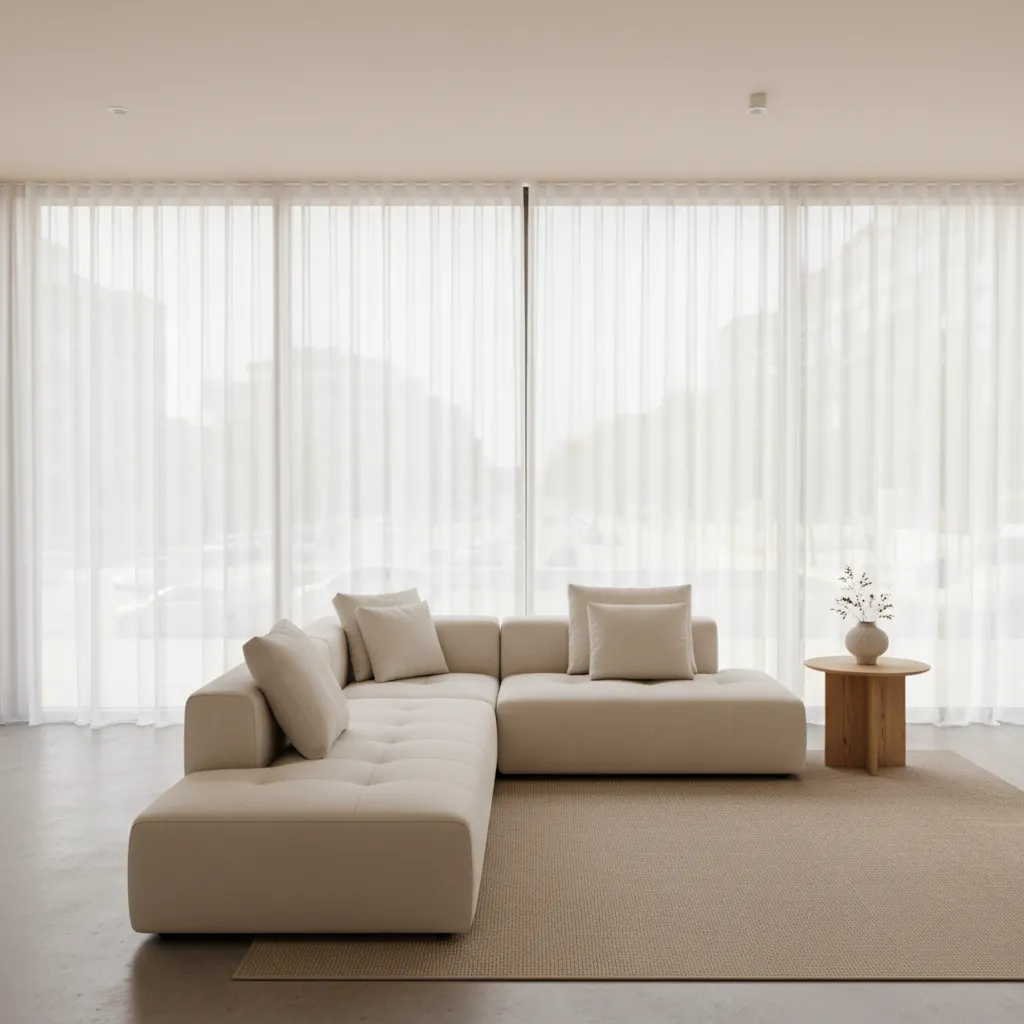 Sheer living room curtains filter daylight and soften views from the street while keeping the space bright.
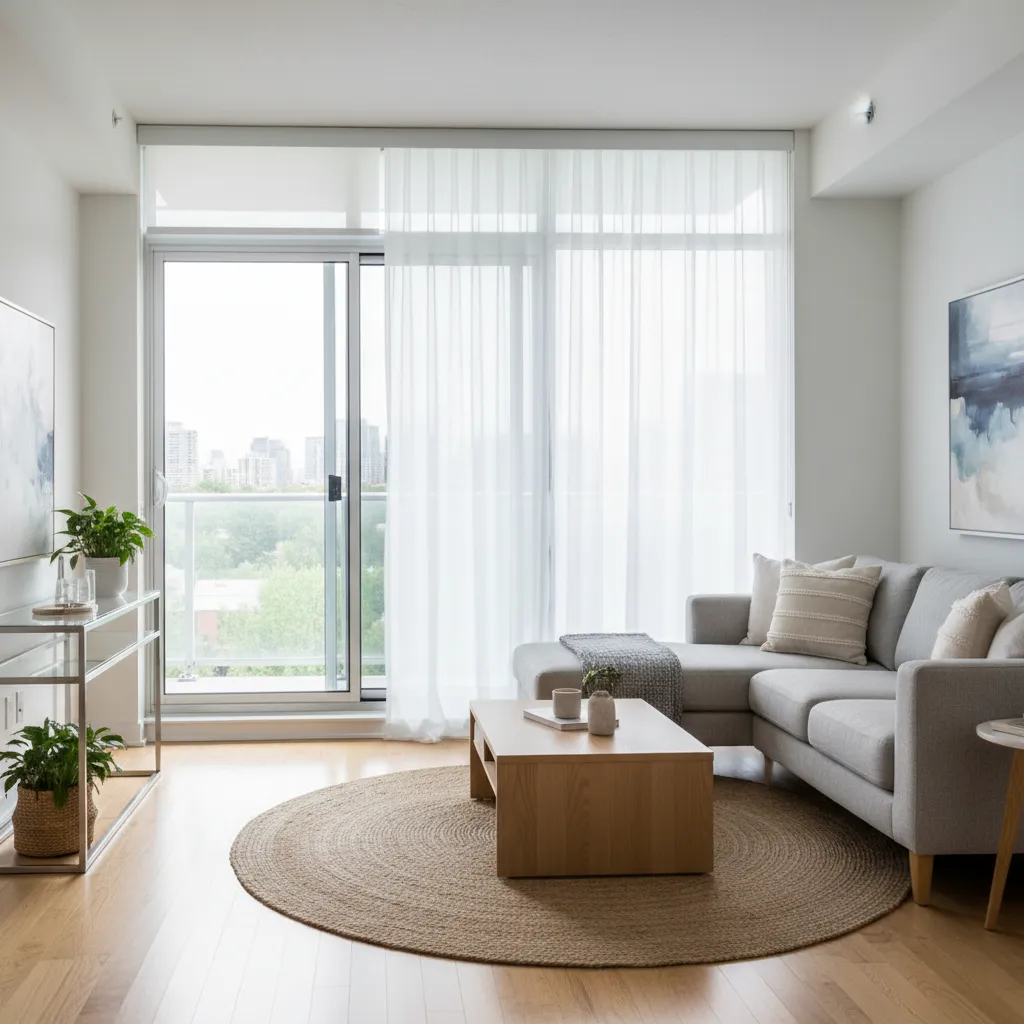 In a compact condo living room, slim shades plus a light layer of sheers keep the sliding door area functional and airy.
This keeps the floor area around the door clear and still gives you that gentle, filtered light effect you get from sheer curtains for living room spaces.
In a compact condo living room, slim shades plus a light layer of sheers keep the sliding door area functional and airy.
This keeps the floor area around the door clear and still gives you that gentle, filtered light effect you get from sheer curtains for living room spaces.
A layered combination of blackout curtains and sheer drapes helps a living room feel bright by day and cozy at night.
TL;DR: Layering living room curtains for comfort
- Use a blackout layer for TV time, naps, and evening privacy.
- Add sheer curtains for the living room to provide daylight, softness, and daytime privacy.
- Mount hardware high and wide so windows feel taller and more generous.
- In smaller spaces, combine sheer drapes with slim roller or zebra shades instead of bulky panels.
- For a made-to-measure look in Surrey or Vancouver, a free in-home consultation keeps measuring and fabric choices simple.
Why layered living room window treatments work so well
Most living rooms have at least three “modes”: daytime hangout, evening TV zone, and weekend hosting space. One single fabric has a hard time doing all of that. Layered living room curtains let you fine-tune light, glare, and privacy without sacrificing style. Think of it as dressing in layers for a West Coast day. Sheer drapes for living room windows handle soft daylight and privacy from the street, while a blackout layer steps in when the sun hits the screen, when the neighbour’s porch light shines straight through, or when you want a darker space for napping kids. If you’re starting from scratch and want more background on options, our overview of blinds and shades is a helpful first read.What blackout living room curtains actually do
Blackout fabrics are designed to block as much incoming light as possible. That doesn’t just help in bedrooms. In a living room, blackout curtains or a blackout roller shade can turn a bright, reflective space into a calm, glare-free zone.Light control, glare, and TV time
If your sofa faces the TV and the TV faces the window, you already know the struggle. A blackout layer:- Reduces glare on screens from afternoon sun.
- Helps you see detail during sports or movies without squinting.
- Makes the room feel more immersive for home cinema nights.
Blackout living room window treatments reduce glare on the TV and make movie nights more comfortable.
Insulation, noise, and comfort
In the Lower Mainland, large windows can mean chilly air in winter and extra heat on sunny summer days. Heavier blackout living room curtains add an extra buffer that:- Helps reduce drafts on older windows.
- Cuts down some street noise, especially on busy roads.
- Supports better temperature consistency, together with proper blinds or shades.
The role of sheer curtains for living room comfort
Sheer curtains for living room windows bring in that “soft focus” effect you see in magazines. They filter daylight, blur the view in and out, and soften frames, moulding, and even the shape of the sofa underneath the window.
Sheer living room curtains filter daylight and soften views from the street while keeping the space bright.
Soft daylight without feeling on display
On many Surrey and Vancouver streets, living rooms sit close to sidewalks, bus stops, or neighbouring townhomes. Sheer drapes for living room windows let you keep blinds or blackout panels open while still diffusing sightlines. Passersby see movement and shape rather than a clear view inside, and you still enjoy daylight. If you like to work from the couch during the day, this balance between privacy and natural light can make the space feel much more comfortable than fully closed blinds.Framing the view and softening lines
From a design perspective, living room curtains help:- Visually widen narrow windows by extending the rod past the frame.
- Make ceilings feel taller when panels start closer to the ceiling line.
- Hide uneven trim or casing with consistent fabric on both sides.
How to layer blackout curtains with sheer drapes step by step
Step 1: Choose the right base layer (curtains or shades)
Start by deciding what will do the “heavy lifting” for light control. You have two main routes:- Blackout living room curtains as the back layer Mount a sturdy rod with lined, blackout panels closest to the wall, then place sheers in front.
- Blackout roller, zebra, or cellular shades as the back layer Install a slim zebra blind, roller shade, or honeycomb shade inside or just above the frame, then hang sheer drapes for living room softness on a separate rod.
Step 2: Pick the sheer drapes for the living room
For sheers, look for:- Colour: Off-whites, soft greys, and warm linen tones blend well with most sofas and walls.
- Weave: Open weaves feel breezy; tighter weaves give more daytime privacy.
- Header style: Ripplefold or grommet headers glide easily; pinch pleats look more formal.
Step 3: Hardware, rods, and tracks
To keep things simple to operate:- Use a double rod, or a track plus a decorative rod, so each layer moves independently.
- Mount the hardware at least 4–6 inches above the window frame; closer to the ceiling is even better.
- Extend rods 6–10 inches past each side of the glass so panels can stack beside, not over, the window.
Step 4: Length, width, and fullness
A quick rule of thumb for elegant living room curtains:- Length: Just kissing the floor, or with a slight 1–2 cm break.
- Width: Aim for 1.5–2 times the rod width per layer, so panels never look skimpy.
- Consistency: Keep both layers the same length; mismatched hems stand out right away.
Layered living room window treatment ideas for real homes
1. Street-facing living room with a big picture window
For a front room that looks straight onto the road, combine:- A slim blackout roller shade or light-filtering shade mounted inside the frame.
- Ceiling-mounted sheer drapes for the living room height and softness.
- Optional decorative side panels in a richer fabric for colour and pattern.
2. Small condo living room with limited wall space
In condos across Surrey and Vancouver, we often see a single wall that supports both a sofa and a sliding door. There isn’t always room for deep stacks of fabric. Here, we like:- Wall- or ceiling-mounted vertical or panel track shades for light control.
- A single layer of soft sheers, just wide enough to cover the glass when drawn.
In a compact condo living room, slim shades plus a light layer of sheers keep the sliding door area functional and airy.
This keeps the floor area around the door clear and still gives you that gentle, filtered light effect you get from sheer curtains for living room spaces.
3. Open-concept living and dining room
When one long window spans living and dining zones, use living room window treatments to visually tie everything together:- Run one continuous rod or track across the full length of the wall.
- Use consistent sheers throughout, then add blackout or dim-out panels only where needed (for example, by the TV).
- Match hardware finishes to other metals in the room, like lighting and table legs.
When blinds or shades make more sense than curtains
Curtains are only one tool in the toolbox. In some living rooms, especially with deep window frames, arched shapes, or lots of tilt-and-turn windows, custom blinds and shades do the main job, and sheers become a light decorative layer. Consider leaning on blinds or shades when:- You need precise tilt control to protect flooring, artwork, or instruments from direct sun.
- You prefer a very clean, minimal look with less fabric overall.
- You want smart-home integration so you can set scenes for “movie night,” “work from home,” or “evening wind-down.”
Get living room window treatments that feel custom-fit
The best layering plan depends on how you and your family actually use the space. During our in-home visits across Surrey, Vancouver, and the Lower Mainland, we look at how the sun moves through your room, where your seating and TV sit, and how close your windows are to the street. From there, we help you decide whether blackout living room curtains, sheer drapes, roller shades, zebra blinds, or a mix of products will give the right balance of softness, privacy, and control. Because we manufacture many custom blinds and shades ourselves, you get a clean, built-in look without designer-showroom pricing. Ready to feel good about your living room at every hour of the day? Book a free in-home design consultation and we’ll bring fabric samples, hardware options, and plenty of real-world layering ideas right to your sofa.Living room window treatments FAQ
How can I keep daylight while still adding window treatments?
To keep your living room bright, treat sheers as the everyday layer and mount rods wide so blackout curtains or shades can stack completely off the glass. Most of the time you’ll enjoy full daylight and a soft filter from the sheers, and you only slide the blackout layer across when you need extra privacy, darkness, or glare control.Do sheer curtains provide privacy at night?
Sheer curtains offer good daytime privacy because they blur views from the street, but at night they become much more transparent once lights are on inside. For true evening privacy, plan to pair your sheers with lined blackout curtains or a room-darkening shade you can close fully whenever you want to feel enclosed and comfortable.What’s the best way to handle a room with both a window and a patio door?
In a room with a window and a patio door, keep things simple by using the same fabric family and hardware finish on both openings. Many homeowners run one continuous track of sheers across the whole wall for softness, then add a separate blackout shade or curtain only where it’s needed most, such as behind the TV or on the sunniest section of glass.Get Custom Blinds for Your Home
Updating your living room windows? Ray Blinds provides custom blinds and shades for homes in Surrey, Langley, Vancouver, and across the Lower Mainland.
Get a Free Quote