

You know that moment when you sit down with a coffee, sunlight hits your eyes at just the wrong angle, and you start playing with the blinds like a DJ with a volume knob? That’s exactly the kind of everyday hassle these dual-layer blinds are built to solve. You might be asking yourself, “what are zebra blinds?” and whether they’re really different from regular roller shades or sheers.
In this guide, we’ll walk through what they are, how they work, where they shine (and where they don’t), and the kinds of rooms around Surrey and Vancouver where our team at Ray Blinds installs them most often. By the end, you’ll know if they fit your home or if another style would suit you better.
TL;DR: Zebra blinds are a dual-layer roller shade with alternating sheer and solid fabric stripes. Slide the stripes past each other to go from open, to dimmed, to closed — giving you flexible light control, daytime privacy, and a clean, modern look.
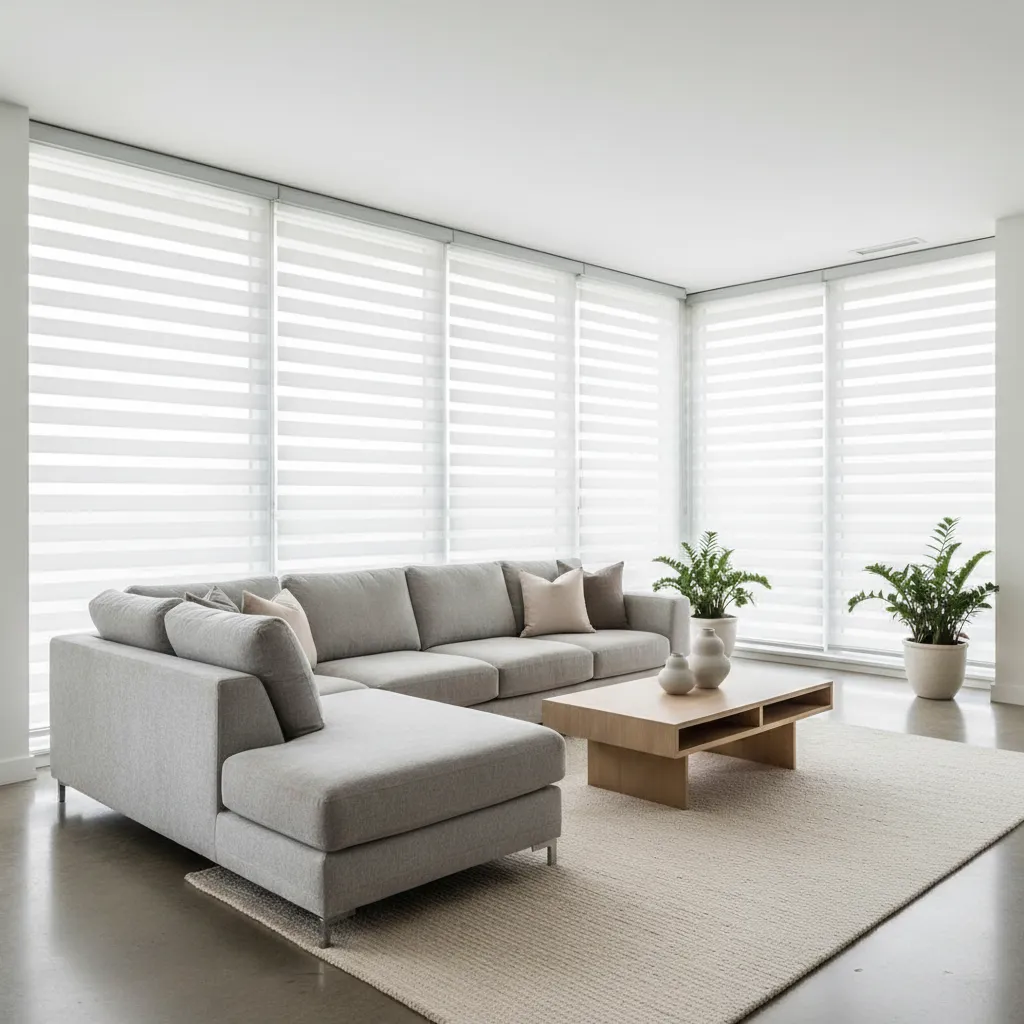
A bright modern living room with custom zebra blinds gives you soft daylight without losing privacy.
Zebra blinds in plain language
Zebra blinds (also called dual sheer shades, day‑night blinds, or combi blinds) are a modern twist on a roller shade. Instead of one solid piece of fabric, they use two layers of fabric that roll up and down together.
Each layer has alternating sheer and solid fabric stripes running horizontally, like a soft fabric version of zebra stripes. When you line up sheer over sheer, daylight flows in and you can still see out softly. Slide the solid stripes in front of each other and the window becomes much more private and darker.
At the top, the fabric rolls into a slim cassette headrail, so when the blind is fully up it almost disappears. That gives you a clean, built‑in look that works especially well in newer condos and townhomes. For many of our clients, custom zebra blinds are the sweet spot between airy sheers and full blackout shades.
Zebra blinds are basically a dimmer switch for daylight — two fabric layers, three main positions we call the “3‑Mode Zebra Setup”: Day, Dim, and Night.
How do zebra blinds work?
1. The fabric layers slide past each other
Both fabric layers are attached to the same top tube. As you pull the chain or use a motor, the tube turns and the fabric rolls up or down. Because the two layers are offset, the stripes can either:
- Line up sheer-to-sheer – maximum natural light, soft view out.
- Stagger sheer-to-solid – filtered light and higher privacy.
- Overlap solid-to-solid – the darkest setting the fabric offers.
3‑Mode Zebra Setup: Day, Dim, Night
To keep it simple, we often describe zebra blinds as having three everyday modes:
- Day mode (open): Sheer stripes are aligned for maximum daylight and a soft view out.
- Dim mode: Sheer and solid stripes alternate to cut glare while keeping some natural light.
- Night mode (closed): Solid stripes overlap to give you the most privacy and darkness the fabric allows.
Once you’re used to those three positions, adjusting the chain or remote becomes second nature — like nudging a light dimmer instead of fussing with slats.
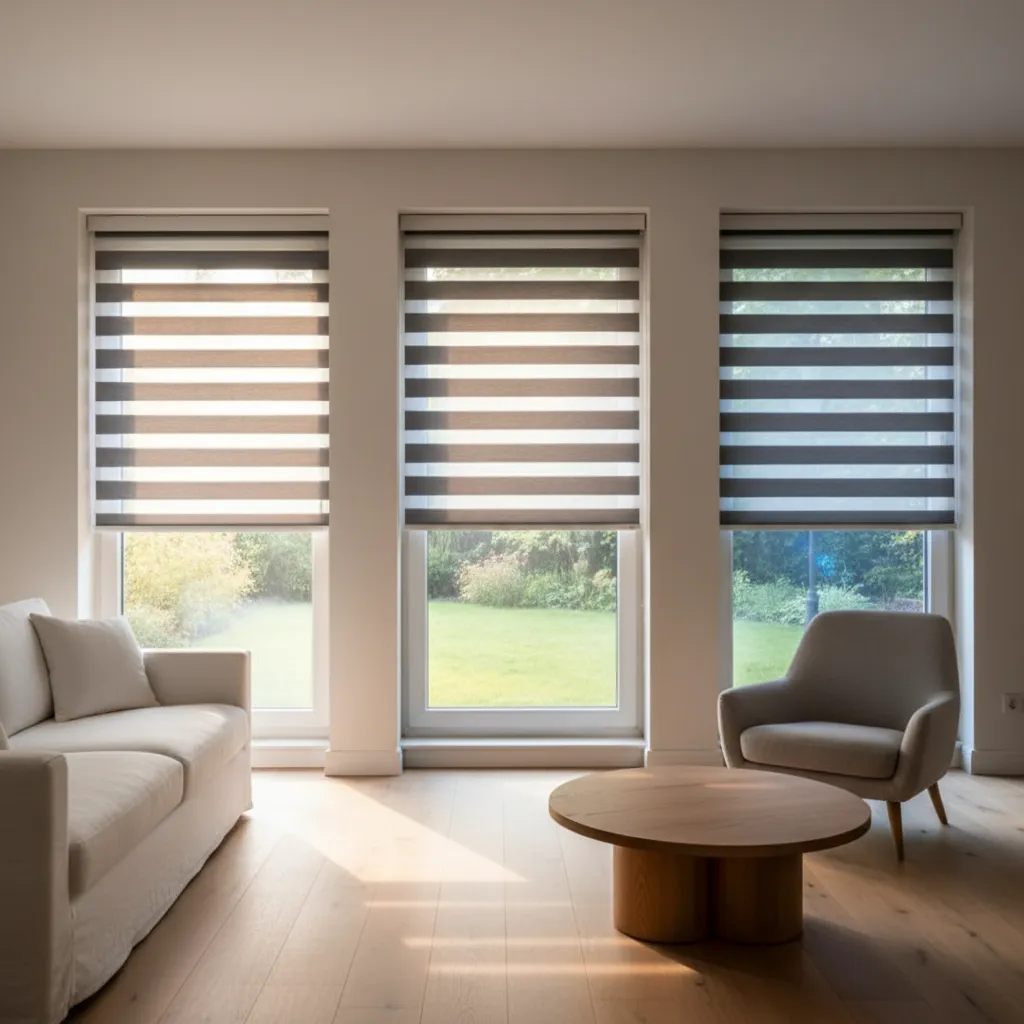
Zebra blinds shift between day, dim, and night modes by sliding the striped fabric layers past each other.
2. The operating system: chain or motorized
Most zebra shades use a continuous loop chain on one side. You pull one way to lower and shift the fabric, and the other way to raise it. Higher‑end systems are smooth and quiet, which matters when you’re adjusting them every day.
You can also choose motorized zebra blinds. A small, hidden motor inside the tube moves the fabric for you, usually with a remote, wall switch, or phone app. Many of our Surrey and Vancouver clients pair smart motorized blinds with voice assistants so they can dim glare on the sofa without standing up.
3. The hardware: cassette and bottom bar
The top cassette hides the roll, screws into the window frame or wall, and can be colour‑matched to your trim. A weighted bottom bar keeps the fabric hanging flat so the stripes line up neatly. In wider windows, the right components make a big difference to how smoothly everything moves over time.
Light control and privacy: what to expect
Think of zebra blinds as “layered light control” rather than a full blackout system. Here’s how they usually perform in real rooms:
- Daytime privacy: In the staggered or closed position, passersby can’t see clear details inside, but you still get a soft glow. Perfect for street‑facing living rooms and kitchens.
- Glare control: The sheer sections cut harsh glare on screens and glossy surfaces while still letting daylight in, so you’re not sitting in a cave in the middle of the afternoon.
- Night privacy: At night, when your lights are on and outside is dark, silhouettes may still be slightly visible with some fabrics. Many homeowners layer zebra blinds with blackout roller shades or drapery in bedrooms for extra comfort.
Research from organizations like the Sleep Foundation: Light and Sleep links darker bedrooms with better melatonin production and more restful sleep for many people, which is why full blackout is still the go‑to for light‑sensitive sleepers. Zebra blinds can be part of that setup, especially when paired with a dedicated blackout layer behind them.
Best rooms for zebra blinds
Around the Lower Mainland, we see zebra blinds working especially well in:
- Living rooms and family rooms – Flexible for movie nights, working from the sofa, and daytime lounging without feeling closed in.
- Dining areas and kitchens – Great for morning sun and street‑facing windows where you still want a bit of a view.
- Home offices – The “dimmed” position cuts screen glare while still giving you natural light, which helps keep you alert during long Zoom days.
- Hallways and stairwells – These usually don’t need blackout, but benefit from privacy and a finished, modern look.
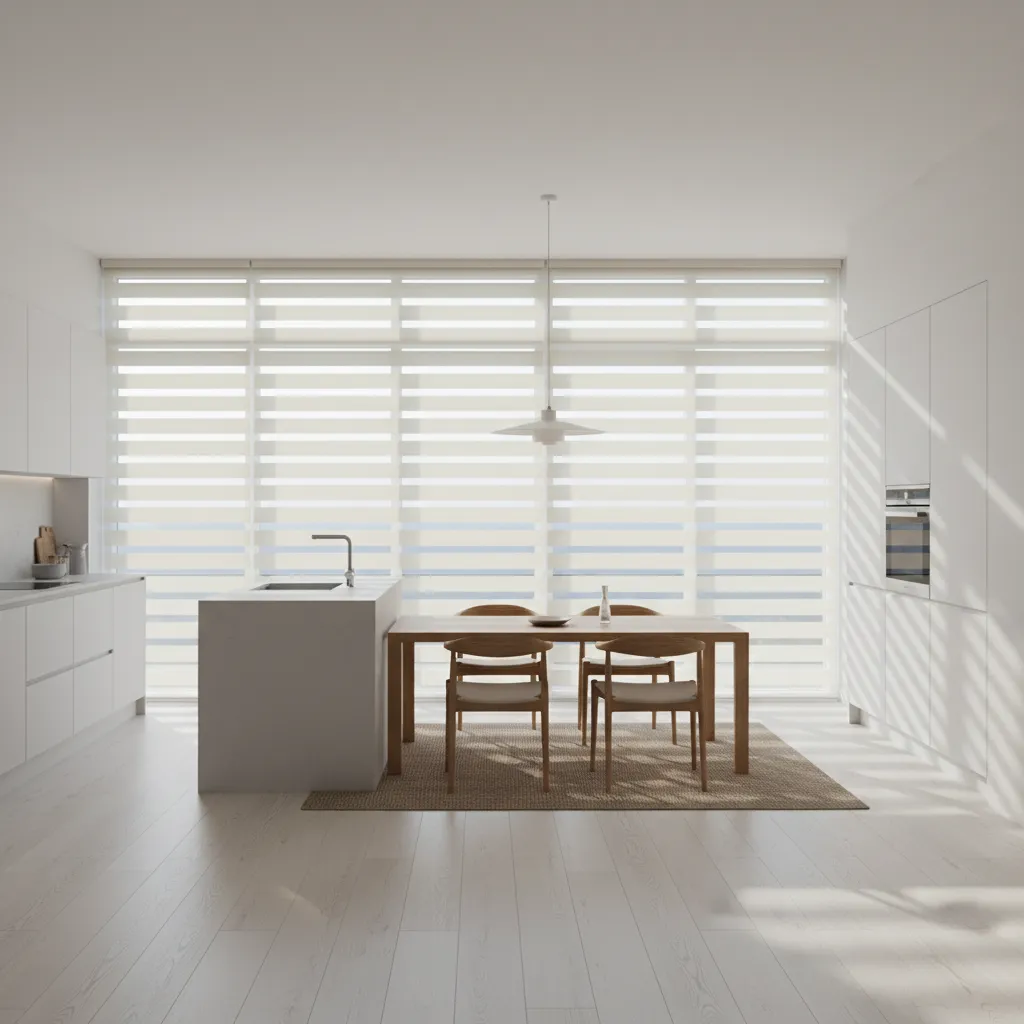
Zebra blinds work especially well in open-plan kitchens and dining areas where you want both daylight and privacy.
For nurseries and main bedrooms, we often recommend a layered solution: for example, zebra blinds for daytime flexibility plus a separate blackout shade or lined drapery for night. During an in‑home visit, our team can walk you through which combination makes sense for each room.
As one recent example, in a Surrey townhouse we paired zebra shades in the open‑plan living and dining area with blackout roller shades in all three bedrooms, so the homeowners get daytime softness where they gather and fully dark rooms where they sleep.
Zebra blinds vs other window coverings
If you’re trying to sort through all the options, here’s a quick, honest comparison based on what we install most often in Surrey and Vancouver homes.
Option | Best for | Where zebra blinds fit in |
Simple, clean look; blackout or solar fabrics | Zebra gives more “in‑between” light control than a single roller but not quite the full blackout a dedicated bedroom roller can offer. | |
Insulation and energy savings | Honeycomb shades still win for insulation, especially on drafty or older windows. Natural Resources Canada notes that windows can account for roughly 25–35% of a home’s total heat loss, so that extra insulation matters on colder exposures. Zebra does better if you care more about view and style than maximum efficiency. See the Natural Resources Canada: Market Transformation Roadmap for more on window performance. | |
Horizontal blinds (faux wood / aluminum) | Tight privacy and tilt control | Zebra blinds are quieter, easier to clean (no individual slats), and look softer, but slatted blinds can close more firmly for tricky street‑level windows. |
Soft, airy look | Zebra blinds offer a similar light feel but with a smaller footprint and more precise control over privacy. |
There’s no one “best” option for every window. During a free consultation, we often mix solutions in the same home: maybe zebra blinds in main living areas, honeycomb shades on colder north‑facing windows, and classic blackout rollers in bedrooms.
Popular zebra blind options we install in Surrey & Vancouver
Because Ray Blinds manufactures in Surrey, we can tweak details that big‑box stores usually can’t. Some of the choices you’ll make:
- Fabric openness and colour: Lighter colours reflect more heat and feel airy; darker tones give better glare control and a stronger stripe effect.
- Valance / cassette style: Square, slim cassettes in white or matching your trim keep things looking built‑in, especially in newer condos.
- Manual vs motorized: For tall or hard‑to‑reach windows, motorized zebra blinds with smart controls are worth considering. Pairing these with timers can help you manage heat gain on sunny days without thinking about it. Windows can be a major source of heat loss and gain in Canadian homes, so small adjustments add up over time, as outlined in the Natural Resources Canada: Market Transformation Roadmap.
- Layering: In primary bedrooms, we often install zebra shades inside the frame with side panels or a separate blackout roller above the window for a hotel‑style finish.
If you’d like to see fabrics in person, you can visit us in Surrey by appointment or book a free in‑home consultation in the Lower Mainland. We’ll bring samples to your windows so you can see how different stripes look in your actual light.
Zebra blinds FAQ
What is zebra blinds in the simplest terms?
In short, zebra blinds are a dual‑layer roller blind with alternating sheer and solid stripes. Slide the stripes past each other to move from open to dim to closed. The goal is smooth control of daylight and privacy in one neat package.
Do zebra blinds darken a room enough for sleep?
With darker fabrics and a tight inside mount, zebra blinds can make a room fairly dark, especially in the evening. For light‑sensitive sleepers or bright city streets, we usually suggest pairing them with a dedicated blackout layer for best results, since sleep experts strongly encourage keeping bedrooms as dark as reasonably possible.
Are zebra blinds hard to clean?
Not at all. In most homes, a soft brush attachment on a vacuum and the occasional light dusting are enough. Because there are no slats, they collect less dust than traditional blinds. For sticky spots, a barely damp cloth and gentle dabbing usually does the trick; we just guide clients to skip harsh cleaners on the fabric.
Can zebra blinds help with energy bills?
They aren’t the top performer for insulation the way honeycomb shades are, but they still help cut direct sun, glare, and some heat gain. Natural Resources Canada estimates that windows can account for roughly 25–35% of a home’s total heat loss, so any well‑fitted window covering helps your furnace and AC work a little less.
How long do zebra blinds usually last?
With good‑quality components and proper measuring, zebra blinds should last many years of daily use. The biggest factors are fabric quality and hardware. Because Ray Blinds manufactures locally and sources components directly, we can match fabrics and mechanisms to how often you’ll use each window, then stand behind the product and installation.
Next steps: see zebra blinds on your windows
If you’re still picturing your own living room and thinking, “Would that actually work here?”, that’s where an in‑home visit helps. One of our design consultants can:
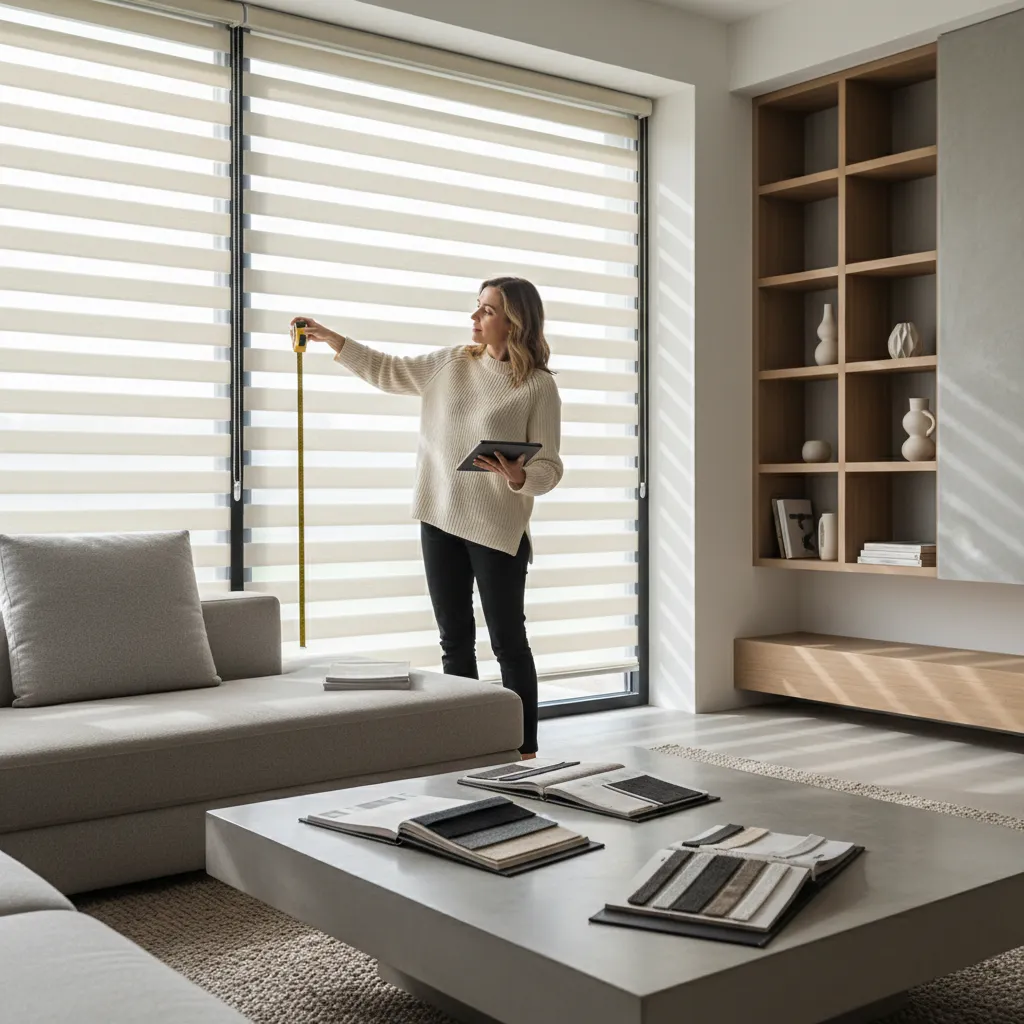
During a free in‑home consultation, a design consultant measures your windows and helps you choose zebra blind fabrics.
- Look at how sun moves through your rooms during the day.
- Check privacy needs from the street, neighbours, and nearby buildings.
- Measure each window so the zebra fabric lines up cleanly.
- Compare zebra blinds with rollers, honeycomb shades, or shutters if you’re on the fence.
We’re a family‑owned manufacturer based in Surrey, so you’re dealing directly with the team that measures, builds, and installs your blinds — no layers of middlemen. If you’d like that kind of hands‑on help or want to see recent installs and real homes, you can Get a Free Quote on Custom Blinds and Shades Today.
Key takeaways
- Zebra blinds use two striped fabric layers to give you “dimmer switch” style control over daylight.
- They shine in living areas, kitchens, and offices where you want softness and flexibility more than full blackout.
- For bedrooms, they work best as part of a layered solution with blackout shades or drapes.
- Local, made‑to‑measure manufacturing means smoother operation, better fit, and faster service across Surrey and Vancouver.