

TL;DR
Solar shades (often made from solar screen fabric) cut glare, heat, and UV while keeping your view. They’re technically a type of roller shade, but instead of solid fabric, they use a woven, “see‑through” screen. They’re great for bright living spaces and home offices, but you’ll usually want something more private at night in bedrooms and bathrooms.
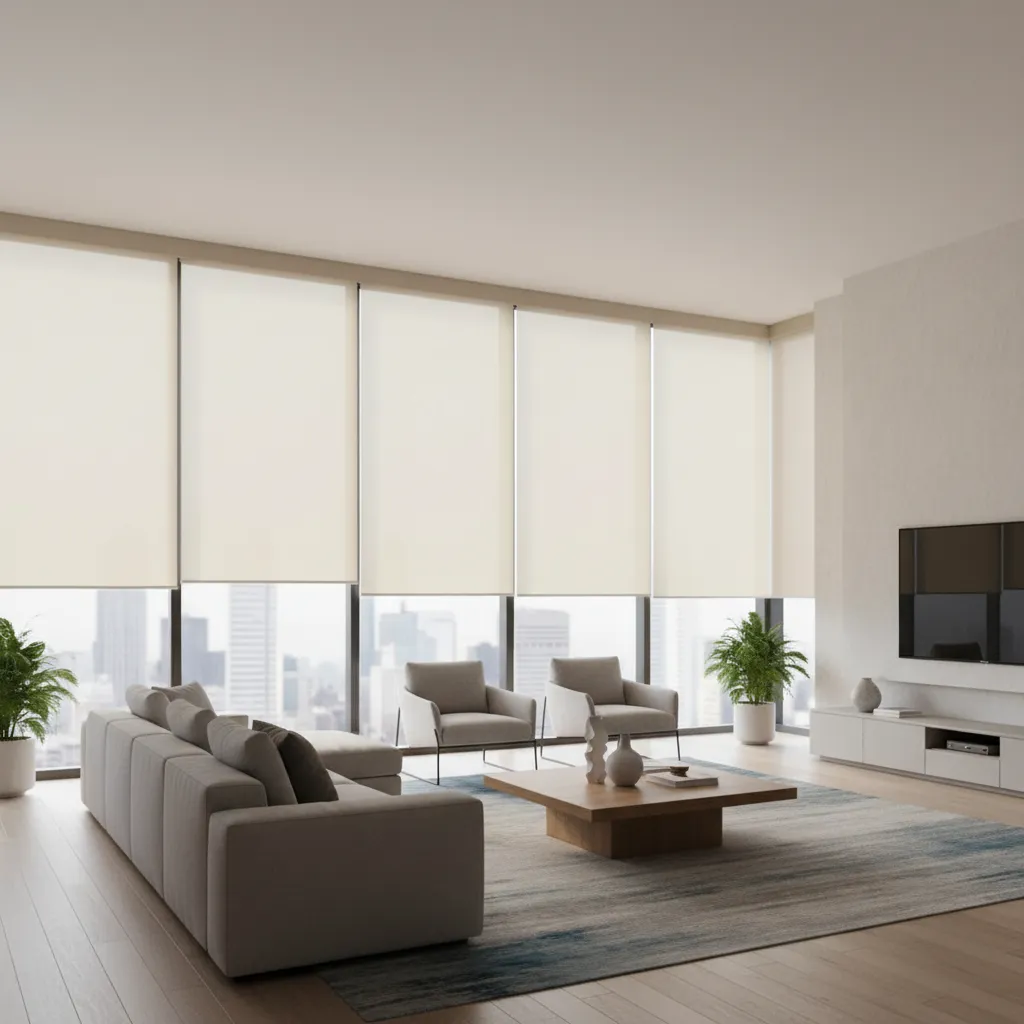
A bright living room with solar shades softening glare while keeping the outdoor view.
If you live in a sunny Surrey townhouse or a glassy Vancouver condo, you’ve probably had that moment at 3 p.m. when your beautiful view turns into brutal glare. The TV washes out, the sofa starts to cook, and you end up pulling the blinds shut and losing the view you paid for.
That’s usually when people start Googling questions like “what are solar shades?” and whether they’re the same thing as “solar screens” or just another name for roller blinds. The terms get thrown around a lot, and it’s easy to feel like every company is saying something slightly different.
This guide walks through what solar shades actually are, how they compare to regular roller shades and traditional blinds, and where each one makes the most sense in a real BC home.
Solar shades (and solar screens) explained in plain language
Think of solar shades as sunglasses for your windows. They’re a type of roller shade made from a special woven screen fabric that:
- Cuts harsh glare on screens
- Blocks a big portion of UV that fades floors and furniture
- Reduces heat from direct sun
- Still lets you see out during the day
How a solar shade is built
- A slim top cassette or open roller tube
- Solar screen fabric that rolls up and down
- A weighted bottom bar to keep the fabric flat
- Manual chain control or a motor for push‑button / app operation (motorized blinds)
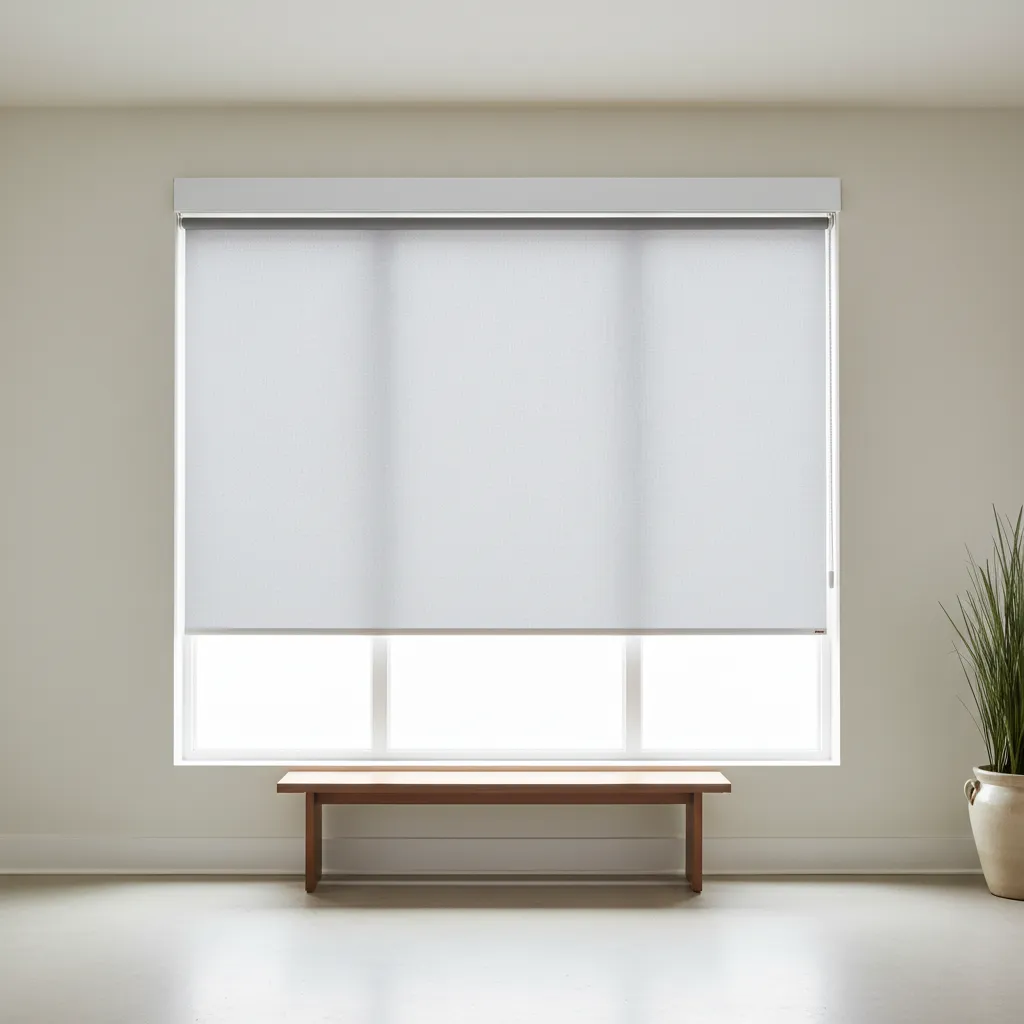
A simple roller cassette, solar shade fabric and chain control on a large window.
The fabric itself is the star of the show. It’s a mesh that comes in different “openness factors”—for example 1%, 3%, 5% or 10%. A lower number means a tighter weave: more glare and heat reduction, less view and daylight. Higher numbers are more open and view‑friendly, but let more sun through.
Solar shades vs “solar screens”
The phrase solar screens can mean two slightly different things:
- In many interior design conversations, people use “solar shades” and “solar screens” for the same product: an interior roller shade with solar screen fabric.
- In building and energy articles, “solar screens” often mean exterior screens or roll‑down panels mounted outside the window to cut heat before it hits the glass.
Functionally, the fabric idea is the same: a mesh that reduces solar heat gain, UV and glare while keeping some view. The difference is mostly where it’s installed and how it looks in the room.
Solar shades vs regular roller shades
Because solar shades sit on a roller tube, they’re technically a subset of roller shades. The difference is in the fabric and what you want the shade to do day‑to‑day.
Key differences at a glance
Feature | Solar shade (screen) | Light‑filtering roller | Blackout roller |
Fabric | Woven mesh, see‑through | Solid but glowing with light | Solid, opaque |
View out (daytime) | Good to excellent, depending on openness | Soft outline only | None |
Glare control | Strong, especially at 1–3% openness | Moderate | Complete |
Daytime privacy | Good (you see out more than others see in) | Good | Excellent |
Night privacy (lights on) | Poor to fair — you’re backlit | Good | Excellent |
Best rooms | Living areas, kitchens, home offices | General living spaces | Bedrooms, media rooms |
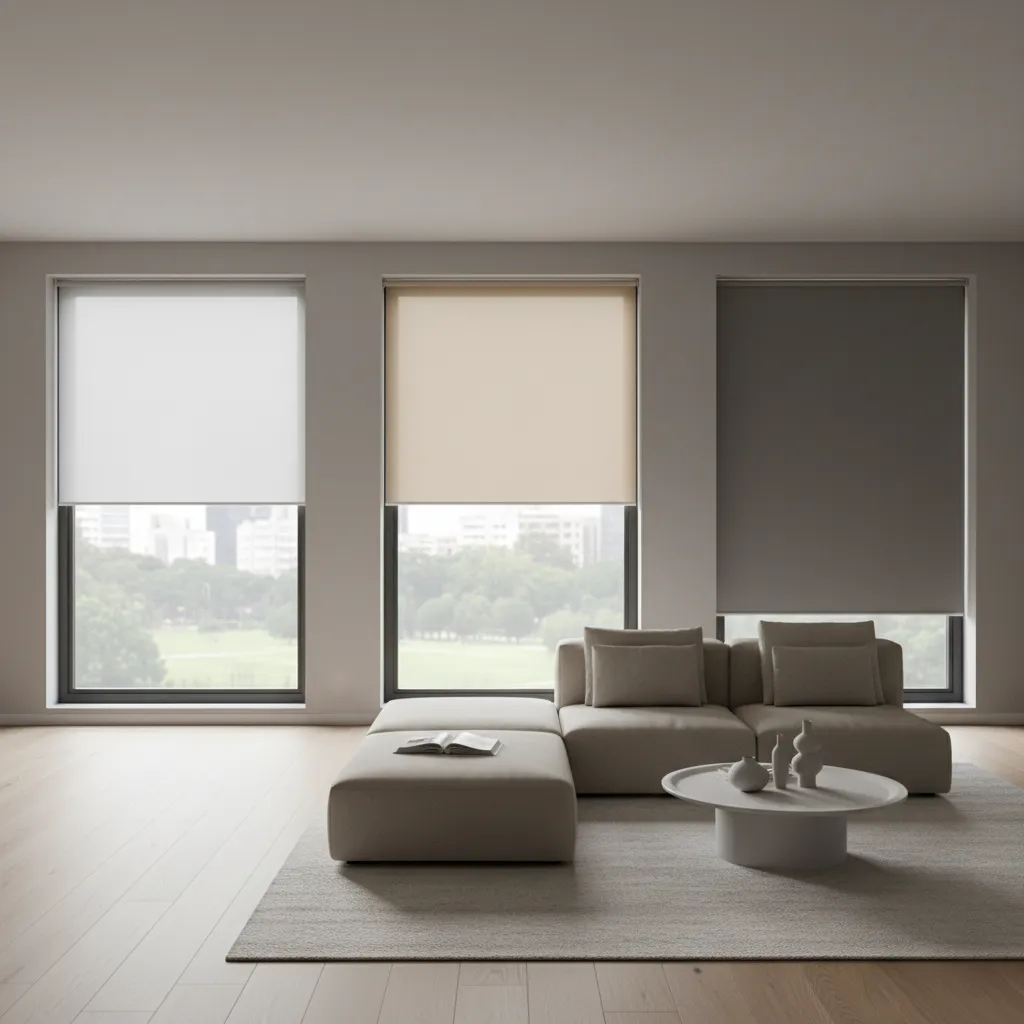
Side-by-side look at solar shades, light‑filtering rollers and blackout rollers in one space.
If you want to keep your view of the mountains or city but tame the West‑coast sun, solar fabric is usually the better pick. If you want to sleep in on summer mornings or darken a media room, a blackout roller shade or blackout honeycomb blind will do a better job.
From an energy perspective, both solar and blackout rollers help by covering the glass. The big difference is that solar fabrics are focused on cutting solar heat gain and UV while still admitting some daylight, whereas blackout rollers are about blocking light almost completely.
Solar shades vs traditional blinds
Now let’s compare solar shades to classic blinds like horizontal faux‑wood blinds or vertical blinds.
How traditional blinds behave
- Made of slats (wood, faux‑wood, aluminum, PVC)
- Light is controlled by tilting the slats
- Good privacy and flexible light control, but more visual “lines” in the window
How solar shades are different
- One clean sheet of fabric, no slats
- Roll up completely out of the way for a wide‑open view
- Down position gives a soft, modern look instead of hard lines
- Less to dust — usually just a quick vacuum or light wipe
If you love a minimal, almost “built‑in” look, solar or other roller shades tend to win. If you want to fine‑tune privacy during the day (for example, tilt blinds up so neighbours see ceiling, not you), slatted blinds have an edge.
For many Lower Mainland homes, we end up mixing styles: solar shades or sheer horizontal shades in main living spaces; blinds or honeycomb in bedrooms; and sometimes a second blackout layer behind solar fabric on very bright or privacy‑sensitive windows.
Pros and cons of solar shades in BC homes
Why homeowners love solar shades
- Comfortable daylight – Cuts that “squinting at your laptop” glare while still letting light in.
- Helps protect finishes – UV‑blocking fabrics help reduce fading of floors, rugs and furniture.
- Lower heat gain – By reflecting and filtering part of the sun before it hits the room, solar shades can reduce heat build‑up on sunny exposures.
- Preserves views – Great for high‑rise condos, river or mountain views where you don’t want to live in the dark just to stay comfortable.
- Works well with automation – Because they roll neatly and don’t weigh much, solar shades pair nicely with motorized blinds and smart controls, which can further improve comfort and energy performance.
Limits and trade‑offs to be aware of
- Limited privacy at night – With lights on inside and darkness outside, solar fabric becomes see‑through from the street. Many homeowners who put them in bathrooms or bedrooms end up wishing they hadn’t. Solar shade buying guides from major retailers make the same caution about privacy at night.
- They soften light, not block it – Even with a dense 1% fabric, the room will not be truly dark. Light‑sensitive sleepers still want a blackout solution.
- View direction matters – On a north‑facing window, you may feel they’re almost too dim; on a south‑ or west‑facing wall of glass, they’re a lifesaver.
A good rule we use in consultations: treat solar shades as a “day layer.” If you need serious privacy or darkness at night, plan a second layer such as a blackout roller shade, honeycomb shade, or lined curtain.
How to choose openness, colour, and rooms for solar shades
1. Pick an openness factor that matches the window
- 1–3% – Tight weave, strongest glare and UV reduction, more privacy. Best for big south / west windows, home offices with screens, or areas with strong afternoon sun.
- 5% – Balanced choice for many living rooms: good view, still a clear reduction in brightness.
- 10% – Very open, “barely there” look. Best for lightly sunny or shaded exposures where you mostly want a bit of softness.
2. Choose fabric colour wisely
- Darker solar fabrics reduce glare and help your eyes focus through to the outside view (similar to wearing sunglasses).
- Lighter solar fabrics reflect more heat and keep the room feeling brighter, but you’ll see the mesh texture more and the view will feel slightly “whiter.”
3. Match the product to the room
Based on what we see in Surrey and Greater Vancouver homes, here’s a simple starting point:
- Living rooms with a view: Solar shades only, or solar + decorative side panels.
- Home offices: Solar shades on the brightest windows, maybe regular rollers elsewhere.
- Kitchens and dining rooms: Solar shades or standard roller shades, depending on privacy needs.
- Bedrooms and nurseries: Blackout roller or honeycomb shades, with the option of a solar or sheer layer if you like daytime view.
- Bathrooms facing neighbours: Usually not solar shades alone — go for frosted glass effect, top‑down cellular, or a dedicated privacy fabric.
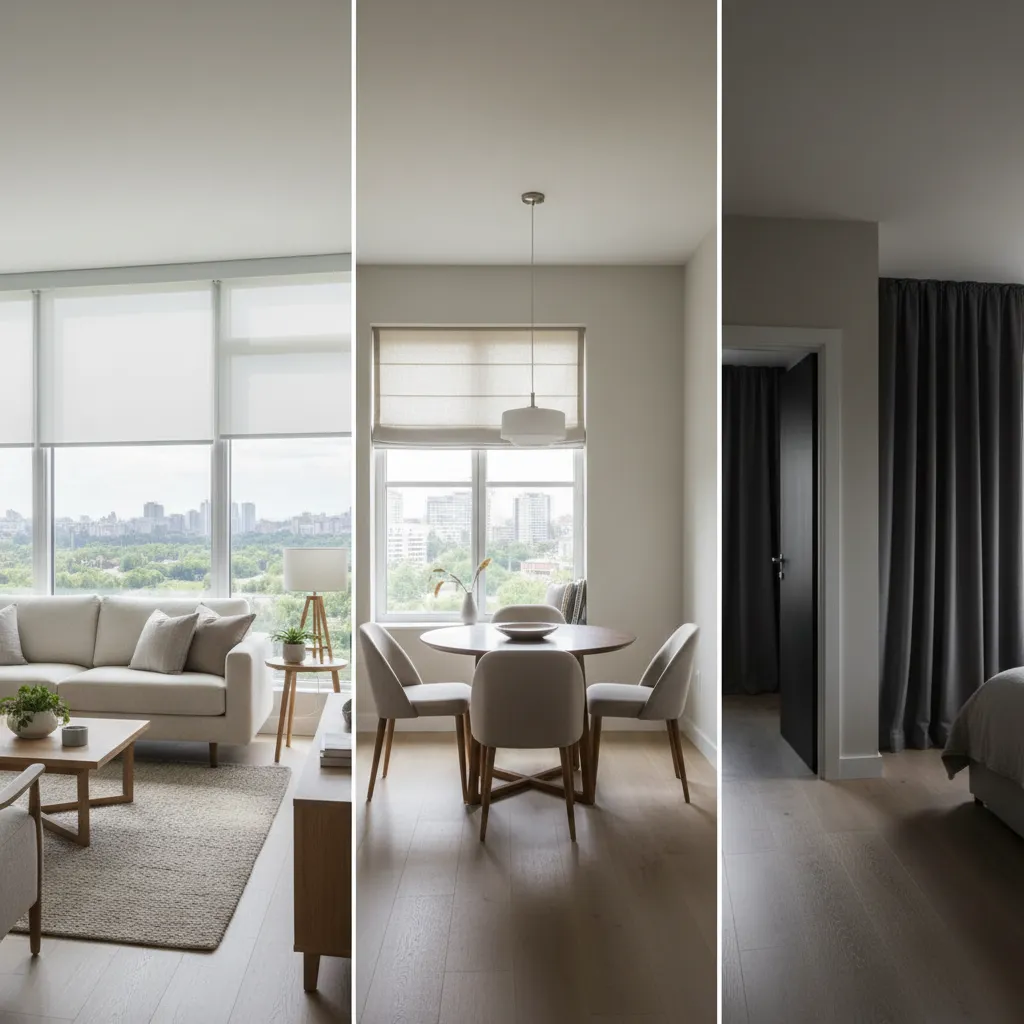
Different rooms call for different solutions: solar shades in living areas, blackout options in bedrooms.
Common questions about solar shades and solar screens
Do solar shades really keep a room cooler?
They can definitely help. Window coverings in general reduce unwanted heat from sun‑exposed glass, and solar fabrics are designed specifically to cut solar heat and glare while still admitting some light. Your results depend on window direction, glass type, and how often you actually use the shades.
Are solar shades good for privacy at night?
During the day, solar shades give a nice one‑way feel: you see out, passers‑by see mostly a dark surface. At night, that flips. With the interior lights on, people outside can usually see in quite clearly. That’s why we rarely recommend solar fabric as the only layer in bedrooms or street‑facing bathrooms.
Can solar shades be motorized?
Yes. Most interior solar shades are just roller shades with solar screen fabric, so they work very well with tube motors and smart controls. At Ray Blinds, we motorize most roller‑style shades (with a few exceptions like vertical and aluminum blinds) and can tie them into an app or voice control for “one tap” glare control.
Where do solar shades make the biggest difference?
You’ll feel the biggest change on large, sunny windows: west‑facing condo living rooms, south‑facing kitchen eating areas, or any space where you currently close blinds mid‑day just to see a screen. In softer light or heavily shaded yards, a regular light‑filtering roller shade may be all you need.
Need help choosing for your Surrey or Vancouver home?
There’s no one “right” answer for every window. Solar shades, standard roller shades, honeycomb shades, and sheer horizontal shades all solve slightly different problems — glare, privacy, comfort, and style.
Ray Blinds is a local, manufacturer‑direct team based in Surrey. We:
- Bring samples of solar, roller, and other fabrics right to your home
- Look at how each room is used (work, sleep, TV, kids, pets)
- Measure precisely so your shades sit clean and tight to the window
- Handle installation, weekend appointments included, so you’re not wrestling with brackets and levels
Not sure whether solar shades, regular rollers, or blinds are best for a tricky window? Book a free in‑home consultation, and we’ll walk you through the options, no pressure.