


A quick weekly dusting keeps blinds looking clean without a full deep wash.
By Ray Blinds Cleaning & Care Team•Updated May 11, 2026•Approx. 7 min read
This guide was written with AI assistance and reviewed by the Ray Blinds team for accuracy.
TL;DR:
- Dust blinds every 1–2 weeks with a microfiber cloth or vacuum brush.
- Use mild soap and barely damp cloths on faux wood and aluminum; treat fabric shades with light vacuuming and spot cleaning only.
- Remove blinds from the window only for heavy buildup or stains, and always follow the manufacturer’s care label.
If you’ve ever opened your blinds and watched dust float off the slats like a movie effect, you’re not alone. Many Surrey and Vancouver homeowners aren’t sure how to clean blinds in a way that actually works, doesn’t wreck the finish, and doesn’t eat up their entire Saturday. The good news: with the right routine, you can keep faux wood, aluminum, and fabric blinds looking new, reduce allergens, and help them last years longer.
Below, we’ll walk through fast weekly refreshes, deeper washes by material, and clear steps on when and how to take blinds down. We’ll also answer common questions like “how do I remove vertical blinds?” so you feel confident handling the ones you already own.
How often should you clean blinds?
Blinds collect the same dust, pollen, and pet hair that lands on your furniture—just in narrower spaces. As a rule of thumb:
- Every 1–2 weeks: light dusting or vacuuming of all blinds.
- Every 2–3 months: a more thorough wipe of each slat or fabric panel.
- Once a year (or as needed): deeper clean, which may include taking blinds down if there’s grease, heavy grime, or nicotine buildup.
Regular light care is much easier than trying to rescue blinds that haven’t been touched in years. If you’re upgrading to zebra blinds or new roller shades, starting a simple routine from day one will keep them looking showroom‑fresh.
Supplies that make blind cleaning easier
You don’t need fancy gadgets. Most blinds clean up well with gentle, everyday items:
- Microfiber cloths or mitts
- Soft brush attachment for your vacuum
- Small bucket or bowl of lukewarm water
- A drop or two of mild dish soap (no bleach or strong solvents)
- White vinegar for greasy buildup in kitchens
- Old towel to protect your sill or floor
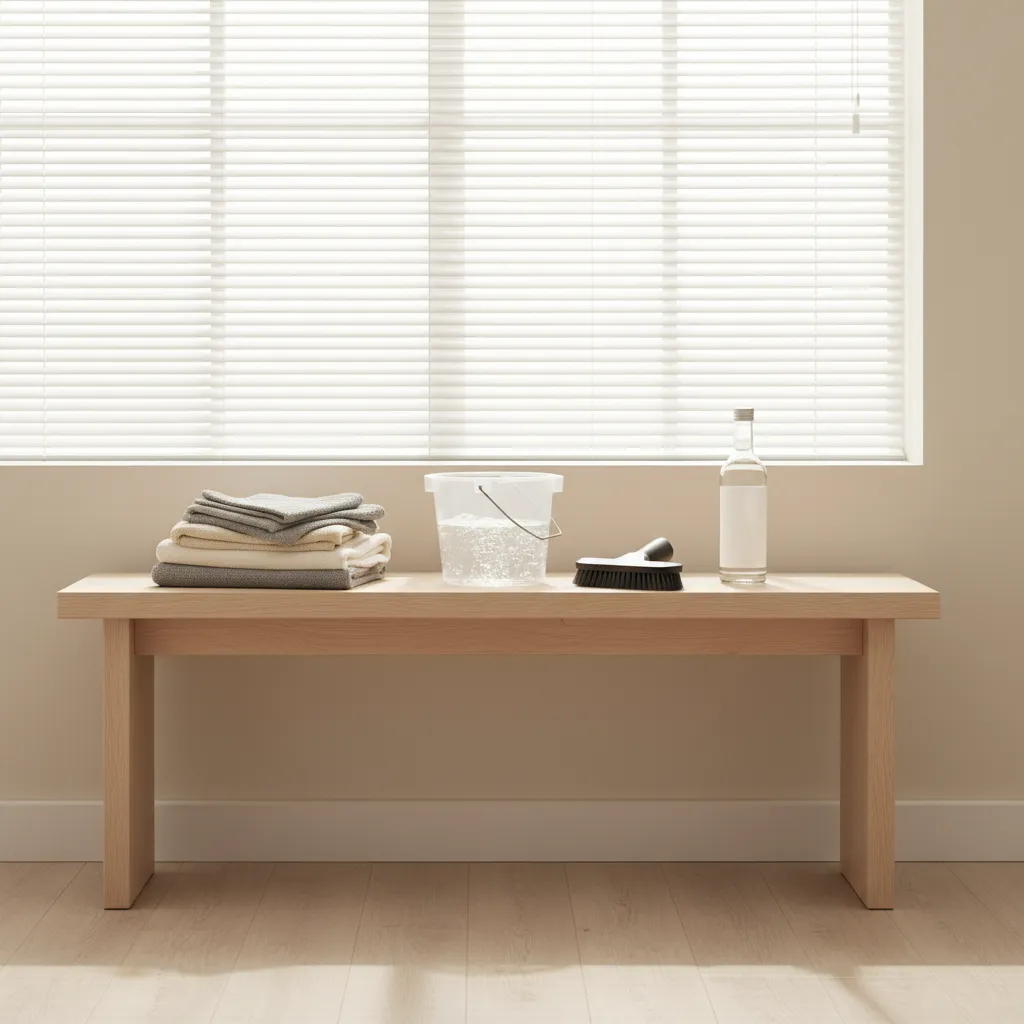
Simple supplies like microfiber cloths, mild soap, and a vacuum brush are all you need to clean blinds.
For fabric shades and honeycomb blinds, a gentle upholstery attachment on your vacuum is usually the safest option. Always check the manufacturer’s label before you wet fabric.
How to clean faux wood blinds without warping
Faux wood blinds are usually made from PVC or composite materials, which handle humidity better than real wood. Still, they respond best to light moisture and gentle cleaners.
Step‑by‑step: clean faux wood blinds without taking them down
- Fully close the blinds so the slats form a flat surface.
- Starting at the top, dust with a microfiber cloth or vacuum brush, working side to side.
- Flip the slats the other way and repeat so you catch both sides.
- Mix a little mild dish soap in lukewarm water. Dip a cloth, wring it until only slightly damp, then wipe each slat.
- Follow with a dry cloth to remove extra moisture and polish.
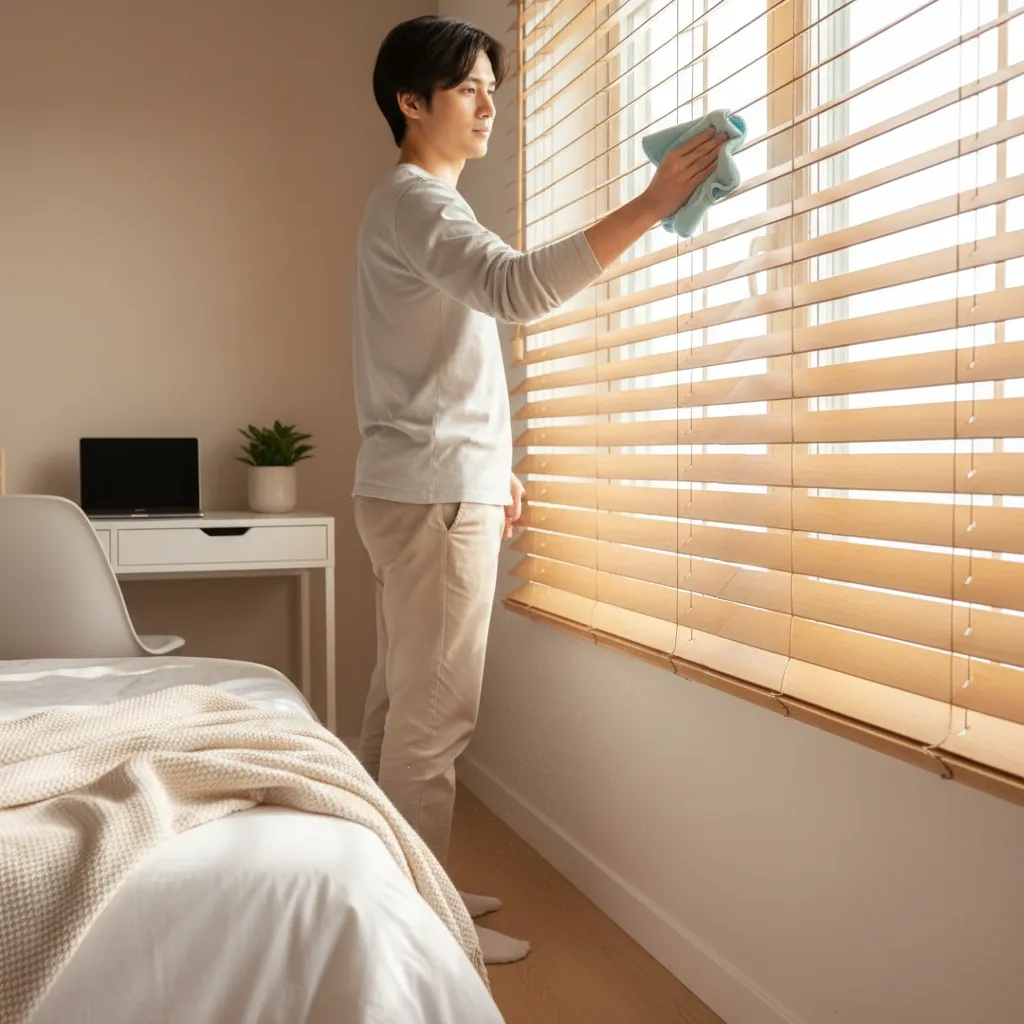
Use a barely damp microfiber cloth and light pressure to clean faux wood blinds without warping.
Dealing with greasy or sticky spots
In kitchens, airborne grease can cling to slats. Add a splash of white vinegar to your soapy water for extra cutting power, then test on a small area first. Skip abrasive scrub pads, which can scratch the finish.
If you’re thinking about swapping older faux wood for easier‑to‑clean options like roller blinds, a quick chat with a blinds specialist can help you compare fabrics and finishes that resist grease.
How to clean aluminum blinds so they don’t bend
Aluminum blinds are light and sleek, but their slats can kink if you use heavy pressure. Think “gentle and steady” rather than “scrub like a baking tray.”
Fast method: clean aluminum blinds in place
- Close the blinds and support the slats with one hand from behind.
- With the other hand, wipe along each row using a dry microfiber cloth or vacuum brush.
- For marks, use a barely damp cloth with mild soap, again supporting from behind so the slats don’t bend.
- Dry with a soft cloth, so water spots don’t form.
Can you wash aluminum blinds in the tub?
For very dirty aluminum blinds, some manufacturers allow a gentle bath. If the care instructions confirm this:
- Lay a towel in the tub, fill it with a few inches of lukewarm water, and add mild soap.
- Place the blinds on the towel, gently swoosh, then rinse with the shower.
- Let them dry completely before rehanging.
Be sure all caps and cords are in good condition first. If anything looks loose, a professional from Ray Blinds can check hardware and suggest safe care steps.
How to clean fabric blinds and shades
Fabric roller shades, roman shades, and honeycomb (cellular) blinds bring softness and insulation, but they need more gentle care than hard slats.
Routine care for fabric roller and roman shades
- Lower the shade fully.
- Use a vacuum with a soft brush on low suction, working from top to bottom.
- For surface dust, a clean microfiber cloth lightly swept over the fabric works well.
For roller shades, focus on the front where dust settles. Roman shades benefit from an extra pass along the folds, where pet hair likes to hide.
Special care for honeycomb / cellular shades
Honeycomb blinds have air pockets that improve insulation. To clean:
- Use a soft brush vacuum attachment over both sides of the shade.
- For loose crumbs in the cells, a hair dryer on cool can gently blow them out.
- Spot clean stains only if the label says water is safe, dabbing instead of scrubbing.
If you’re ever unsure, contact the manufacturer or ask during a free in‑home consultation. The fabrics used on many custom shades respond very differently from generic off‑the‑shelf options.
When and how to remove blinds from a window
If there’s heavy grease, thick dust layers, or old smoke residue, you might wonder how to remove blinds from a window for a real reset. The process depends on the style.
How to remove blinds from a window (standard horizontal blinds)
- Fully raise the blinds and lock them in place.
- Locate the mounting brackets at the top corners of the headrail.
- Open the bracket covers (they usually flip open or release with a small tab).
- Support the blinds with one hand and slide the headrail out of the brackets.
- Carry the blinds to your cleaning area, keeping cords untangled.
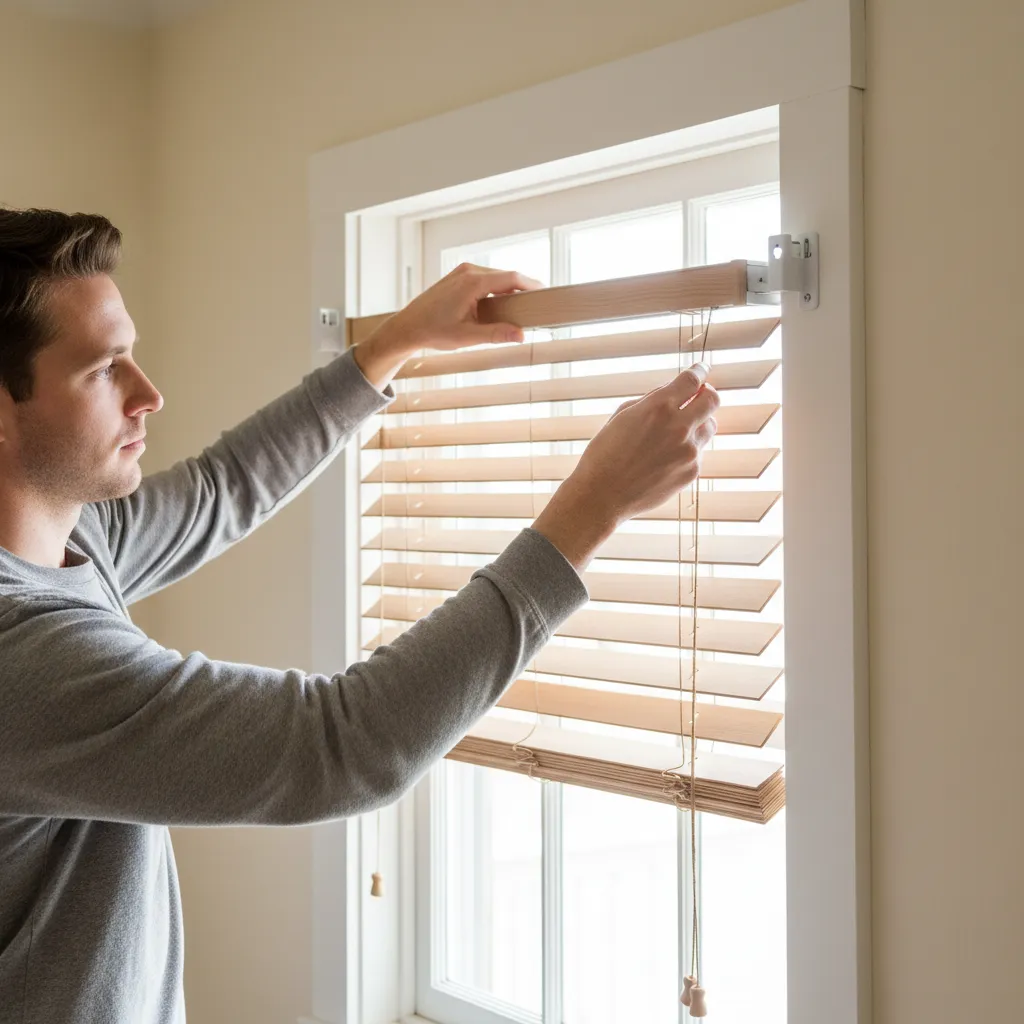
Support the headrail with one hand as you release it from the brackets to safely remove blinds for deep cleaning.
When rehanging, slide the headrail back into the brackets until it clicks. If brackets feel loose or stripped, it might be a good time to upgrade to new motorized blinds or a fresh set of custom blinds with new hardware.
How do I remove vertical blinds?
Many people search “how do I remove vertical blinds” because they’re nervous about breaking a clip. Here’s a steady way to do it:
- Turn the vanes (the long vertical pieces) so they’re half open—you should see their edges.
- Starting at one end, gently lift the vane up into the clip, then swing the bottom out and down. Most clips release when the vane is pushed slightly higher than its resting position.
- Work along the track, removing each vane and setting them flat on a towel.
- Once all vanes are down, inspect the carrier clips. If you plan to deep clean the headrail or replace the track, follow the manufacturer’s instructions or speak with a blinds installer.
To clean the vanes, wipe both sides with a slightly damp cloth and mild soap, then dry flat. Fabric vertical vanes may need professional cleaning, especially if they have stiffeners or special coatings.
Simple habits that help blinds last for years
- Dust on laundry day. Linking blinds care to an existing habit keeps it from feeling like another chore.
- Keep moisture light. Too much water on faux wood, aluminum, or wood can lead to spots, rust, or warping.
- Use gentle cleaners. Stick with mild dish soap; glass cleaner, bleach, and harsh chemicals can strip finishes.
- Mind pets and kids. Show little ones how to tilt slats gently. Bent slats and damaged cords shorten the life of blinds quickly.
- Watch for early signs of wear. Fraying cords, sticking mechanisms, or sagging slats are your cue to book a blinds checkup or quote for replacement.
Dusting blinds every 1–2 weeks can keep them from ever looking “dirty” again.
Live in Surrey or Vancouver? When to call Ray Blinds
If your blinds are stained, yellowed, or damaged, no amount of cleaning will bring them back to the look you want. At that point, it often makes more sense to invest in new, easy‑care rollers, zebra shades, or motorized options that match how you use each room.
Ray Blinds designs, manufactures, and installs custom blinds across Surrey, Vancouver, and the Lower Mainland. During a free in‑home consultation, we’ll help you choose fabrics and finishes that clean up easily and stand up to real family life—so you spend less time dusting and more time enjoying the view.