

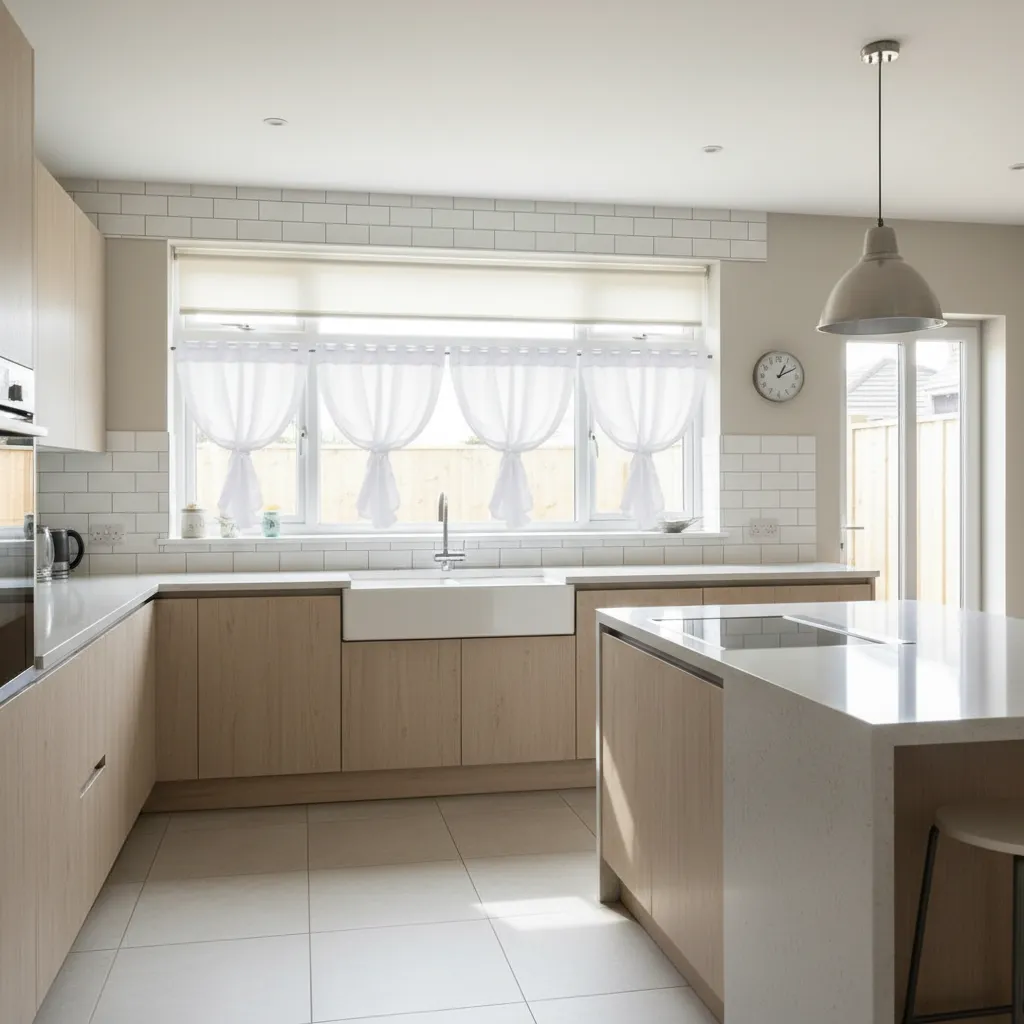
Layered kitchen window treatments keep the room bright while still controlling glare and privacy.
The kitchen is where you make morning coffee, pack school lunches, and catch up at the end of the day. When the window coverings are wrong, you feel it every time the sun hits your eyes at 6 p.m. or the neighbours get a little too clear a view of your sink.
You don’t have to choose between cute cafe curtains and practical, easy-to-clean shades. With a thoughtful mix of cafe curtains, simple kitchen curtain panels, and hard-working blinds or shades, you can keep the room bright, tame glare, and still show off that backsplash you paid good money for.
TL;DR
- Use cafe curtains on the lower half of windows to protect privacy while keeping the room bright.
- Add simple, full-length kitchen drapes and curtains for softness, extra insulation, or evening privacy.
- Layer with zebra blinds or roller shades where you need strong light control and easy cleaning.
- Stick with light, wipeable fabrics and slim hardware for a modern, minimal look.
What modern kitchens need from their window treatments
Before you pick anything pretty, think about what your kitchen window treatments actually need to do. In most Lower Mainland homes, kitchen windows have to handle:
- Strong, changing light – especially on west-facing or corner windows that catch long summer evenings.
- Privacy – from neighbours, walkers on the sidewalk, or townhomes right across the lane.
- Moisture and cooking mess – steam, grease, and the occasional sauce splash near the stove or sink.
- Daily use – opened in the morning, adjusted mid-day, closed again at night.
Energy agencies like Natural Resources Canada and the U.S. Department of Energy estimate that windows can be responsible for roughly a third of a home’s heat loss or unwanted heat gain, so how you manage light and glare in the kitchen isn’t just about looks—it affects comfort and energy use too.
That’s why many Surrey and Vancouver homeowners layer soft pieces like cafe curtains with practical hard treatments such as honeycomb shades or roller blinds. You get the charm of fabric plus the control of modern shades, without cluttering the space.
Cafe curtains 101: light, privacy, and a relaxed feel
Cafe curtains hang on the lower half of the window, often on a slim tension rod or a small bracket-mounted rod. You see them in Paris bistros and classic farmhouse kitchens, and they translate nicely into today’s more minimal spaces when handled with care.
Why cafe curtains still work in modern kitchens
- They protect privacy at counter height while leaving the top of the window open for light and views.
- They soften hard finishes like stone, tile, and stainless steel without feeling fussy.
- They’re easy to pull back while cooking or cleaning because they sit below your eye line.
For a simple, current look, think light linen‑look fabrics, cotton, or performance textiles that handle moisture well. Stay away from heavy gathers or bold ruffles; a soft pleat or subtle pinch keeps things airy.
Not sure about sizes and fullness? As a rule of thumb, aim for about 1.5 times the window width in fabric so the cafe curtains look softly full without feeling frilly.
3‑Layer Kitchen Window Plan: how to pair cafe curtains with modern kitchen drapes and curtains
Layering lets you design different “modes” for the room: bright daytime, soft evening light, and full privacy when the lights are on and it’s dark outside.
Layered look: step-by-step
- Start with the control layer. This is the shade or blind right at the glass. Decide whether you need full blackout at night or just glare control. For strong light blocking, plan a layer of blackout shades inside the frame.
- Add the comfort layer. Mount cafe curtains just above mid-window so they cover where you stand and work. Keep the rod slim and close to the frame so the fabric moves easily around taps and counters.
- Finish with the privacy/frame layer. Hang kitchen curtain panels high and wide, like you would in a living room. This frames the window, makes it feel taller, and lets most of the fabric stack off the glass.
Those three simple layers—control at the glass, comfort at counter height, and privacy with long panels—make it easy to switch from open and bright to cosy and covered without fighting with cords all day.
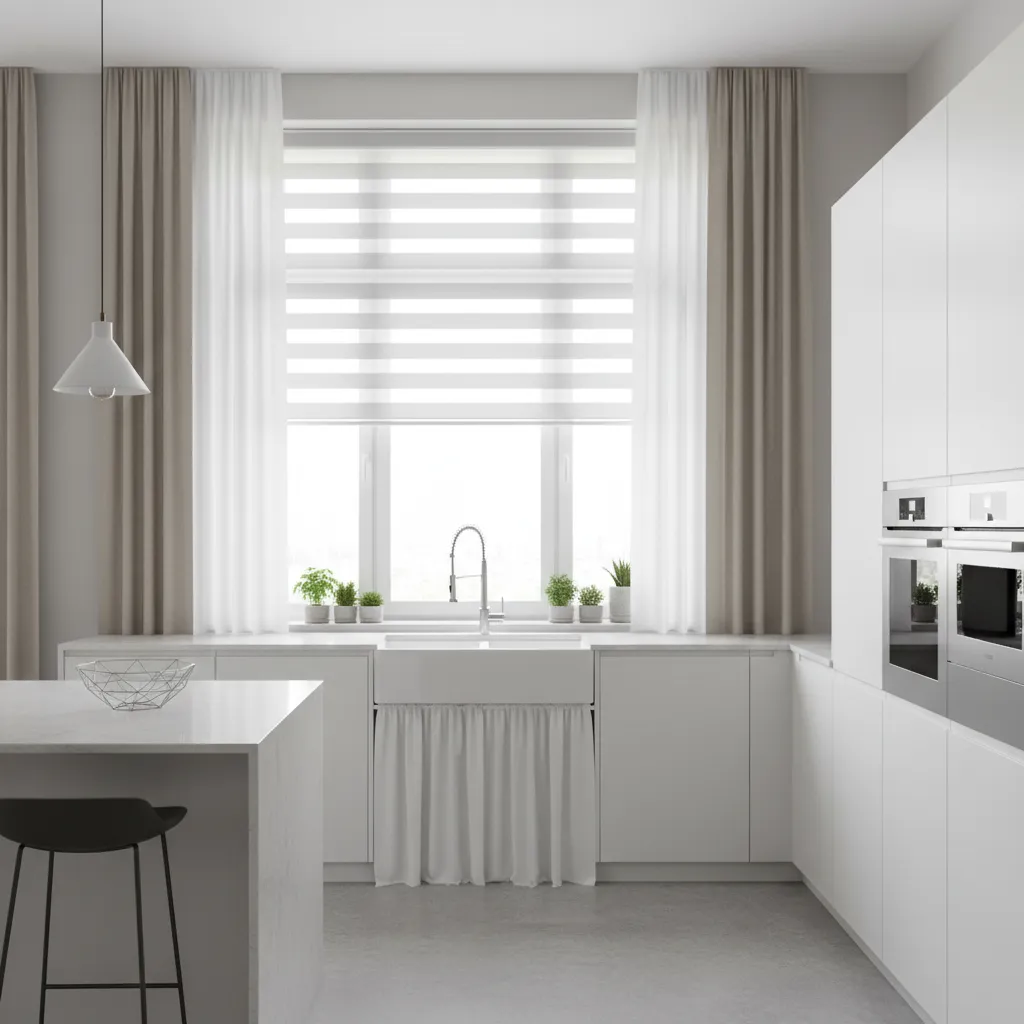
Control at the glass, comfort at counter height, and privacy with long panels create a flexible three-layer kitchen window plan.
In a recent Cloverdale townhouse kitchen, we combined sheer cafe curtains on the bottom half of the window, relaxed off‑white side panels, and a discreet zebra blind tucked inside the frame. Afternoon glare dropped, but the homeowners still kept plenty of natural light, and they stopped leaving the blinds permanently closed just to feel private.
“The most livable window setups give you at least two ways to live in the room, not just one ‘perfect’ photo moment.”
Blinds, shades, and curtains: what goes where?
Because Ray Blinds focuses on custom blinds and shades, we see how real kitchens behave. Some windows are perfect for soft kitchen drapes and curtains; others do better with hard treatments that wipe clean in seconds.
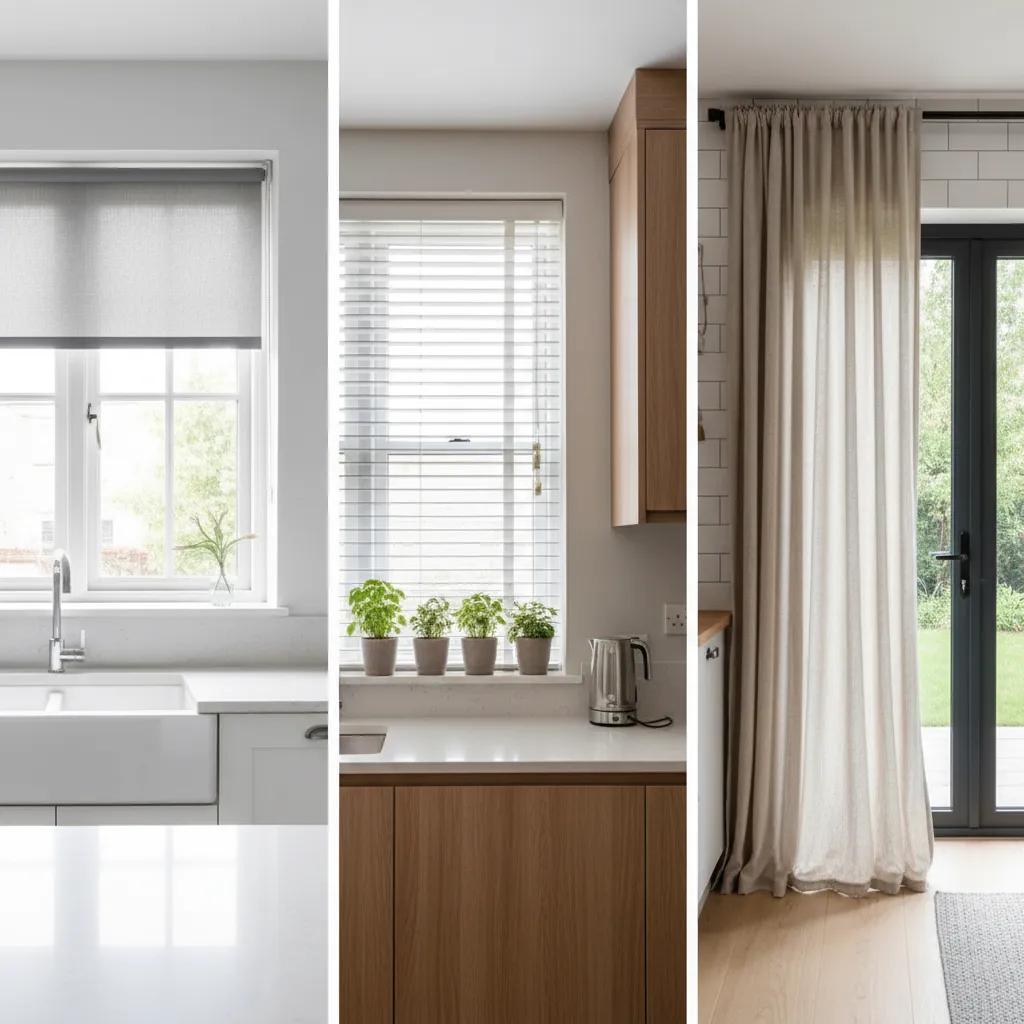
Different kitchen windows call for different solutions, from roller and faux-wood blinds to full-height curtain panels.
Over the sink
- Great: Simple roller or solar shades, faux‑wood blinds, or a moisture‑friendly cafe curtain.
- Tricky: Full-length panels that can drag near the floor or soak up every splash.
Patio doors off the kitchen
- Great: Vertical blinds, panel track shades, or tall, lined curtains you can draw fully open.
- Nice-to-have: Sheer curtains layered over something more practical, so you keep the softness without losing control over glare.
Small side windows
- Great: Compact motorized shades, slim roller shades, or a single cafe curtain panel.
If you like to dig into the details, resources from the U.S. Department of Energy and Natural Resources Canada explain how different window coverings affect heat gain, glare, and overall comfort, which can help you decide how much light control you really need.
Choosing fabrics, colours, and hardware for a clean look
Minimal doesn’t mean boring. It just means every line has a reason to be there. Here’s how to keep your kitchen window treatments looking fresh instead of fussy.
Fabric choices that handle real life
- Stick to lighter weights like cotton, linen‑look blends, or performance fabrics that resist moisture and stains.
- Skip heavy brocades or thick velvets near cooking zones; they hold onto cooking smells and are harder to clean.
- For blinds and shades, look at wipeable vinyls, smooth rollers, and easy‑dust slat finishes. Sheer horizontal shades soften light while still staying practical.
Colour and pattern
- Match your trim if you want the window to recede and let the cabinets and backsplash be the star.
- Echo a colour from your stone or tile for a pulled‑together look that doesn’t shout.
- Keep patterns simple – slim stripes, tiny checks, or tone‑on‑tone textures work well without competing with countertops.
Hardware that disappears (in a good way)
- Use slim rods in matte black, stainless, or white to match your faucets or appliances.
- Mount rods a few inches above the window to draw the eye upward.
- Inside‑mount blinds give a built‑in feel and pair easily with cafe curtains in front.
Many lighting guides suggest roughly 30–50 foot-candles of general light in a kitchen, with stronger task lighting over counters, so your window treatments should filter glare without making the room feel dim. If you’re planning new fixtures as well, resources on kitchen light levels can help you balance natural light with overhead and under-cabinet lighting.
Real-life tips for Surrey & Vancouver kitchens
Homes in the Lower Mainland have their own quirks: long summer evenings, grey winter days, and a mix of condo, townhouse, and single‑family layouts. Here’s what we notice most often in local kitchens:
- Condos with one main kitchen window: Layer a clean roller shade with cafe curtains so you can block neighbouring towers at night but keep things open and bright all day.
- Townhomes backing onto lanes: Combine zebra blinds and light curtain panels so you can fine‑tune privacy for cars in the lane without turning the kitchen into a cave.
- Detached homes with big patio doors: Use vertical blinds or panel tracks for daily use, with tall curtains added for softness and warmth around the frame.
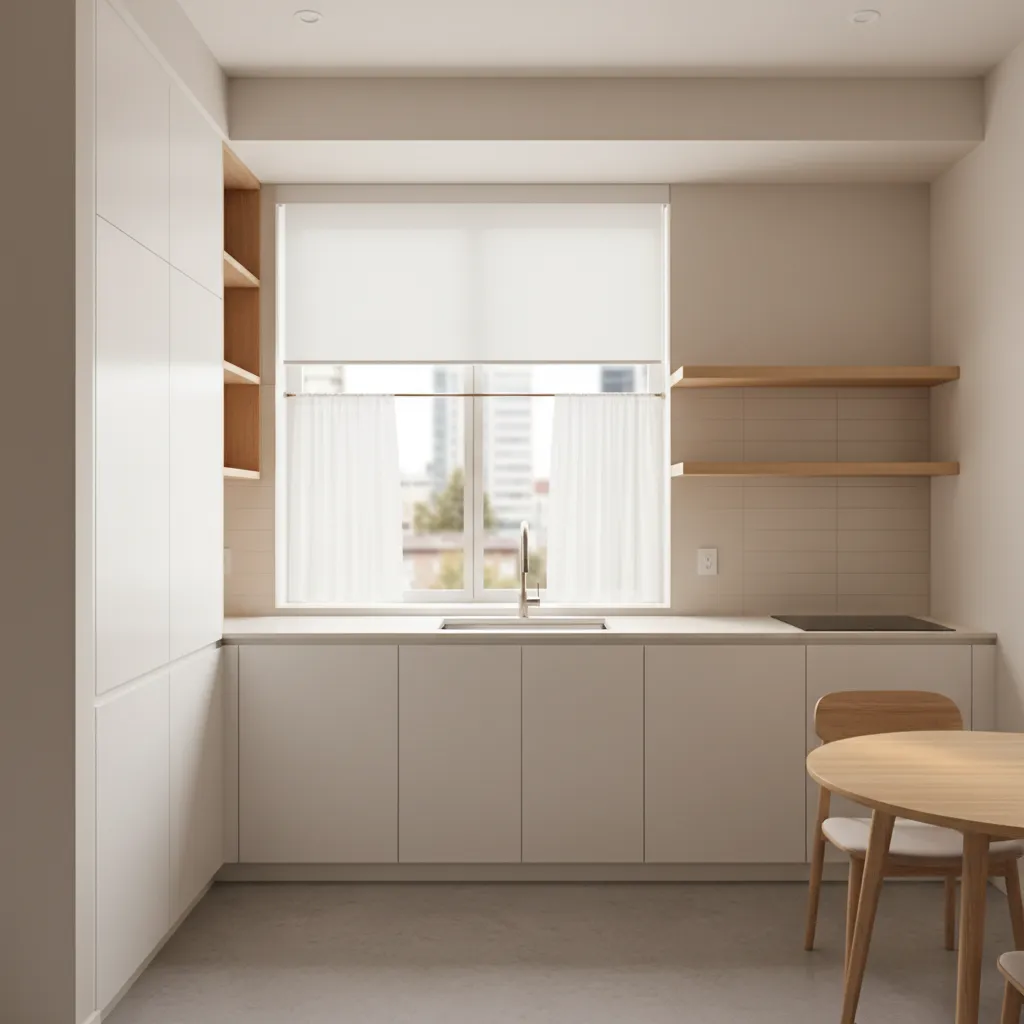
In many Surrey and Vancouver condos, a single-layered window treatment keeps the kitchen bright but private.
Not sure what you’re working with? A quick in‑home visit makes a big difference. During a free appointment, we measure the windows, check clearances around cabinets and tile, and show samples so you can see how fabrics and blinds behave in your actual light.
When custom blinds beat a kitchen curtain
We love a charming cafe curtain as much as anyone, but some situations call for something sturdier. Custom blinds and shades are usually the better choice when:
- The window is very close to the stove and exposed to frequent splatters.
- You need strong glare control for a home office nook tucked into the kitchen.
- Family members have allergy concerns and prefer lower‑maintenance, dust‑resistant materials.
- You want to automate hard‑to‑reach windows with motorized blinds.
In those cases, you can still layer a simple kitchen curtain or side panel purely for looks, while letting the blind or shade handle privacy and light control.
Ready to talk through options for your own space? Ray Blinds offers a no‑charge design visit in Surrey, Vancouver, and nearby cities. We’ll bring samples, measure carefully, and help you decide where cafe curtains make sense and where a shade, shutter, or blind will serve you better in the long run.
Kitchen window treatments FAQ
What are the best kitchen window treatments over a sink?
For the window directly over your sink, choose low-profile treatments that can handle splashes and steam: simple roller or solar shades, durable faux-wood blinds, or a moisture-friendly cafe curtain.
Look for smooth, wipeable materials like vinyl or composite faux wood and mount them close to the window frame so they clear the faucet and backsplash. A short performance-fabric cafe curtain adds softness at eye level, while a slim inside-mount roller or solar shade drops only when you need privacy or to cut glare.
Are cafe curtains outdated in modern kitchens?
No. Cafe curtains still feel fresh in modern kitchens when you keep the details simple and tailored. Skip ruffles and busy prints, and choose solid or subtly textured fabrics in light neutrals, oatmeal, or soft greys. Use slim hardware in matte black, stainless, or white, and keep the fullness around 1.3 to 1.5 times the window width so the curtains sit in soft waves instead of heavy gathers. In many Surrey and Vancouver homes, streamlined cafe curtains paired with clean-lined curtain panels or a compact shade inside the frame give you that relaxed, European feel without sacrificing a crisp, minimal look.
Can kitchen window treatments really help with heat and glare?
Yes. Well-planned kitchen window treatments can make a noticeable difference to both heat and glare, especially on south- and west-facing windows. The U.S. Department of Energy notes that about 30% of a home’s heating energy is lost through windows, and in summer, roughly 76% of the sunlight that hits standard double-pane glass can enter as unwanted heat.
Tightly fitted cellular shades can reduce that unwanted solar heat through windows by up to 60%, and even simple roller or solar shades cut the intensity of the afternoon sun and reflections on counters. For a bright but comfortable kitchen, mount light-filtering roller or solar shades close to the glass so they cover the full opening, then layer in cafe curtains or side panels for style and extra privacy without making the room feel dark.
Key takeaway
Thoughtful kitchen window treatments mix the charm of cafe curtains with the strength of modern blinds and simple curtain panels. Keep lines clean, fabrics light, and hardware slim, and you’ll end up with a kitchen that looks good in photos and works even better in everyday life.