

Staring at fabric swatches wondering whether cellular shades vs roller shades will actually make a difference from room to room? You’re not the only one. We hear this question in Surrey living rooms and Vancouver condos almost every week.
The short answer: both styles can look clean and modern, but they perform very differently for privacy, glare control, and insulation. The right choice in a south-facing living room might be the wrong one in a steamy bathroom or a street-facing bedroom.
This guide walks through your home room by room so you can stop guessing and choose shades that keep your spaces comfortable, private, and easy to live with year-round.
TL;DR: quick comparison by room
If you just want the highlight reel, start here.
Room | Better fit | Why it works |
Living room | Roller for view, cellular for insulation | Rollers keep the profile slim and show off your view; cellular adds warmth in drafty spaces. |
Bedroom / nursery | Blackout cellular | Strong insulation and light blocking for cooler, darker, quieter sleep. |
Kitchen / dining | Roller | Easy to wipe and hard to stain in splash zones. |
Home office | Light-filtering cellular | Softens glare on screens and helps with temperature swings. |
Bathroom | Moisture-resistant roller | Handles humidity and offers solid privacy in tight spaces. |
Entry / hallway | Roller or sheer cellular | Balance privacy with a bit of daylight at the front of your home. |
Cellular vs roller: how they actually differ
Before we go room by room, it helps to know what each product is built to do.
What are cellular (honeycomb) shades?
Cellular shades, sometimes called honeycomb shades, are made from fabric that forms air pockets when viewed from the side. Those “cells” trap air at the window, which boosts insulation. Double-cell and blackout fabrics increase that effect. If your home has drafty windows or you’re sensitive to temperature swings, custom cellular shades are usually the standout.
What are roller shades?
Roller shades are a single layer of fabric that rolls up into a neat tube at the top of the window. They come in everything from sheer to full blackout, and they pair nicely with zebra shades or drapery when you want extra style. Roller shades shine when you want a clean, minimal look and easy operation on wide windows or patio doors.
“Think of cellular shades as cozy sweaters for your windows, and roller shades as sleek T‑shirts that go with everything.”
How to choose between them for your home
Instead of starting with the product, start with how each room actually feels during the day:
- Light: Is it blinding, soft, or gloomy?
- Privacy: Do neighbours or the street look straight in?
- Temperature: Does the room run hot in summer or chilly in winter?
- Maintenance: Is this a clean, low-traffic room or a kid/pet zone?
Once you know that, picking between roller shades and cellular shades becomes a lot less stressful.
Are cellular shades warmer than roller shades?
In most cases, yes. The honeycomb structure increases thermal resistance (often described as R‑value), which helps rooms feel steadier in both winter and summer. Roller shades can still help with glare and UV rays, but they don’t trap air in the same way.
Government energy agencies, like Natural Resources Canada and BC Hydro, regularly note that window coverings can play a real role in reducing heat loss and heat gain through glass. For the chilliest rooms, that tilt toward cellular can make a noticeable difference over time.
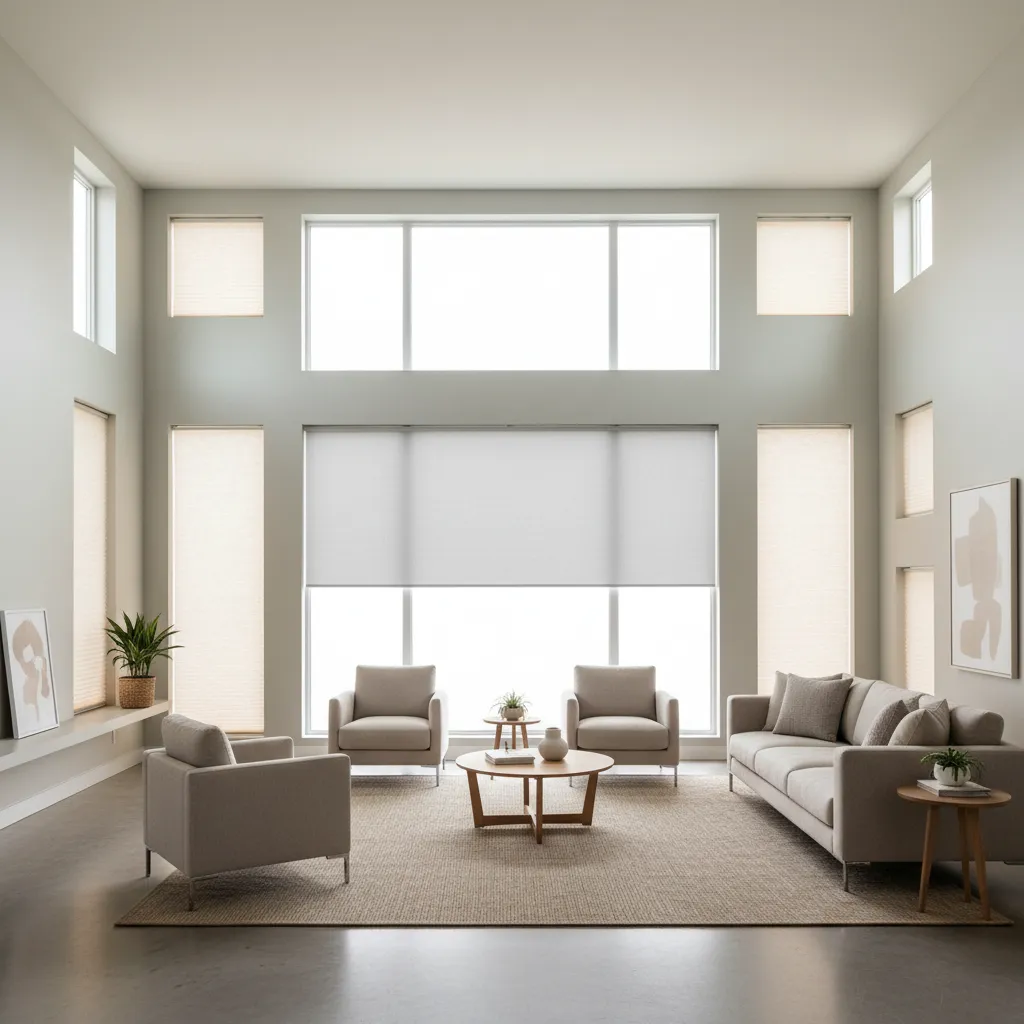
Living rooms: light, view, and TV glare
Living rooms tend to have the biggest windows and the best views, which is great until the sun bounces off the TV right in the middle of the game.
Best choice if you love your view
If the view is the star — mountains, city skyline, or that maple tree in your Surrey backyard — light-filtering roller shades are hard to beat. A slim cassette at the top, a small roll when open, and you get daytime privacy without feeling closed in.
Best choice for drafty or west-facing living rooms
If your living room runs cool in winter or overheats in late afternoon sun, cellular shades pull ahead. Double-cell or blackout fabrics help the space feel more stable and can complement layered treatments like side panels or a valance.
For a lot of Lower Mainland homes, we end up recommending a mix: light-filtering cellular shades for insulation plus decorative drapery to frame the window. During your free in‑home consultation, we can show how both would look on your actual windows.
Bedrooms & nurseries: sleep, privacy, and noise
If you’ve ever tried to sleep through a summer sunrise with thin blinds, you know how much window coverings matter. Streetlights, headlights, and early daylight all team up against a good night’s rest.
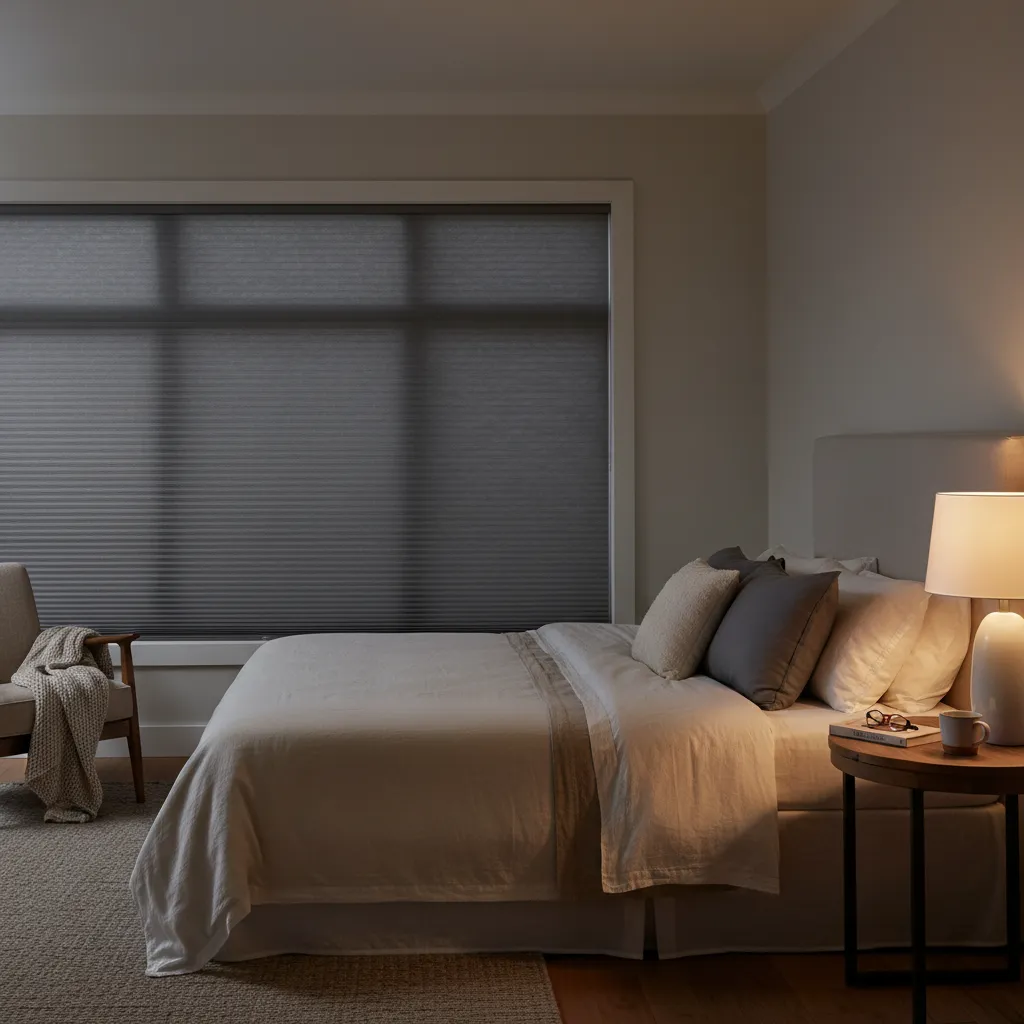
Best for full darkness and insulation
For most bedrooms and nurseries, blackout cellular shades are the first choice. They:
- Block light from streetlamps and early mornings
- Help buffer traffic noise more than a flat fabric
- Keep rooms cooler on hot days and warmer on cold nights
Pair blackout honeycomb shades with side channels or a well-fitted cassette, and you get a very dark, cozy room without a heavy look.
Can roller shades work in bedrooms?
Absolutely, especially in condos where windows are flush with the wall and you want a low-profile look. Blackout roller fabrics combined with a fascia or cassette and tight side clearances can get surprisingly close to full darkness.
Many of our clients choose blackout roller blinds in primary bedrooms, then light-filtering cellular shades in kids’ rooms, where naps and early bedtimes are a bigger priority.
Kitchens & dining rooms: mess and moisture
Kitchens face a different kind of challenge: steam, cooking splatter, and the occasional spaghetti-sauce incident. Here, easy cleaning matters just as much as light control.
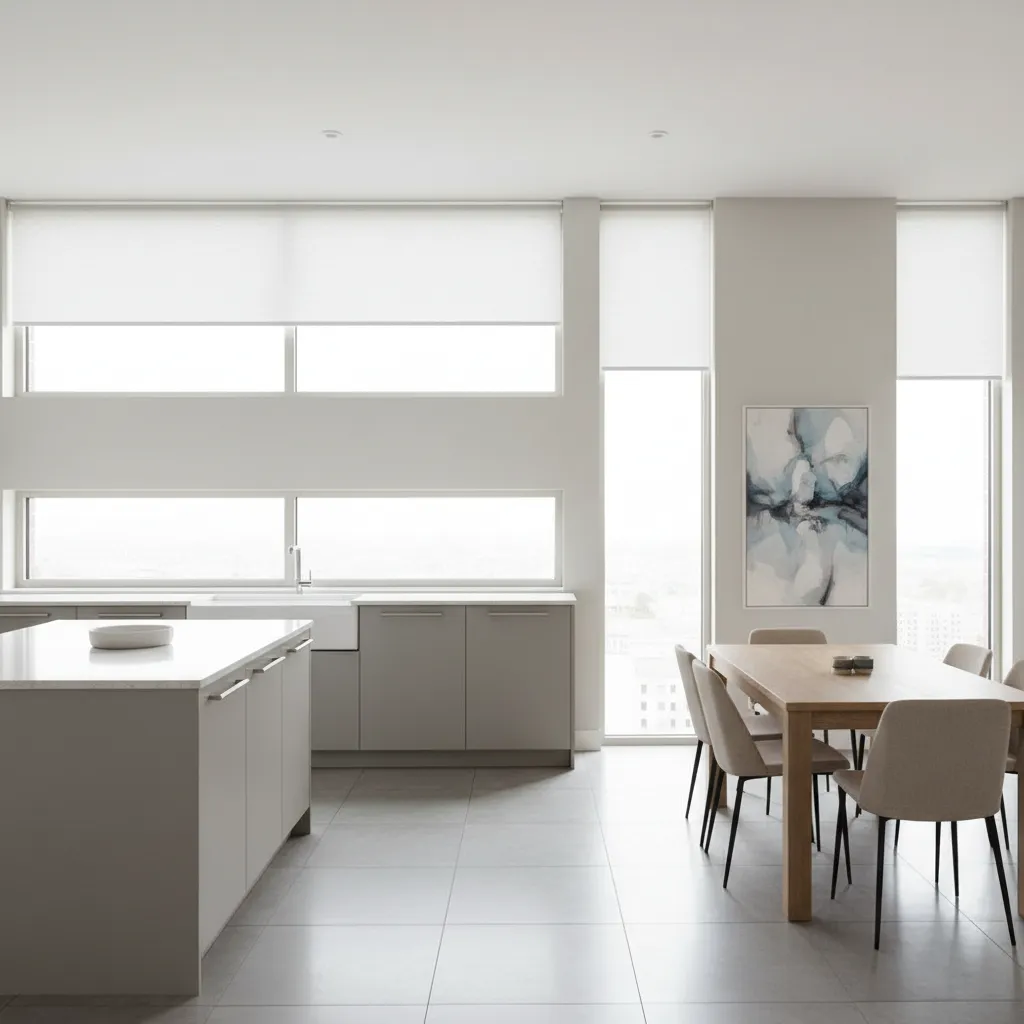
Why roller shades usually win in kitchens
In rooms where windows sit above a sink or range, smooth roller fabrics are practical. Many are made from vinyl-backed or coated materials that wipe down with a damp cloth, which keeps grease and food splashes from becoming permanent marks.
When cellular shades can still work near food
If your kitchen windows sit away from direct splatter — for example, over a breakfast nook or in a dining area — cellular shades can soften the look and cut drafts from older windows. In open-concept homes, matching cellular shades across dining and living areas creates a cohesive line of sight.
For guidance on moisture and materials, BC Hydro and similar utilities share window-covering tips as part of their home-efficiency resources, and we build on that during on-site visits by looking at your specific layout.
Home offices & media rooms: screens and sound
Working from home changed how often we sit in one spot staring at a screen. Glare that felt minor before suddenly becomes a daily headache.
Light-filtering cellular for daytime work
Light-filtering cellular shades gently soften sunlight without turning your office into a cave. They cut harsh contrast on monitors and help keep the room more comfortable during long video calls. The air pockets can also give a small boost to acoustics, making echoey rooms feel calmer.
Roller or blackout options for media rooms
For dedicated media rooms or basement lounges with projectors, blackout roller shades are a strong option. They mount neatly inside the frame, stack tightly, and can be combined with motorized controls so you can darken the room from your sofa.
We often see a pattern in the Lower Mainland: cellular shades in multi‑use offices/guest rooms, and roller shades in true media or gaming spaces where quick blackout is the goal.
Bathrooms & entryways: privacy in small spaces
Bathrooms and front entries both demand privacy, but they handle very different levels of moisture and traffic.
Best shades for bathrooms
In most full bathrooms, moisture-resistant roller shades are the safer bet. Look for:
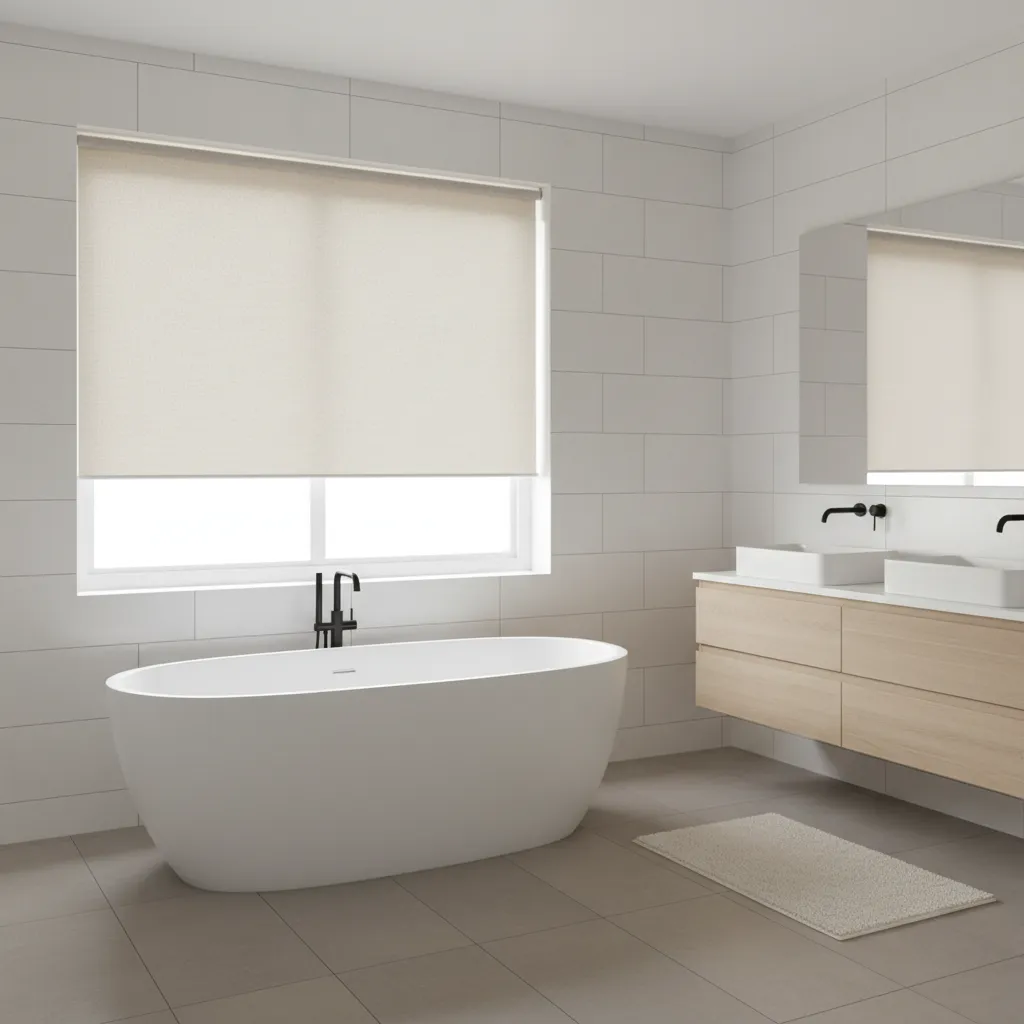
- Fade-resistant fabrics that handle steam
- Privacy or blackout opacity for close neighbours
- Tight fit to keep silhouettes from showing at night
Cellular shades can work in powder rooms with good ventilation and less steam, especially when you want a softer, more decorative look. We just pay close attention to fabric choice and mounting depth.
Front doors and sidelights
For glass beside front doors, narrow roller shades or slim cellular shades both work well. Many homeowners like sheer or light-filtering fabrics that blur the view but still let them see movement outside.
Housing guides note that window coverings can support comfort and privacy near entry doors. Homeowners often combine subtle privacy film with slim shades for extra peace of mind at the front door.
Costs, durability, and cleaning
You’re probably wondering where budgets land in this whole discussion.
Which is more budget-friendly?
For the same window size and a similar fabric quality, roller shades are typically more affordable than cellular shades. The honeycomb construction and extra fabric in cellular designs add material and manufacturing time.
Durability and everyday use
Both styles are designed for daily use when they’re custom-made and professionally installed. As a direct manufacturer here in Surrey, we see firsthand how small details — bracket placement, headrail quality, fabric choice — affect long-term performance.
Cleaning and upkeep
- Roller shades: Usually clean with a soft cloth or gentle vacuuming; some fabrics allow spot-cleaning with mild soap.
- Cellular shades: Best maintained with light vacuuming using a brush attachment and occasional dusting. Many fabrics resist static so they don’t hold onto dust as much as older vinyl blinds.
During your design consultation with Ray Blinds, we walk through fabric samples you can touch and feel, including which ones stand up best to kids, pets, and daily cooking.
Can you mix cellular and roller in one home?
Short answer: yes — and in real homes around Surrey and Vancouver, that’s usually what works best.
A common pattern we install:
- Blackout cellular shades in bedrooms and nurseries
- Light-filtering roller shades in living and dining rooms
- Moisture-resistant rollers in bathrooms and laundry rooms
- Either style in home offices, depending on glare and insulation needs
The key is keeping colour and hardware consistent. Matching headrail and cassette colours, and keeping fabrics within the same neutral family, makes everything feel intentional rather than pieced together.
Next steps: get room-specific advice in your own home
Reading guides is helpful, but nothing beats seeing fabrics against your actual windows and light. Our team brings fabric swatches and shade samples right to homes across Surrey, Vancouver, and the Lower Mainland so you can compare options on your actual windows.
During a free, no-pressure visit, we:
- Look at how each room is used, from nap times to homework spots
- Measure every window so your new shades fit cleanly and operate smoothly
- Compare cellular vs roller options side by side for your exact light and privacy needs
- Explain pricing clearly so you can prioritize rooms and phases
If you’re ready to cut glare, improve sleep, or warm up drafty rooms, book a free quote today. We manufacture locally, install everything ourselves, and stand behind the work long after the last bracket is in.
This guide was created with the help of AI and reviewed by the Ray Blinds team for accuracy and local relevance.